Can a deep groove ball bearing take an axial or thrust load? This may be one of the key questions you have when selecting deep groove ball bearings for your application.
To help you choose the correct bearing without difficulty, I will not only explain whether deep groove ball bearings can handle axial or thrust loads but also answer other important questions you may have during the selection process, including what deep groove ball bearings are, their advantages and disadvantages, and their major types.
Moreover, to help you better understand deep groove ball bearings, I will compare them with angular contact ball bearings, as these two bearing types are similar in many ways.
If you decide to purchase deep groove ball bearings in bulk after determining that they are suitable for your application, I recommend BKZ Industry. As a China-based deep groove ball bearing manufacturer and supplier, BKZ Industry operates its own factories and has 15 years of bearing manufacturing experience, enabling it to supply high-quality deep groove ball bearings for various applications.
Part 1. What is a Deep Groove Ball Bearing?
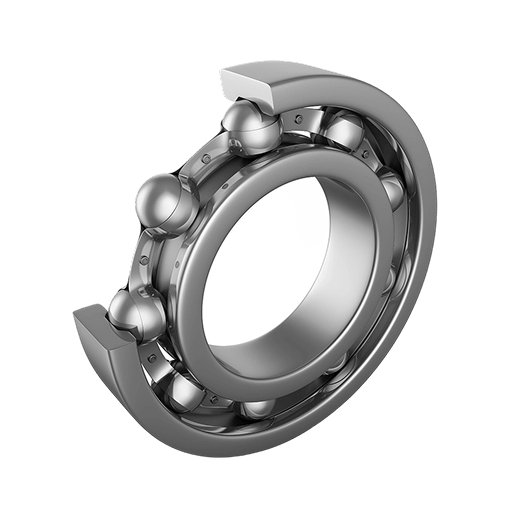
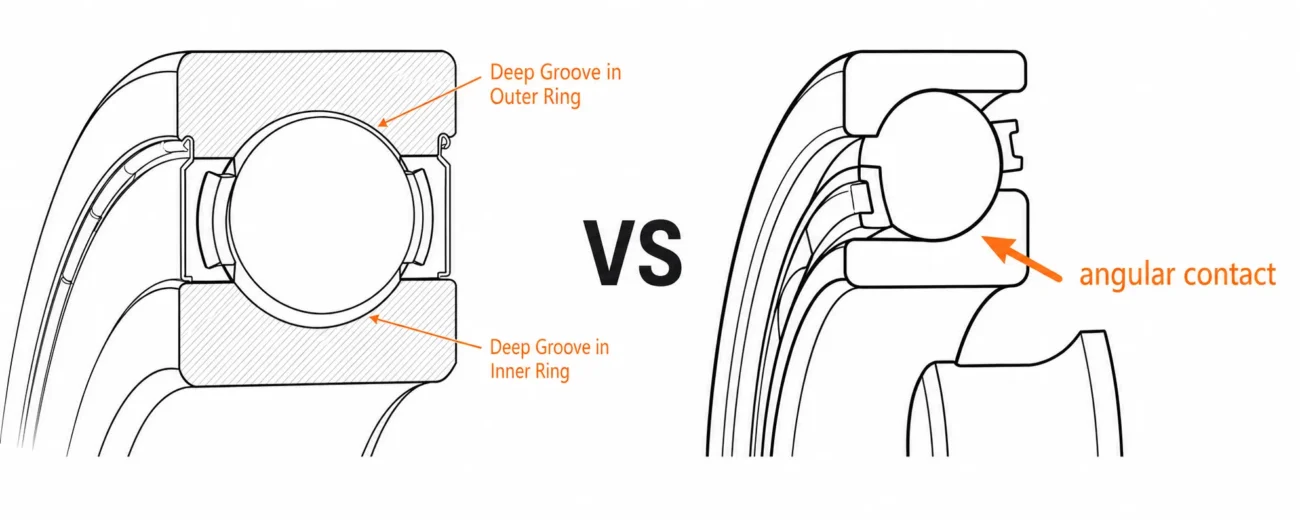
A deep groove ball bearing is a type of bearing with deep raceway grooves in both the inner and outer rings. The balls run within these deep grooves, which is how the deep groove ball bearing gets its name.
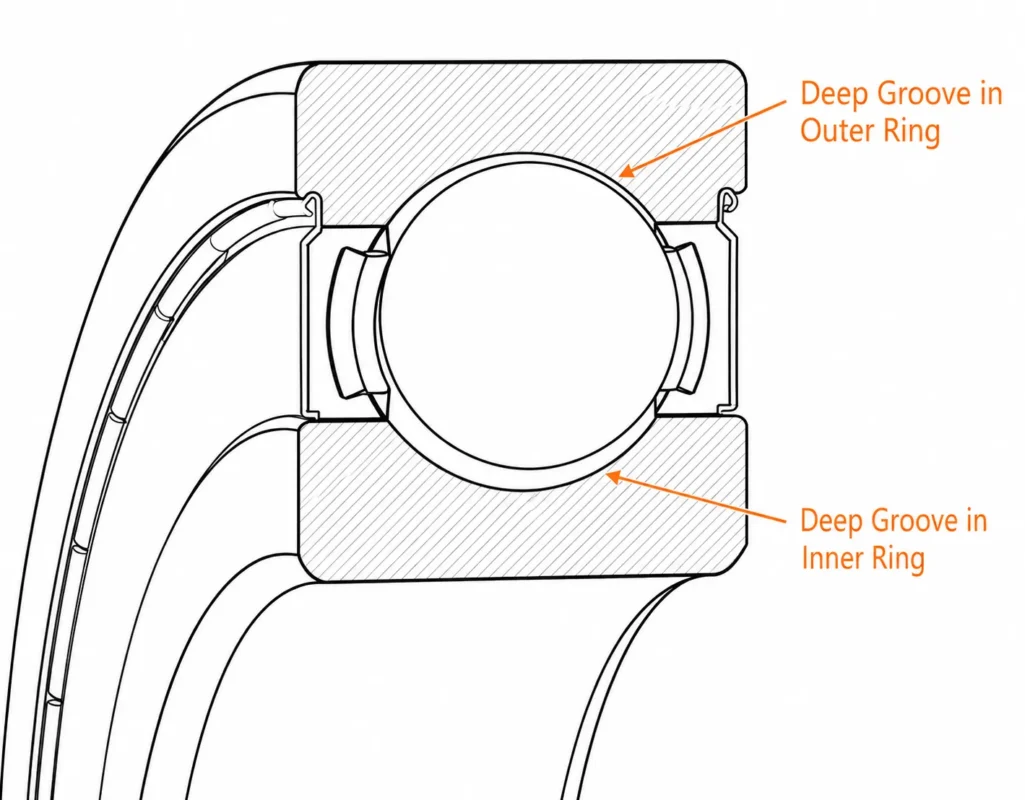
What Are the Main Components of a Deep Groove Ball Bearing?
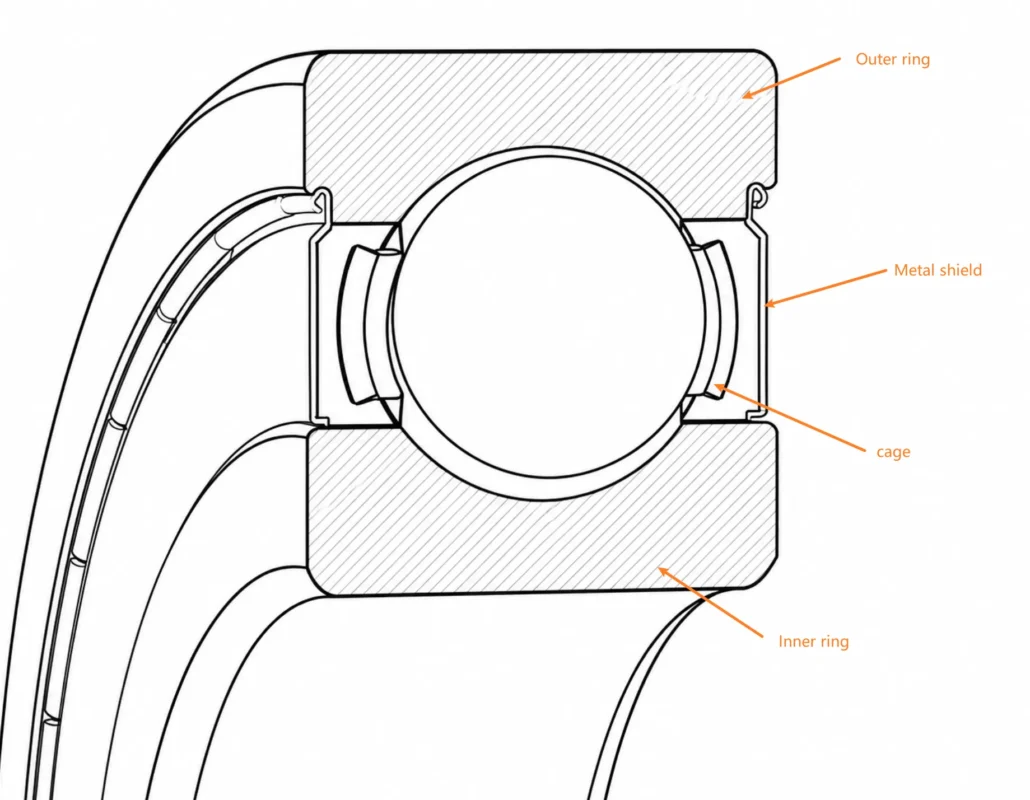
The basic components of a deep groove ball bearing include:
- Inner ring with a deep raceway
- Outer ring with a deep raceway
- Steel or ceramic balls
- Cage that separates, spaces, and guides the balls
- Seals or metal shields, depending on the bearing design
- Lubricant, such as grease or oil, for reducing friction and wear
Part 2. What Are the Advantages and Disadvantages of Deep Groove Ball Bearings?
Due to their special design, deep groove ball bearings offer many advantages. However, they are not suitable for every application and also have some limitations. Below are their main advantages and disadvantages to help you determine whether they are suitable for your application.
Advantages of Deep Groove Ball Bearings:
- Low friction: Deep groove ball bearings use balls as rolling elements. The relatively small contact areas between the balls and raceways help minimize friction during operation.
- High-speed capability: Due to their low friction, deep groove ball bearings can operate efficiently at high speeds.
- Radial and axial load capacity: Their deep raceway grooves allow them to carry mainly radial loads as well as moderate axial loads in both directions.
- Long service life: Low friction reduces energy loss and heat generation, helping extend the bearing’s service life. Proper lubrication can further improve its operating life.
- Various options for a wide range of applications: Deep groove ball bearings are available in open, sealed, and metal-shielded designs. They are also manufactured in many ISO-standardized sizes, making them suitable for various applications.
- Generally easy to source and replace: Because most deep groove ball bearings follow standardized dimensions, many models have cross-references and can be interchanged with equivalent bearings from other manufacturers. This makes replacements widely available from factories, suppliers, and bearing distributors.
- Cost-effective: Deep groove ball bearings are among the most commonly used bearing types. Their simple design, mass production, and wide availability generally make them an economical option.
Disadvantages of Deep Groove Ball Bearings
- Lower radial load capacity than comparable roller bearings: Deep groove ball bearings can carry substantial radial loads when correctly selected. However, within a similar installation envelope, roller bearings generally provide higher radial load capacity because their rolling elements have line contact with the raceways.
- Limited axial load capacity: Deep groove ball bearings can carry moderate axial loads, but they are not suitable for applications involving heavy axial loads because they are primarily designed to support radial loads.
- Limited resistance to severe shock loads: The point-contact design between the balls and raceways produces high contact stress under impact. Therefore, deep groove ball bearings are generally less suitable for severe shock loads than comparable roller or journal bearings.
- More noise than journal bearings: The movement of the balls and cage can generate more noise than a properly lubricated journal bearing, particularly at high speeds or when the bearing is worn, contaminated, or improperly installed.
- Sensitive to misalignment: Deep groove ball bearings can accommodate only very small alignment errors. Significant misalignment between the shaft and housing can increase internal stress, noise, vibration, and premature wear.
Part 3. What Are the Types of Deep Groove Ball Bearings?
As mentioned in the advantages section, deep groove ball bearings are available in many different types, with each type being suitable for different operating conditions. To understand whether a deep groove ball bearing can carry an axial or thrust load and select the correct option, it is important to know the main types available.
Based on different classification criteria, deep groove ball bearings can be divided into the following types.
Based on the Number of Rows of Balls
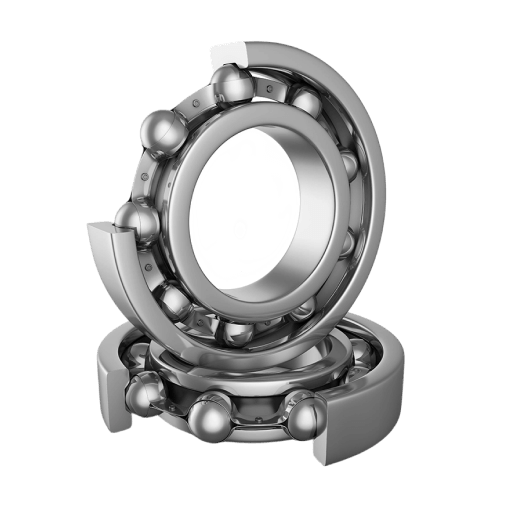
- Single-row deep groove ball bearing: A single-row deep groove ball bearing has one row of balls. It is the most common type and can carry mainly radial loads as well as moderate axial loads in both directions.
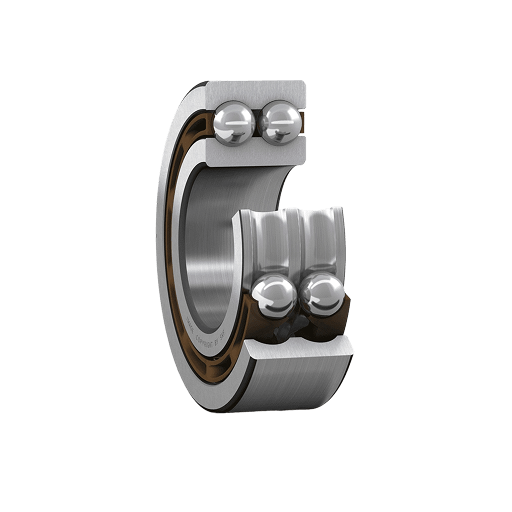
- Double-row deep groove ball bearing: A double-row deep groove ball bearing has two rows of balls. Compared with a single-row version of a similar size, it can generally carry higher radial loads and has greater stiffness.
Based on the Load Direction
Deep groove ball bearings are primarily radial bearings, but their deep raceway grooves also allow them to carry moderate axial loads.
- Radial deep groove ball bearing: This is the standard deep groove ball bearing. It is designed primarily to carry radial loads but can also support moderate axial loads in both directions.
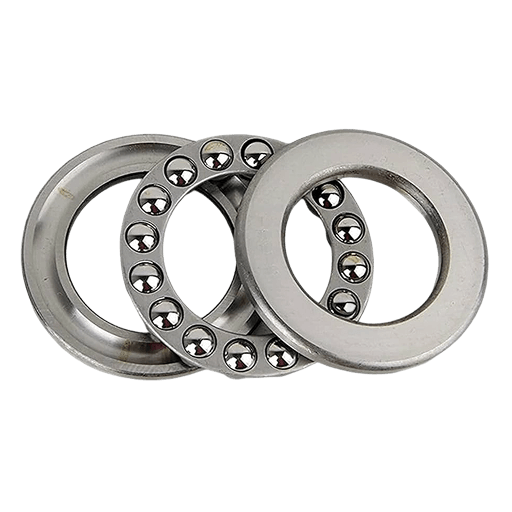
- Axial deep groove ball bearing: Axial deep groove ball bearings also called thrust ball bearings are designed to carry axial loads.
Based on the Closure Design
- Open deep groove ball bearing: An open bearing has no seals or shields on either side. It is suitable for clean operating environments and applications where the bearing is lubricated externally.
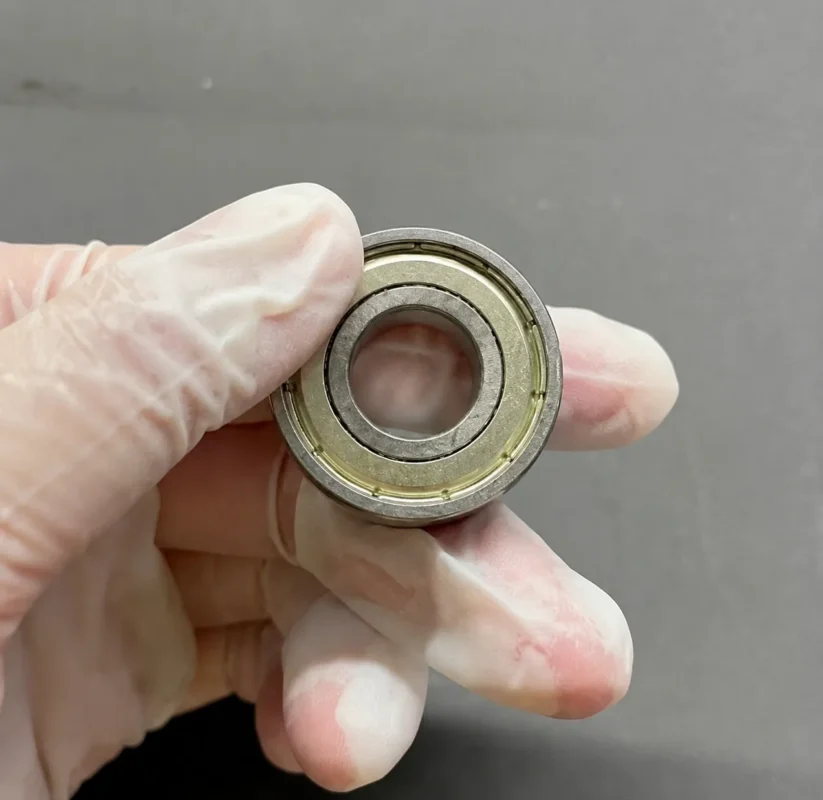
- Shielded deep groove ball bearing: This bearing has a non-contact metal shield on one or both sides to help protect its internal components from contamination. Common designations include Z for one shield and ZZ or 2Z for two shields.
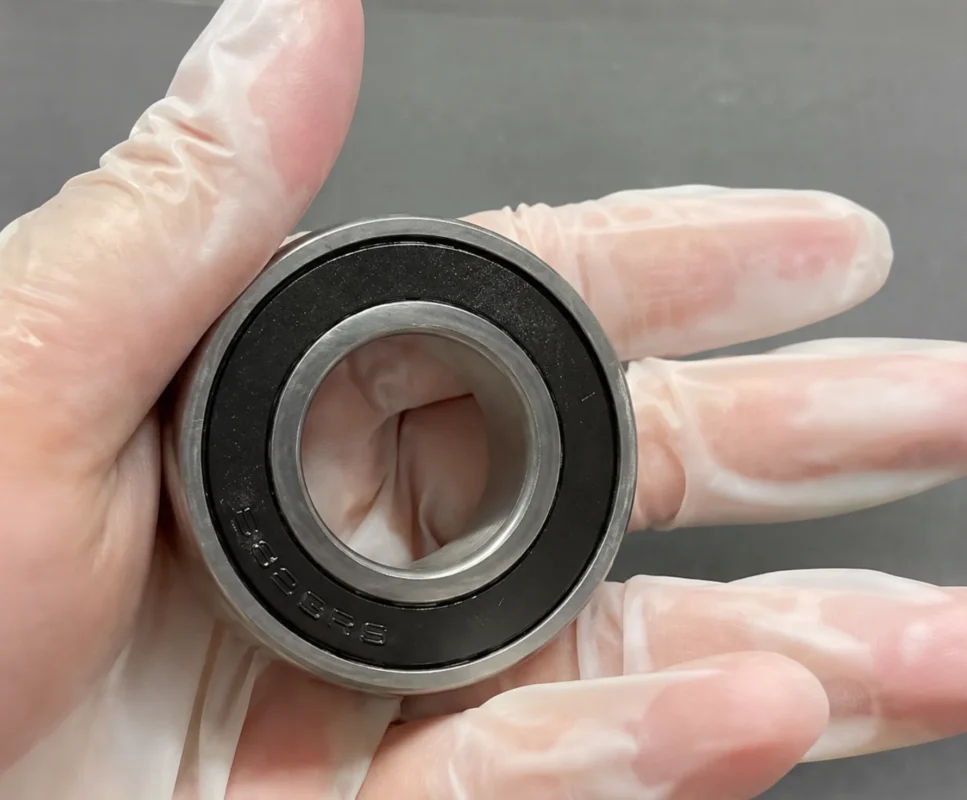
- Sealed deep groove ball bearing: This bearing has a rubber seal on one or both sides to provide greater protection against dust, moisture, and other contaminants. Common designations include RS for one seal and 2RS for two seals.
Based on the Installation Design
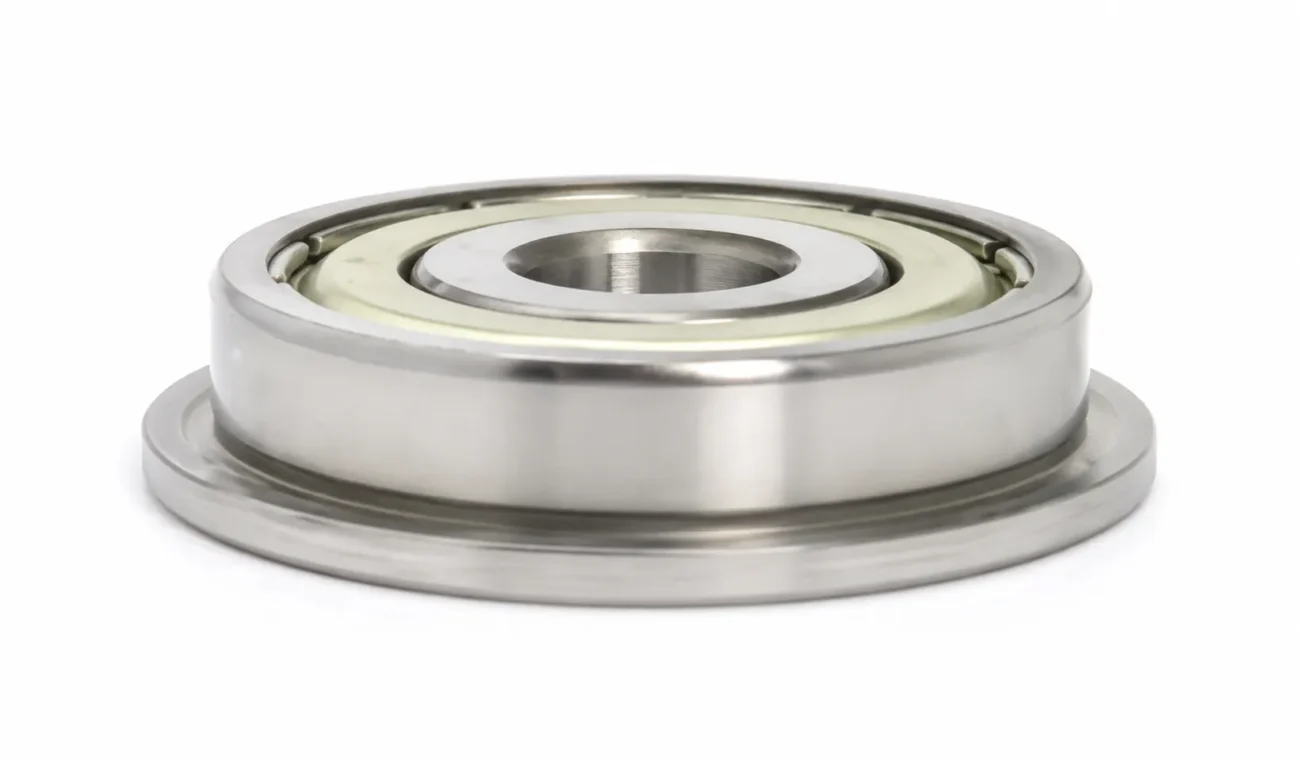
- Flanged deep groove ball bearing: This bearing has a flange on its outer ring. The flange helps locate the bearing axially and prevents it from moving through the housing, making it especially useful when the housing has limited space or cannot include a shoulder.
Part 4. Can a Deep Groove Ball Bearing Take an Axial/Thrust Load?
Now, let’s return to today’s main question: “Can a deep groove ball bearing take an axial or thrust load?”
The answer is yes. A standard deep groove ball bearing can carry moderate axial loads. However, if your application involves heavy axial loads or mainly thrust loads, you should use an axial deep groove ball bearing or a thrust ball bearing.
Part 5. What is the Difference between Angular Contact and Deep Groove Ball Bearing?
You now have a general idea of what deep groove ball bearings are. However, when selecting a bearing, you may find that angular contact ball bearings are very similar to deep groove ball bearings.
To make the correct choice, you should understand the key differences between them. This will help you better determine the operating conditions for which deep groove ball bearings are suitable.
| Bearing | Deep Groove Ball Bearings | Angular Contact Ball Bearings |
| Raceway Design | Deep, symmetrical raceway grooves | Inner and outer raceways are offset to form a specific contact angle with the balls |
| Radial Loads | Primarily designed to carry radial loads | Can carry radial loads, usually as part of a combined load |
| Axial Loads | Can carry moderate axial loads in both directions | A single-row bearing can carry higher axial loads in one direction; paired bearings can carry axial loads in both directions |
| Applications | Textile machinery, packaging machines, printing presses, skateboards and roller skates, automotive alternators, automotive starter motors, exercise equipment, grain-processing equipment, food-processing machinery, and garage door systems | Dental handpieces, centrifugal separators, aircraft engine accessories, high-precision indexing heads, lathe headstocks, milling machine heads, high-speed centrifuges, marine propeller shaft systems, racing bicycle hubs, and precision grinding heads |
Part 6. Where to Buy Deep Groove Ball Bearings?
Have you decided to purchase deep groove ball bearings in bulk but do not know which bearing manufacturer to choose? You should consider BKZ Industry for the following reasons:
- Two in-house factories: BKZ Industry operates two factories that manufacture deep groove ball bearings, enabling it to offer most major types.
- One-stop bearing sourcing: BKZ Industry has established long-term relationships with many qualified partner factories. If you need different types of bearings and want to purchase them from one supplier, BKZ Industry is a suitable option.
- OEM services: BKZ Industry supports OEM orders to meet different product and branding requirements.
- Extensive industry experience: BKZ Industry has 15 years of experience in bearing manufacturing and exporting.
- Competitive factory pricing: As a China-based company with its own factories and long-term partner factories, BKZ Industry can offer competitive prices.
- Strict quality control: BKZ Industry implements strict quality-control procedures and can provide the bearing test reports required for your order.
Part 7. FAQS About Deep Groove Ball Bearings
You can click here to view a size chart covering common deep groove ball bearing series and dimensions. If you cannot find the required model, contact BKZ Industry to confirm its bore diameter, outside diameter, width, load ratings, internal clearance, sealing arrangement, and other specifications.
A deep-groove ball bearing has raceways that closely conform to the balls, allowing it to carry radial loads and moderate axial loads in both directions. A shallow-groove ball bearing has less raceway conformity and generally offers lower axial load capacity and less secure ball retention.
No. Standard deep groove ball bearings generally do not require preload.
Ending Note
Now, you know that deep groove ball bearings can carry axial loads. You also have a better understanding of their advantages, disadvantages, major types, differences from angular contact ball bearings, and more. With this knowledge, you can determine whether deep groove ball bearings are suitable for your application.
If you decide to purchase deep groove ball bearings in bulk, contact BKZ Industry today.