When you search for skateboard bearings or fidget spinner bearings, you will often see 608 bearings in the results. So, what are 608 bearings? What are their sizes and what types are available? What are they used for, and where can you buy them?
As an engineer with about 10 years of experience in the bearing industry, I would like to explain everything you need to know about 608 bearings. After reading this article, you will have a clear understanding of 608 bearings and a better idea of how to select the right type and where to buy them.
If you are looking to buy 608 bearings in bulk for skateboards, fidget spinners, other manufacturing applications, or wholesale distribution, contact BKZ Industry. As a China-based 608 bearing manufacturer with two factories, we can supply different types of 608 bearings for various applications. Contact BKZ Industry today with your required bearing number and quantity.
Part 1. What Are 608 Bearings?
608 bearings are single-row deep groove ball bearings. You may ask: How can you identify the bearing type from the number alone? Well, you first need to understand what the 608 bearing designation means.
The first digit, “6,” identifies it as a single-row deep groove ball bearing, as standard deep groove ball bearing designations begin with 6. The remaining digits indicate its dimension series and bore size.
The structure of a 608 bearing is similar to that of other deep groove ball bearings. It consists of an inner ring and an outer ring with deep raceways, balls that serve as the rolling elements, and a cage that keeps the balls correctly positioned.
The 608 bearing offers many features and advantages. Here are some of them:
- Low friction: Because balls are used as the rolling elements, the point contact between the balls and raceways helps reduce friction during rotation.
- High speed: Low friction allows 608 bearings to operate at relatively high rotational speeds.
- Compact size: Because 608 bearings are small, they require very little installation space.
- Radial and axial loads: As deep groove ball bearings, 608 bearings are primarily suitable for radial loads and can also accommodate light axial loads.
- Cost-effective: The 608 bearing is small and can be made from different materials depending on the application, making its cost easier to control.
- Acceptable noise and vibration: Although rotating balls generate some noise and vibration, suitable materials, such as plastic components, can help keep them at acceptable levels for small-device applications.
- Easy to replace: Because 608 bearings are standardized, replacements are easy to find when the original bearings become damaged. They are also widely available from online suppliers and bearing manufacturers.
With so many advantages, it is easy to understand why 608 bearings are used in such a wide range of applications.
Part 2. What Are the Dimensions of a 608 Bearing?
As mentioned above, the 608 bearing is very compact. So, what are the dimensions of a 608 bearing? To determine whether a 608 bearing will fit your application, you should first check its dimensions. Here are the key dimensions you need to know:
| Bearing | 608 Deep Groove Ball Bearings |
| Inner diameter | 8 mm |
| Outer diameter | 22 mm |
| Width | 7 mm |
All standard 608 bearings follow the same dimensional specifications. This means that as long as the bearing designation is 608, its basic dimensions will be 8 × 22 × 7 mm, regardless of the manufacturer.
Part 3. What are 608 Bearing Types?
Now that you understand what 608 bearings are and know their dimensions, you may find that they are available in several different types. To select the right option, you first need to understand the differences between them.
608 bearings can be classified in several ways, but they are mainly divided according to two factors: sealing type and material.
By Closure Type
Based on the closure type, 608 bearings are available as open, Z, ZZ/2Z, RS, 2RS, RZ, and 2RZ bearings. I will explain them one by one below.
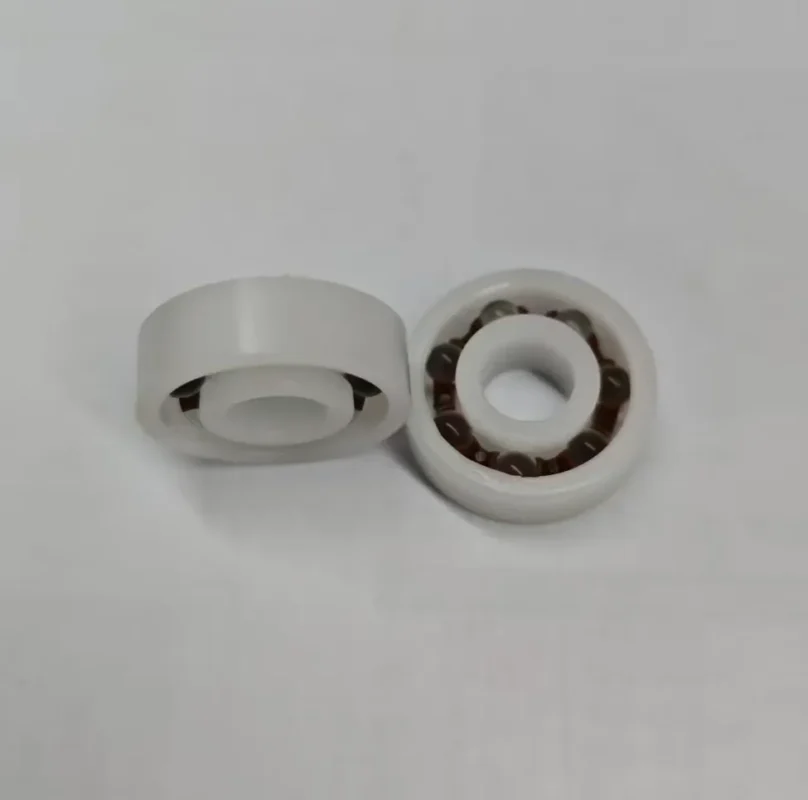
608 Open Bearing: When you see “608” without any suffix, it normally refers to an open bearing. This means that it consists only of an inner ring, an outer ring, balls, and a cage, with the balls visible from both sides. The advantage of this design is that there are no shields or seals to generate additional friction, making the bearing suitable for higher-speed operation. However, without any protection, dust and other contaminants can easily enter the bearing. Open 608 bearings are therefore best suited to clean operating environments. For example, they may be used in some fidget spinners.
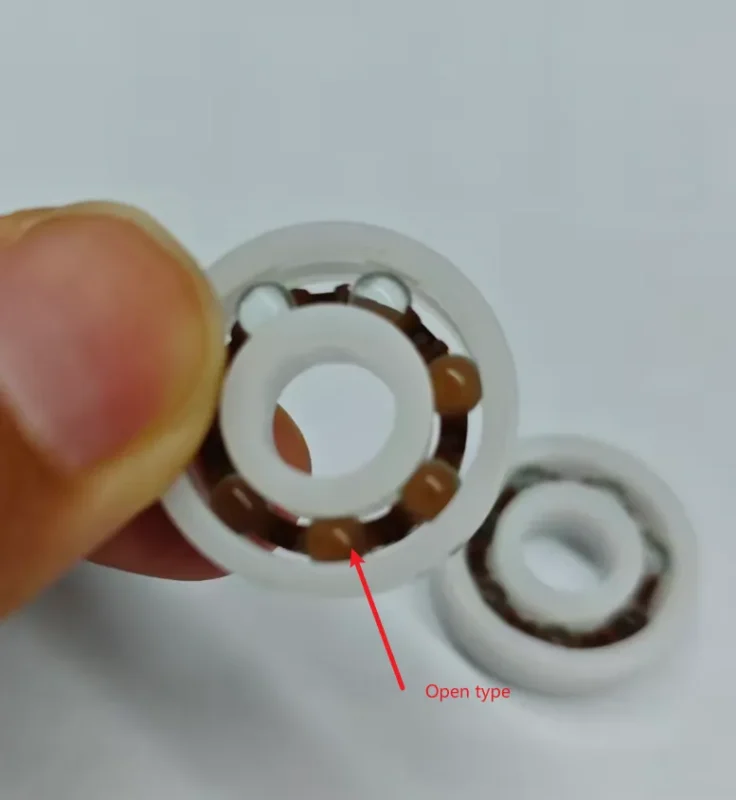
608-Z: A 608-Z bearing has one non-contact metal shield on one side, while the other side remains open. This design is suitable for applications in which one side of the bearing requires protection from dust and contaminants while the other side does not. Small electric motors may use 608-Z bearings.
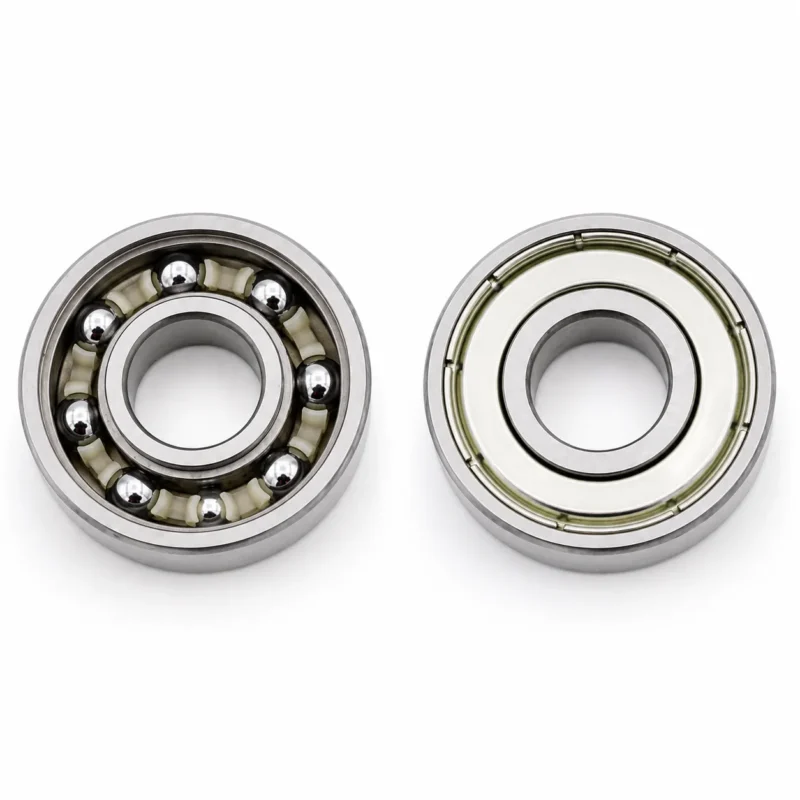
608-ZZ / 608-2Z: This type of bearing has non-contact metal shields on both sides. Compared with a 608-Z bearing, it provides protection on both sides while maintaining relatively low friction. You can commonly find this type of bearing in skateboards, where it supports high-speed rotation while helping prevent sand, dust, and small particles from entering the bearing and shortening its service life.
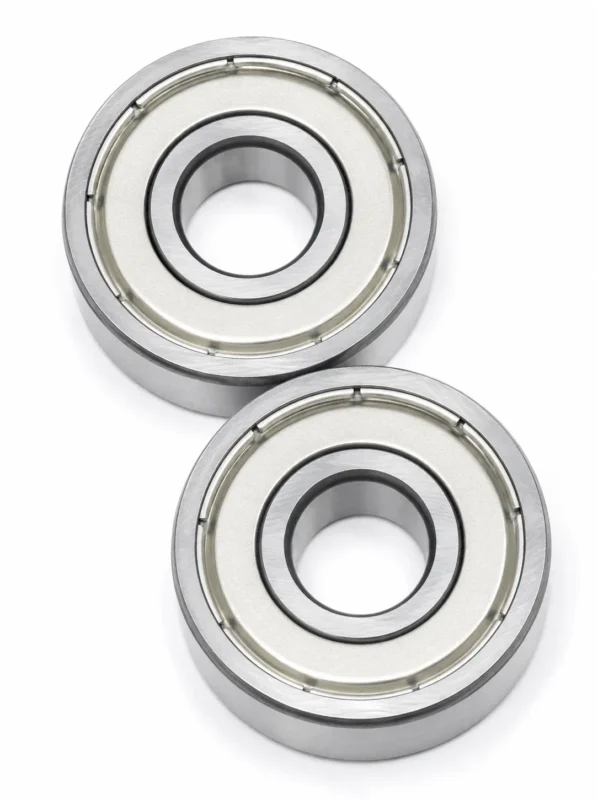
608-RS: A 608-RS bearing has one rubber contact seal on one side. Compared with a metal shield, the rubber seal generally provides better protection against dust and contaminants. However, it also generates more friction because the seal contacts the inner ring during rotation.
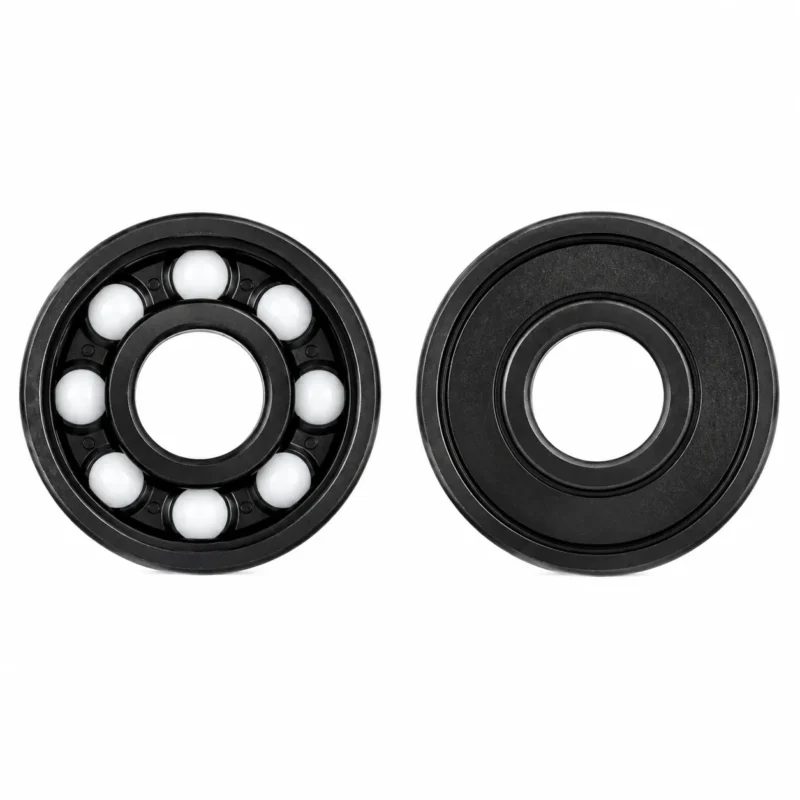
608-2RS: A 608-2RS bearing has rubber contact seals on both sides, providing better protection than single-sealed or metal-shielded versions. These bearings are commonly used in dusty or contaminated environments and may also be found in certain surgical instruments, depending on the equipment requirements.
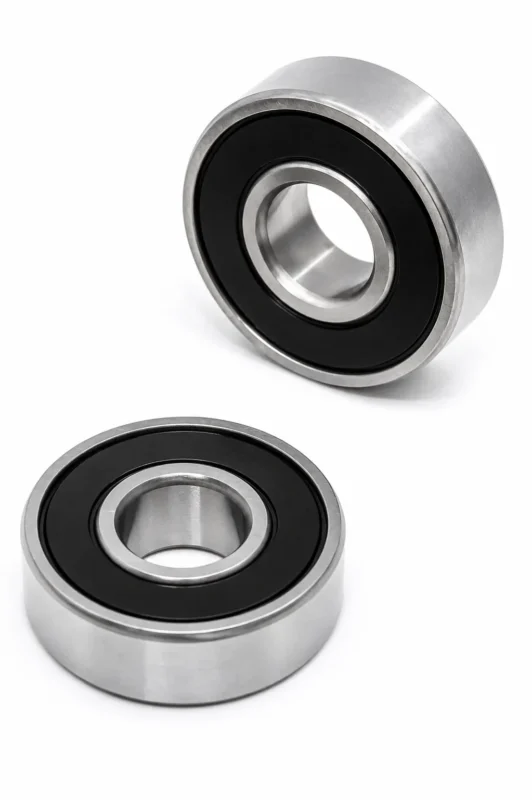
608-RZ: A 608-RZ bearing has one low-contact or non-contact rubber seal, which is commonly made from NBR. Unlike the contact seal used on a 608-RS bearing, the RZ seal produces less friction and supports higher operating speeds. You may find this type of bearing in spindle applications where both speed and protection are required.
608-2RZ: A 608-2RZ bearing has low-contact or non-contact rubber seals, commonly made from NBR, on both sides. It generates less friction than the contact-sealed 608-2RS version while still providing protection against contaminants. These bearings are commonly found in fans and other relatively high-speed applications.
You May Also Like: Shielded Vs Sealed Bearing: How to Choose?
By Materials
In addition to closure type, 608 bearings can also be classified by material. Based on the materials commonly used, 608 bearings are available in the following types:
Chrome Steel 608 Bearings: The inner and outer rings and balls are made of chrome steel, while the cage may be made of steel or another suitable material. This is the most common material option and is suitable for a wide range of general applications.
Stainless Steel 608 Bearings: The rings and balls are made of stainless steel. These bearings are suitable for applications that require better resistance to moisture and corrosion.
Full Ceramic 608 Bearings: The inner ring, outer ring, and balls are made of ceramic, while the cage may be ceramic or another suitable material. These bearings are suitable for applications requiring high-temperature resistance, excellent corrosion resistance, electrical insulation, low density, or non-magnetic properties.
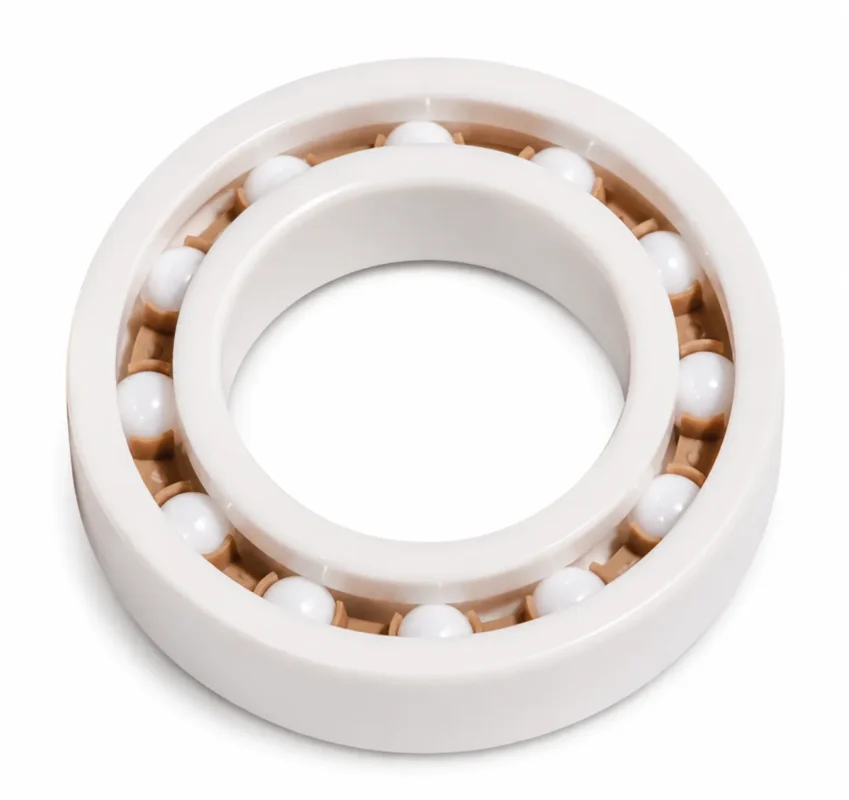
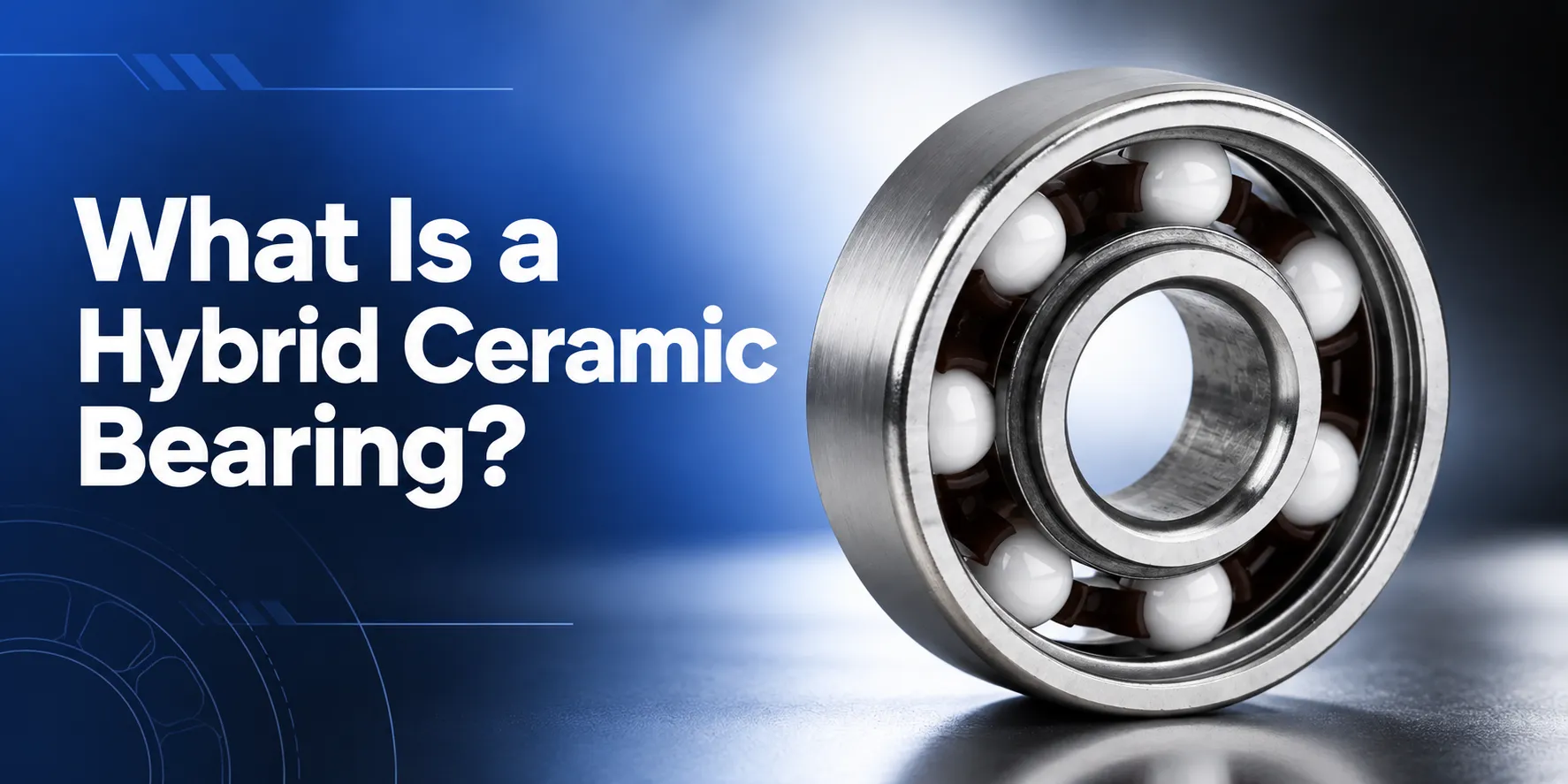
Hybrid Ceramic 608 Bearings: The balls are made of ceramic, while the inner and outer rings are usually made of steel. Ceramic balls offer lower rolling mass, reduced friction, electrical insulation between the rings, and improved performance at high speeds.
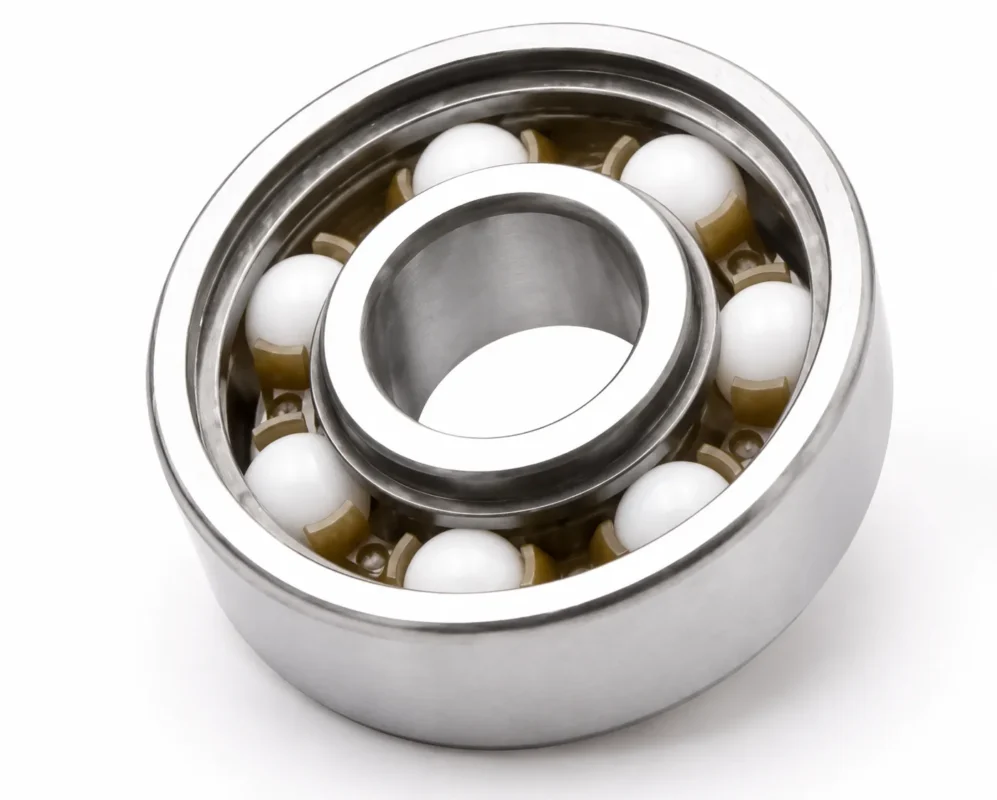
Plastic 608 Bearings: The bearing rings are made of plastic, while the balls may be made of glass, ceramic, stainless steel, or other suitable materials. These bearings are suitable for corrosive environments and applications requiring lightweight components.
Part 4. What Are 608 Bearings Used For?
With their compact dimensions and wide range of closure and material options, 608 bearings can be used in many applications. So, where are 608 bearings commonly found? Below are five common applications.
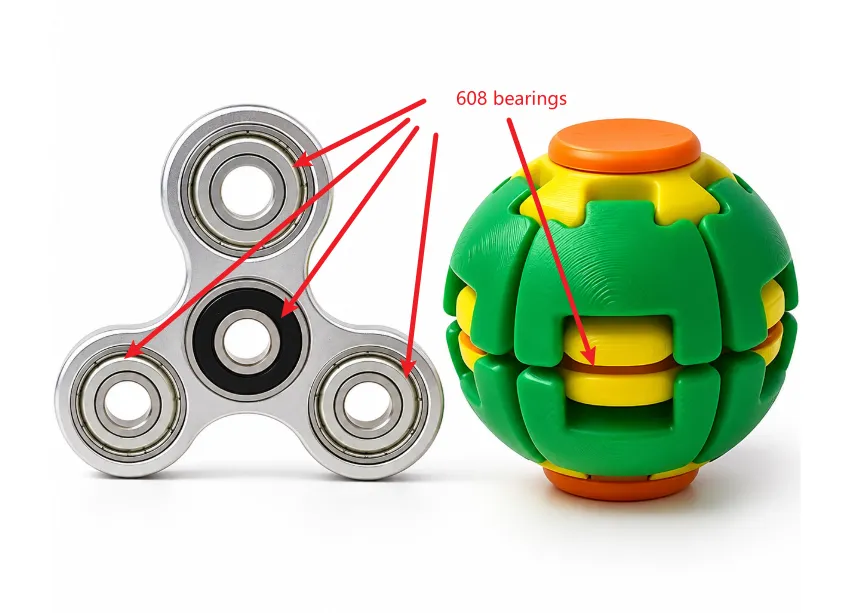
1. Fidget Spinner
A 608 bearing is installed at the center of a fidget spinner. Open or low-friction 608 bearings are commonly selected because low rotational resistance helps the spinner rotate freely for a longer time.
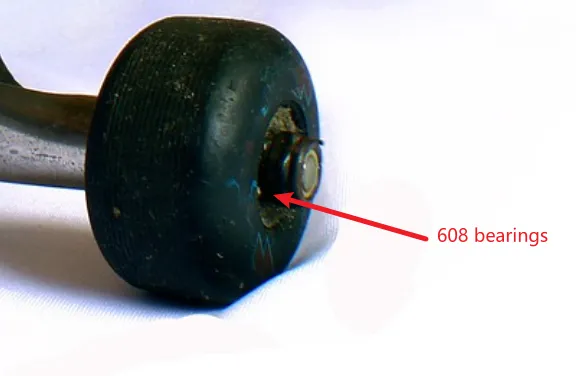
2. Skateboards and Skates
608 bearings are installed inside the wheels of skateboards, longboards, roller skates, and inline skates, normally with two bearings in each wheel. The 608-2RS and 608-ZZ types are commonly used because their seals or shields protect the internal components from dust, moisture, and road debris.
3. Fans
In some fans, 608 bearings are installed on the motor shaft behind the fan blades. Low-friction and low-noise types, such as 608-ZZ or 608-2RZ, may be used because smooth, quiet rotation is particularly important in fan applications.
4. Robotics
In robots, 608 bearings may be installed in wheels, joints, pulleys, or guide rollers. Shielded or sealed types, such as 608-ZZ and 608-2RS, are commonly selected because their standardized dimensions provide stable shaft support and make replacement convenient.
5. 3D Printers
In 3D printers, 608 bearings are commonly installed in belt idlers, guide rollers, spool holders, or other rotating mechanisms. The 608-ZZ type is often used because its low-friction metal shields allow smooth movement while protecting the bearing from larger dust particles.
These five examples represent only some of the applications of 608 bearings. They are also used in many other devices and equipment, including shopping carts, office equipment, conveyors, and more.
Part 5. 608 vs 606 vs 688 bearing
Understanding the 608 bearing alone is not enough when selecting the correct bearing for an application. You should also understand how it differs from similar miniature bearings, such as the 606 and 688. Although these bearings may be used in similar types of equipment, they have different bore diameters, outside diameters, widths, and load capacities. The following table compares their main differences.
| Feature | 608 Bearing | 606 Bearing | 688 Bearing |
| Bearing Type | Deep Groove Ball Bearing | Deep Groove Ball Bearing | Thin-Section Deep Groove Ball Bearing |
| Bore Diameter | 8 mm | 6 mm | 8 mm |
| Outside Diameter | 22 mm | 17 mm | 16 mm |
| Width | 7 mm | 6 mm | 5 mm |
| Relative Load Capacity | Generally the highest | Lower than 608 | Generally the lowest |
| Installation Space | Requires the most space | Suitable for smaller shafts and housings | Suitable for very limited installation space |
As shown in the table, the main differences between the 608, 606, and 688 bearings lie in their dimensions and relative load capacities. The 606 fits a 6 mm shaft, while both the 608 and 688 fit an 8 mm shaft. However, the 608 and 688 are not interchangeable because they have different outside diameters and widths. The 608 generally offers a higher load capacity, while the 688 is more suitable for applications with limited installation space. Select the correct bearings based on the sizes and your application details.
Part 6. Where to Buy 608 Bearings in Bulk?
Now that you understand 608 bearings and know how to select one, the next question is: Where can you buy them in bulk?
For cost-effective pricing and reliable quality, you can purchase directly from a bearing manufacturer in China. BKZ Industry is a recommended supplier for the following reasons:
- In-house manufacturing: BKZ Industry manufactures various types of 608 bearings with different closure and material options.
- Two self-owned factories: Our two factories support stable production and export supply.
- One-stop bearing sourcing: We also work with more than 20 long-term partner factories to supply bearing types that we do not manufacture in-house. This allows you to purchase different bearings from one supplier.
- Extensive industry experience: We have more than 15 years of experience in bearing manufacturing and export.
Contact BKZ Industry today with your required 608 bearing type and quantity.
Part 7. FAQs About 608 Bearings
ABEC ratings describe the dimensional accuracy and running tolerances of 608 bearings. Common grades include ABEC 1, 3, 5, 7, and 9. Higher numbers indicate tighter manufacturing tolerances.
A standard steel 608 bearing typically weighs approximately 10–15 grams, depending on its design and materials.
A 608-2RSH is an SKF 608 deep groove ball bearing fitted with RSH contact seals on both sides.
A 608ZB bearing is a type of bearing popularly used in skateboard. It is not an ISO-standard bearing designation but a special designation used by some manufacturers. The ZB design differs from standard 608 bearings, and its dimensions are also different.
Inner diameter: 8 mm
Outer diameter: 22 mm
Height: 12.6 mm
Ending Note
In summary, 608 bearings are single-row deep groove ball bearings with dimensions of 8 mm × 22 mm × 7 mm. Because of their advantages, 608 bearings are widely used in many applications.
If you need to buy 608 bearings in bulk, contact BKZ Industry, a bearing manufacturer with 15 years of experience in manufacturing the bearings you need.