Conveyor roller bearings are important components used in conveyor roller systems to support rotation, reduce friction, and ensure smooth material handling. Unlike standard bearings, conveyor roller bearings are usually integrated bearing units designed to fit inside roller tubes. In this article, we will explain what conveyor roller bearings are, their structure, types, applications, and how to select the right bearing for your conveyor system.
Part 1. What Are Conveyor Roller Bearings?
Conveyor roller bearings are bearing units designed specifically for conveyor rollers rather than general-purpose bearings. They are installed at both ends of the conveyor roller to support rotation, reduce friction, and carry mainly radial loads as well as light axial loads generated during conveyor operation. These bearings allow rollers to rotate smoothly under different loads and speeds, ensuring stable material conveying.
Common types include Roller End Bearings, Conveyor Roller Bearing Units, Roller Bearing Assemblies, Conveyor End Bearings, and Roller Insert Bearings.
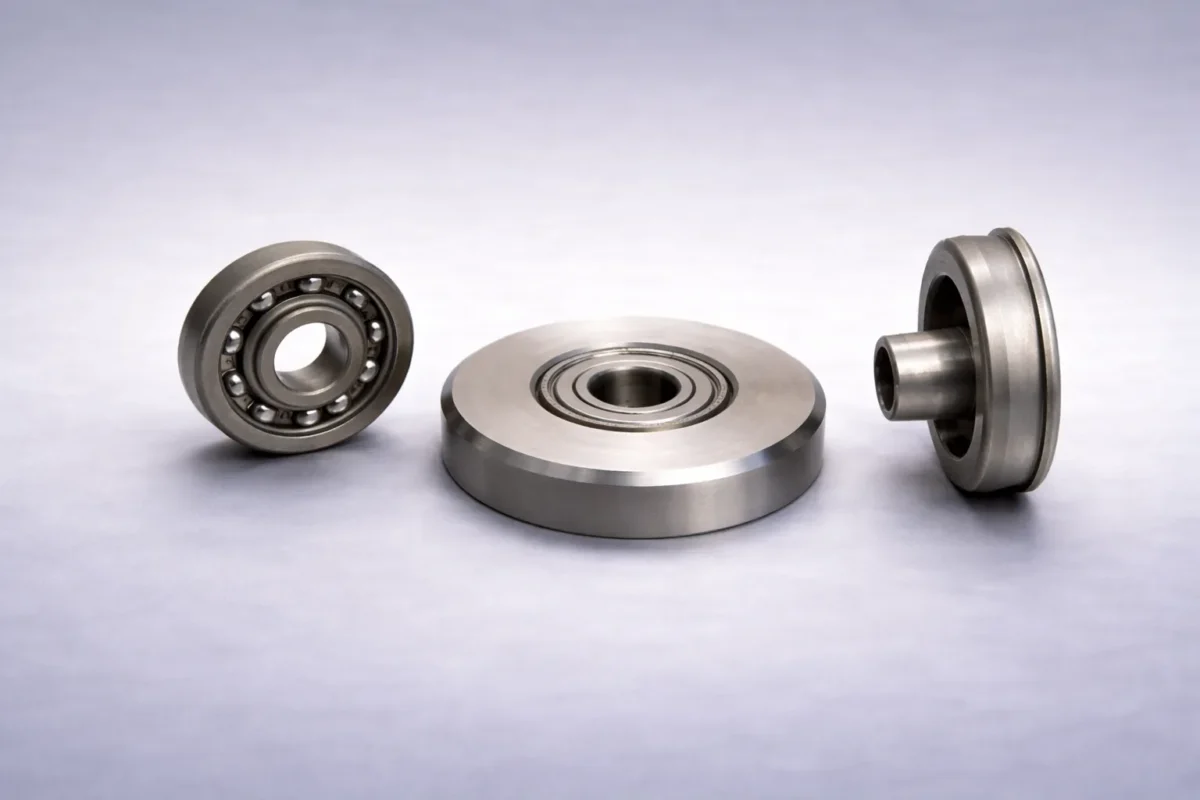
Part 2. What is the Structure of Conveyor Roller Bearings?
Conveyor roller bearings are different from standard bearings because they are usually designed as integrated bearing units rather than standalone bearings. They often have a tube-fit outer profile with press fit or snap fit to match common roller tube diameters such as 38 mm, 50 mm, 60 mm, and 76 mm.
Inside the unit, there is typically a bearing element such as a deep groove ball bearing or sleeve bearing, along with inner ring, outer ring, rolling elements, cage, seals, and lubrication. Heavy-duty conveyor rollers may use tapered roller bearings or cylindrical roller bearings for higher load capacity.
The bore size is designed to match common conveyor shaft diameters or shaft types such as round shafts (8 mm, 10 mm, 12 mm) or hex shafts.
In many designs, the conveyor roller bearing is integrated with a housing or end cap to simplify installation and alignment. The units may also include plastic or steel end caps, labyrinth seals for extra protection, and spacers or adapters for proper positioning inside the roller tube.
Overall, conveyor roller bearings are not just bearings, but integrated components designed specifically for conveyor roller systems.
Part 3. Conveyor Roller Bearings vs Standard Bearings
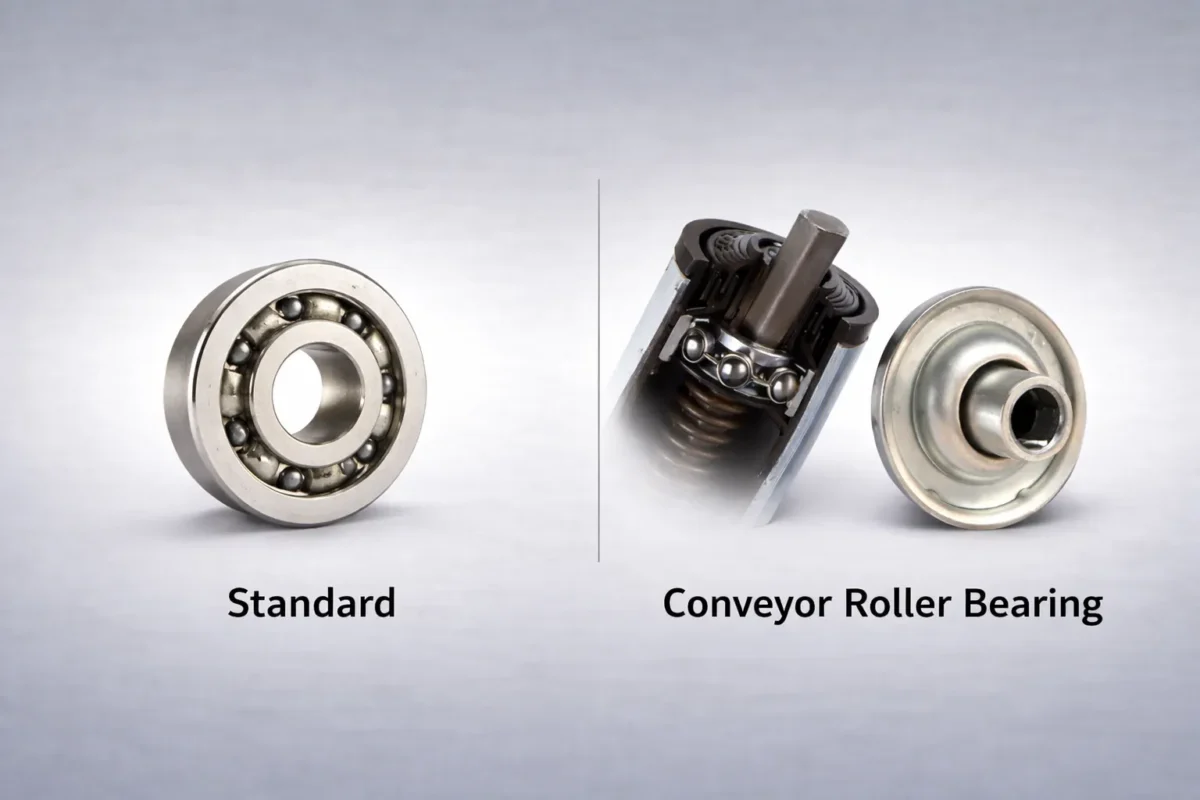
To help you better understand conveyor roller bearings, the following table compares them with standard bearings in terms of structure, installation, sizing, and application design.
| Key Difference | Conveyor Roller Bearings | Standard Bearings |
| Structure & Design | Standard bearing core + custom outer profile + end cap / housing integration | Standardized structure only (inner ring, outer ring, rolling elements, cage) |
| Design Purpose | System-specific, designed for conveyor rollers | General-purpose bearings for machinery |
| Fit & Installation | Direct press fit or snap fit into roller tubes | Requires housing, shaft fits, and additional design |
| Sizing Method | Selected based on shaft size + tube diameter + wall thickness | Selected based on ID / OD / width |
| Integration Level | Integrated unit with tube, end cap, seals, adapters | Standalone bearing component |
| Performance Optimization | Optimized for continuous rotation, low starting torque, and conveying systems | Not application-specific |
| Environment Protection | Usually pre-sealed, maintenance-free | Sealing and lubrication depend on application |
| Installation | Plug-and-play for conveyor rollers | Requires housing and mounting design |
| Maintenance | Usually maintenance-free | Requires lubrication and maintenance in many cases |
Part 4. What are Conveyor Roller Bearing Types?
Conveyor roller bearings are usually classified by shaft size or internal bearing types, because these are the most important factors customers need to consider when selecting conveyor roller bearings for different roller tubes, loads, and applications.
By Shaft Size
1. M8 Shaft (8mm)
- ZZ stainless steel ball bearing, suits PVC tube 38 × 1.5mm (BRG004)
- ZZ mild steel ball bearing, suits steel tube 38 × 1.5mm (BRG001)
2. M10 Shaft (10 mm)
- 304 stainless steel ball bearing, suits PVC tube 38 × 1.5mm (BRG011A)
- Mild steel ball bearing, suits steel tube 38 × 1.5mm (BRG010)
- ZZ ball bearing, suits PVC tube 50 × 2.5mm (BRG012)
- ZZ ball bearing, suits steel tube 50 × 1.5mm (BRG015)
3. M11 Hex Shaft (7/16″)
- ZZ ball bearing, hex bore, suits steel tube 50 × 1.5mm (BRG021)
4. M12 Shaft (12mm)
- ZZ 304 stainless steel bearing, suits PVC tube 50 × 2.5mm (BRG027)
- ZZ ball bearing, suits steel tube 50 × 1.5mm (BRG029)
- ZZ 304 stainless steel bearing, suits steel tube 50 × 1.5mm (BRG030)
- ZZ ball bearing, suits steel tube 60 × 2mm (BRG031)
5. M15 Shaft (15mm)
- ZZ ball bearing, suits steel tube 60 × 2mm (BRG035)
- ZZ ball bearing, suits steel tube 76 × 3mm (BRG036)
6. M20 Shaft (20mm)
- ZZ ball bearing, suits steel tube 76 × 3mm (BRG040)
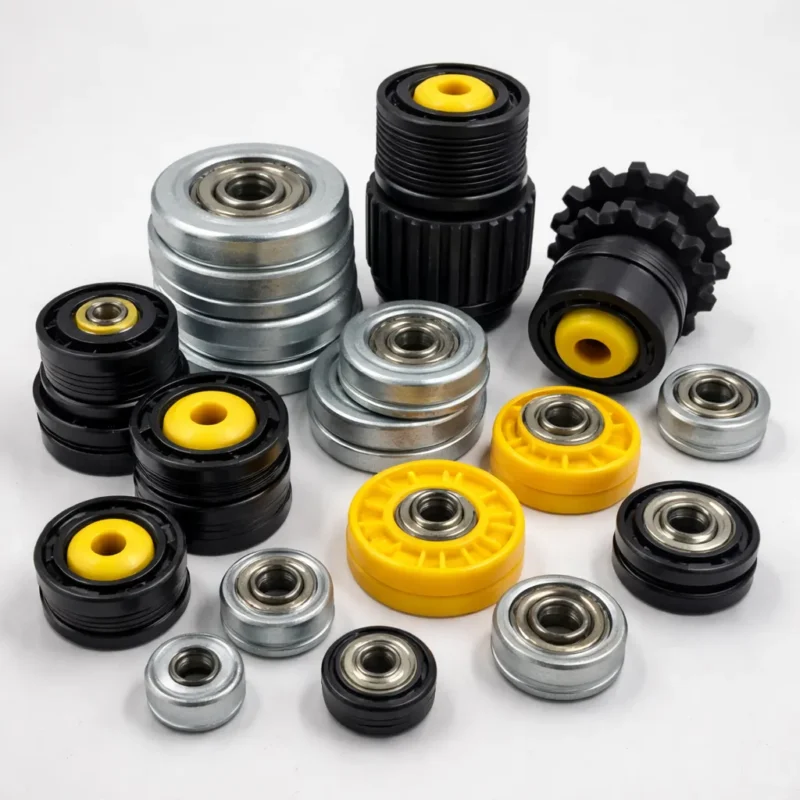
By Bearing Types
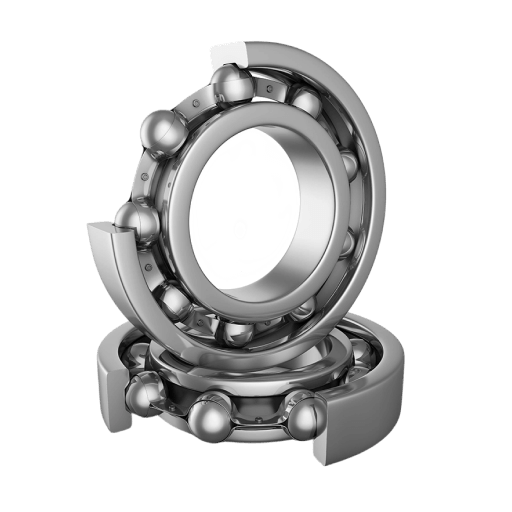
Deep Groove Ball Bearing (Conveyor Roller Bearing)
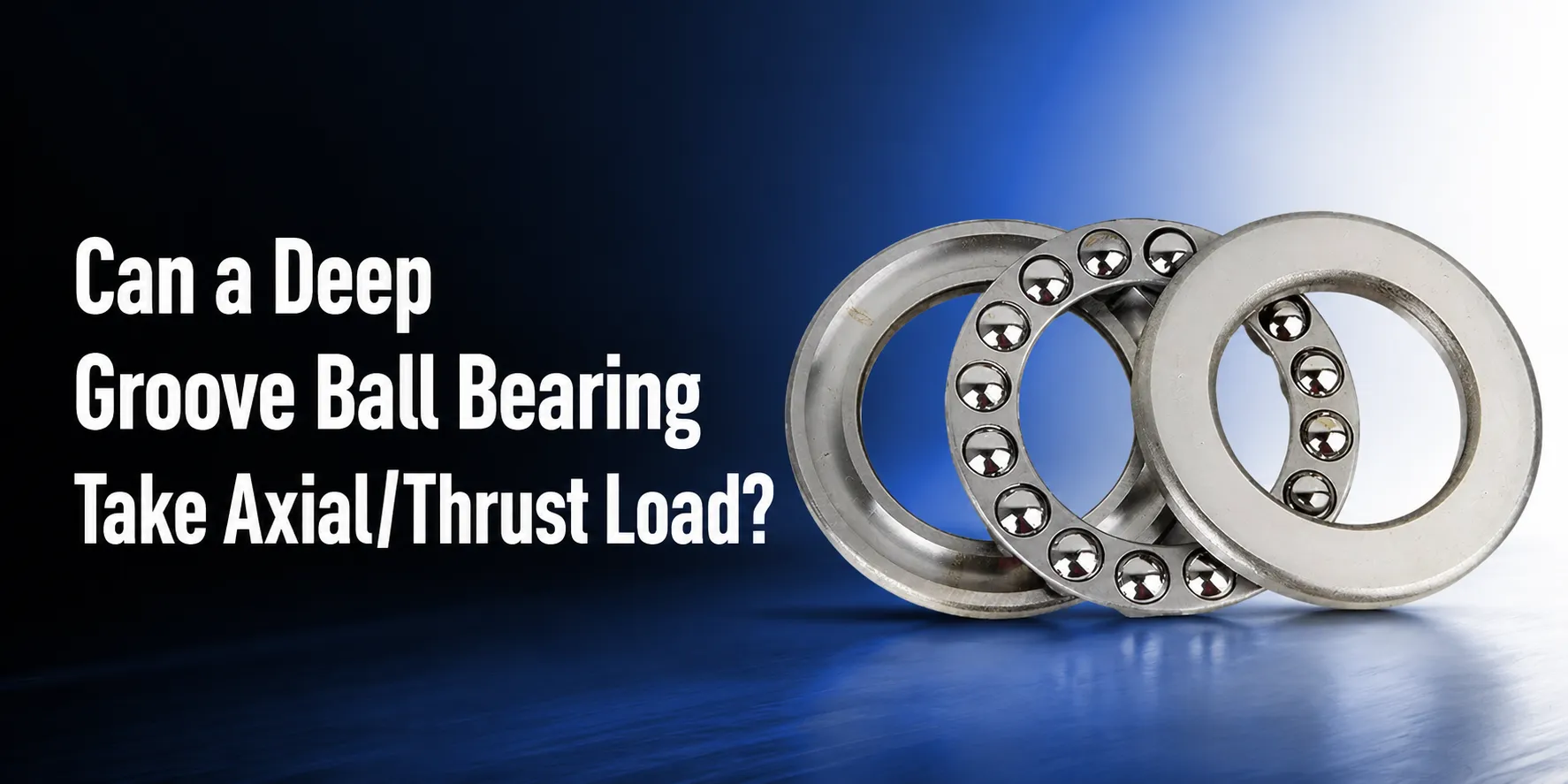
Deep groove ball bearings are the most commonly used bearings in conveyor roller units due to their low friction, smooth rotation, and quiet operation. They are usually pre-sealed and maintenance-free, making them ideal for logistics conveyors, warehouse rollers, packaging lines, and airport baggage systems where continuous rotation and stable performance are required.
Sleeve Bearing (Plain Bearing Conveyor Roller)
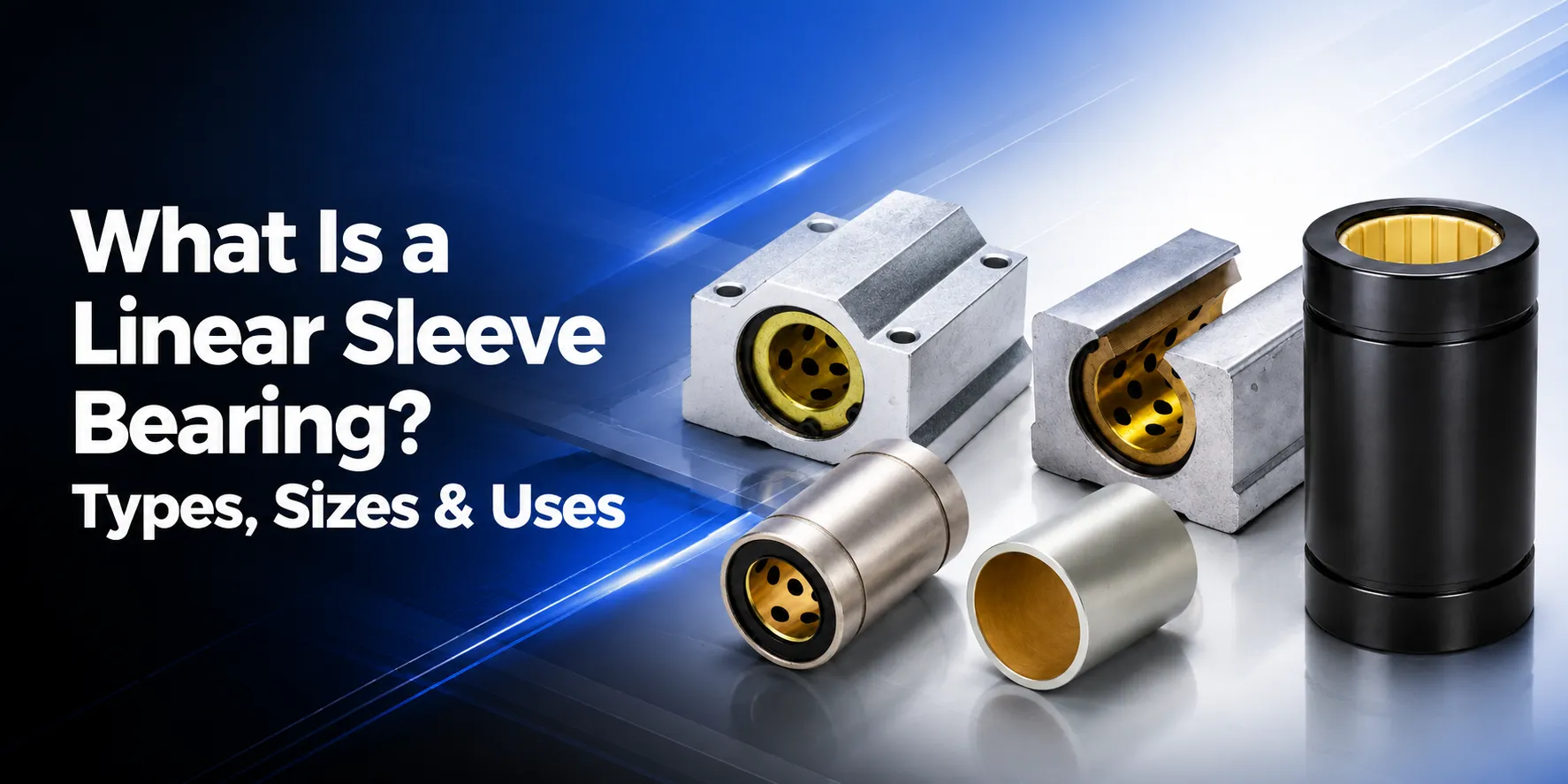
Sleeve bearings use plastic or bronze bushings instead of rolling elements, allowing the roller to rotate directly on the shaft. Their main advantages are simple structure, low cost, corrosion resistance, and very quiet operation. They are mainly used in light-duty gravity conveyors, food processing conveyors, and washdown environments.
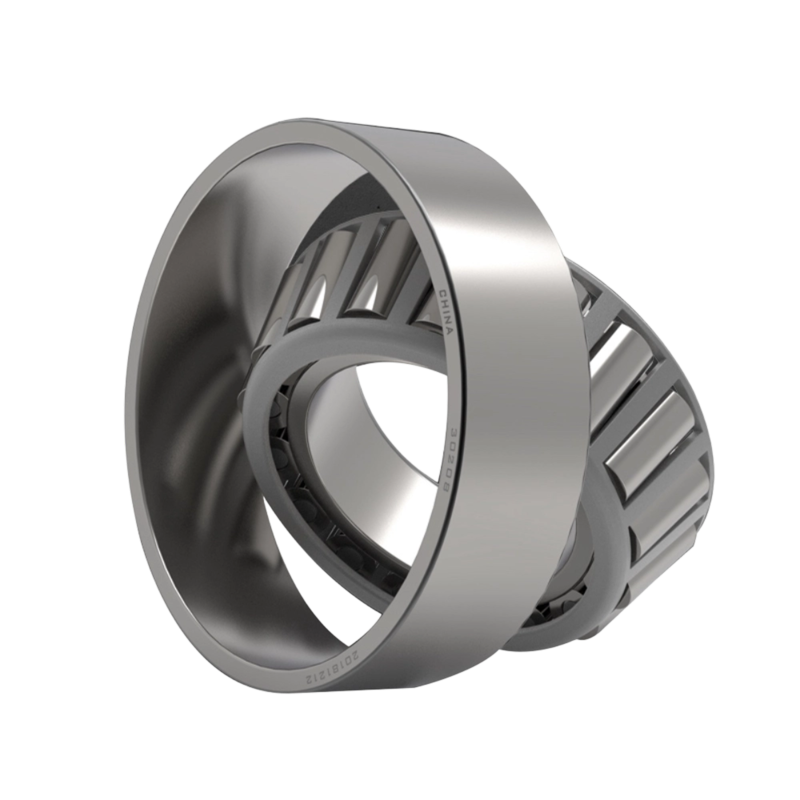
Tapered Roller Bearing (Heavy Duty Conveyor Roller)
Tapered roller bearings are designed for heavy-duty conveyor rollers where both radial and axial loads are present. They have high load capacity and strong impact resistance, making them suitable for pallet conveyors, inclined conveyors, mining conveyors, and bulk material handling systems.
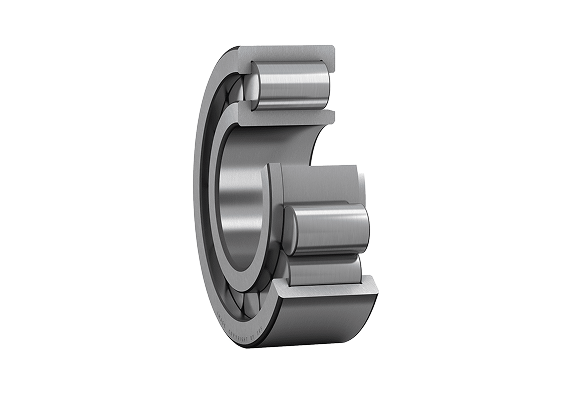
Cylindrical Roller Bearing (Heavy Load Conveyor Roller)
Cylindrical roller bearings provide very high radial load capacity due to line contact between rollers and raceways. They are suitable for heavy industrial conveyor rollers operating under heavy loads and shock conditions, such as steel plants, cement plants, and mining conveyor systems.
Part 5. Applications of Conveyor Roller Bearings
Conveyor roller bearings are widely used in material handling and conveyor systems where rollers rotate around a fixed shaft to move products or materials. Different bearing types are selected based on load, speed, environment, and conveyor design.
Typical applications include:
- Gravity conveyors
- Roller conveyors
- Warehouse logistics systems
- Packaging lines
- Sorting systems
- Manufacturing assembly lines
- Airport baggage conveyors
- Food processing conveyors
Part 6. How to Select a Conveyor Roller Bearing?
To select the correct conveyor roller bearing for your application, several key factors must be considered. Conveyor roller bearing units are selected based on roller tube diameter, tube wall thickness, shaft size, bearing type, load, speed, environment, and sealing requirements rather than standard ISO bearing numbers.
Key selection factors include:
- Bearing type (ball bearing, sleeve bearing, tapered roller bearing, etc.)
- Roller tube outside diameter
- Tube wall thickness
- Shaft size (round or hex)
- Load capacity
- Bearing material (steel / stainless steel / plastic)
- Seal type
- Noise requirement
- Operating environment (dust, moisture, chemicals, temperature)
Part 7. Why BKZ Industry Is a Reliable Conveyor Roller Bearing Supplier in China?
After understanding conveyor roller bearings, the next step is choosing a reliable manufacturer. BKZ Industry is a manufacturer you can rely on. We have been working in bearing production for over 15 years and have more than 50 engineers focusing on industrial bearing applications, including conveyor roller bearing solutions.
We not only supply standard bearings, but also help customers select the correct bearing types based on conveyor roller tube size, shaft size, load, speed, and working environment.
For conveyor roller applications, we supply deep groove ball bearings, sleeve bearings, tapered roller bearings, cylindrical roller bearings, and customized bearing units used in gravity conveyors, logistics conveyors, heavy-duty conveyors, mining conveyors, and pallet conveyor systems. We support both standard bearing supply and OEM conveyor roller bearing production.
With manufacturing experience, engineering support, and stable quality control, BKZ Industry helps conveyor roller manufacturers, conveyor system companies, and industrial equipment manufacturers reduce maintenance, improve roller service life, and improve conveyor system reliability. Contact us now to get the detailed information.
Also Read: What is a Carrier Bearing? Functions, Types, Bad Signs, and Replacement
Part 8. FAQs About Conveyor Roller Bearings
The bearing housing for a conveyor roller is the outer component that holds the bearing and allows the assembly to be press-fitted into the roller tube. It supports the bearing, keeps alignment between the shaft and roller, and protects the bearing from dust, debris, and moisture. Conveyor roller bearing housings are typically made from steel, zinc-plated steel, polypropylene, or nylon depending on load, environment, and noise requirements.
Common materials used for conveyor roller bearings include:
Carbon steel – Used for bearing rings and rolling elements, provides high strength and load capacity.
Stainless steel – Used in food processing, washdown, and corrosive environments.
Zinc plated steel – Provides corrosion resistance for general industrial conveyors.
Polypropylene housing – Lightweight, corrosion resistant, and low noise.
Acetal sleeve – Used in sleeve bearings for low friction and maintenance-free operation.
Nylon / plastic housing – Used for light-duty conveyors and quiet operation.
Material selection depends on load, environment, corrosion resistance, and noise requirements.
Conveyor roller bearings usually do not use standard ISO bearing numbers as complete assemblies. Instead, they are typically identified by roller tube diameter, tube wall thickness (gauge), shaft size, and bearing type.
However, the internal bearing used inside the conveyor roller bearing unit may be a standard ISO bearing, such as a deep groove ball bearing from the 6000 or 6200 series. The complete conveyor roller bearing assembly itself is usually assigned a manufacturer part number rather than an ISO bearing number.
Conclusions
Conveyor roller bearings are specially designed bearing units for conveyor rollers, providing smooth rotation, reliable operation, and long service life. Compared with standard bearings, they are more integrated, easier to install, and optimized specifically for conveyor systems.
The selection of conveyor roller bearings depends on bearing type, roller tube size, shaft size, load, speed, materials, sealing, and operating environment.
BKZ Industry provides conveyor roller bearing solutions for conveyor roller manufacturers and conveyor system companies. Contact us now to negotiate now.