Before We Begin:
If you are an OEM purchaser, distributor, wholesaler, or industrial buyer looking for pilot bearings, throwout bearings, clutch release bearings, or other automotive bearings, Contact BKZ Industry . With 15 years of bearing manufacturing experience, BKZ Industry can supply standard and customized bearing solutions for automotive, industrial, and replacement applications. Send us your bearing number, dimensions, drawings, or application requirements, and our team will help you find the suitable bearing solution.
Pilot bearings and throwout bearings are both related to clutch operation in automotive manual transmission applications. Because both parts may produce noise during clutch pedal operation, many people confuse them when trying to identify which bearing is bad.
Before comparing their noise differences, it is important to first understand what pilot bearings and throwout bearings are, where they are located, and how they work in the clutch system.
Part 1. Pilot Bearing vs Throwout Bearing: Key Difference
If you want to understand their difference quickly, you can go through this complete comparison table for pilot bearings and throwout bearings.
| Bearing Type | Pilot Bearing | Throwout Bearing |
| Position | Rear bore of the crankshaft or center bore of the flywheel | Inside the bell housing, around the transmission input shaft area, near the pressure plate diaphragm spring |
| Function | Supports and locates the front end of the transmission input shaft | Transfers clutch release force to the diaphragm spring to release the clutch |
| Work Principle | The input shaft front tip fits into the pilot bearing, allowing support and relative rotation | Moves toward the engine side and presses the diaphragm spring when the clutch pedal is pressed |
| Load Capacity | Mainly supports radial load from the input shaft front end | Mainly carries axial release force from the clutch fork or hydraulic system |
| Types | Needle roller pilot bearing, ball-type pilot bearing, pilot bushing | Mechanical release bearing, hydraulic release bearing, self-aligning release bearing |
| Appearance | Small bearing or bushing | Larger ring-shaped bearing assembly |
| Signs of Bad Bearings | Grinding or whirring noise, hard shifting, clutch drag, input shaft vibration | Whining, chirping, or growling noise when pressing the clutch pedal, rough pedal feel |
From this table, you can get a general idea of their differences. If you want to understand these bearings more clearly, continue reading. I will first explain what pilot bearings and throwout bearings are. .
Part 2. Throwout Bearing vs Pilot Bearing: What They Are?
So what is pilot bearing and throwout bearing? I will explain them here in detail.
What is Pilot Bearing?
In automotive applications, pilot bearing or pilot bushing is sometimes called flywheel bearing by many people, but this name is not technically accurate. A pilot bearing is usually installed in the rear bore of the crankshaft or in the center bore of the flywheel, depending on the vehicle design.
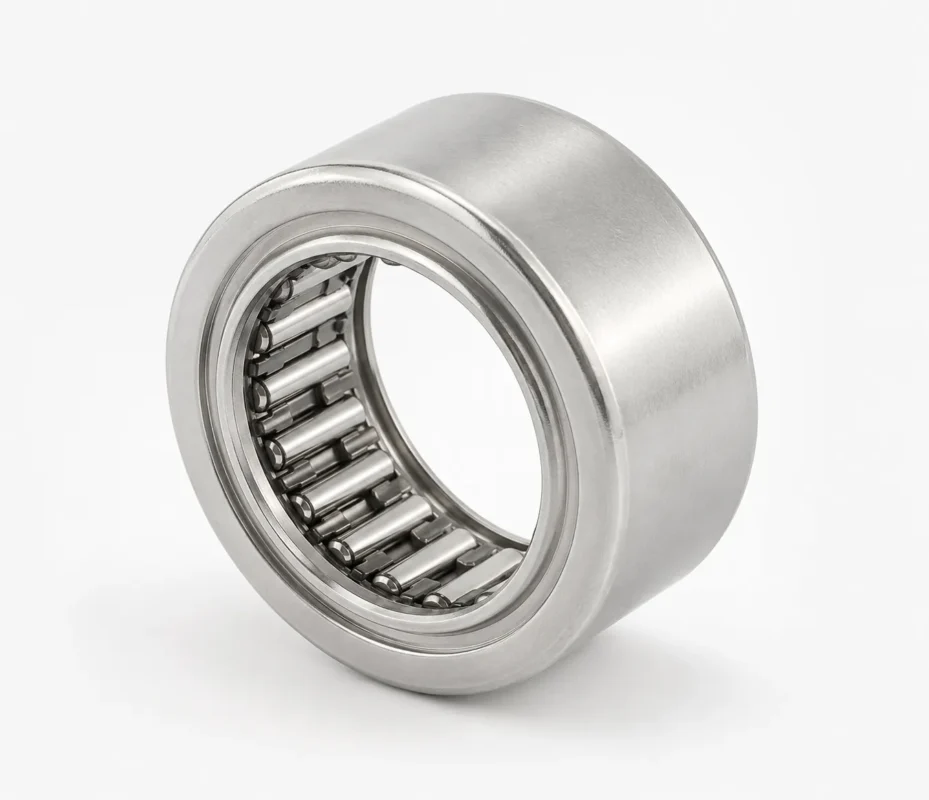
Although the pilot bearing is located at the rear end of the crankshaft or in the center of the flywheel, its function is not to support the crankshaft or the flywheel.
The crankshaft is already supported by the engine main bearings inside the engine block. These main bearings carry the crankshaft load and allow the crankshaft to rotate smoothly. Therefore, the pilot bearing is not needed to support the crankshaft.
The flywheel is bolted directly to the rear flange of the crankshaft and rotates together with the crankshaft. It does not rotate independently from the crankshaft, so it does not need a separate bearing between the flywheel and crankshaft.
The real function of the pilot bearing is to support and locate the front end of the transmission input shaft. The front end of the input shaft extends into the rear center area of the crankshaft or flywheel, so the pilot bearing is placed there to keep the input shaft aligned with the crankshaft centerline.
So how does a pilot bearing work?
When the clutch is engaged, the crankshaft, flywheel, clutch disc, and transmission input shaft usually rotate together at almost the same speed. In this condition, there is little relative speed between the engine side and the transmission input shaft.
However, When the driver presses the clutch pedal, the clutch disc is released from the flywheel. The crankshaft and flywheel continue rotating with the engine, but the transmission input shaft may slow down, stop, or rotate at a different speed. At this moment, the pilot bearing allows relative rotation between the engine side and the transmission input shaft while still supporting the front end of the input shaft.
What is Throwout Bearing?
A throwout bearing, also called a clutch release bearing or release bearing, is an important component in a manual transmission clutch assembly.
The throwout bearing is located inside the bell housing, also called the clutch housing, between the engine and the gearbox. It is usually mounted around the transmission input shaft and slides on the input shaft guide sleeve. The guide sleeve provides a stable sliding surface for the throwout bearing and is usually fixed to the front housing of the gearbox or the input shaft bearing retainer.
The throwout bearing is positioned at the front side of the gearbox and faces the diaphragm spring of the pressure plate. Its job is to move toward the engine side and press the diaphragm spring when the clutch pedal is depressed.
So how does the throwout bearing work in actual driving conditions?
When the driver does not press the clutch pedal, the clutch is engaged. The flywheel and pressure plate clamp the clutch disc tightly. Because the clutch disc is connected to the transmission input shaft by splines, engine power is transferred from the crankshaft to the flywheel, then to the clutch disc, and finally to the transmission input shaft.
When the driver presses the clutch pedal, the clutch fork or hydraulic release system pushes the throwout bearing toward the engine side. The throwout bearing contacts and presses the diaphragm spring of the pressure plate. This releases the clamping force on the clutch disc, so the clutch disc is no longer locked between the flywheel and the pressure plate. Once the clutch disc is released, the engine and gearbox are temporarily disconnected, and power transmission to the gearbox is interrupted.
You May Also Like: What is a Pinion Bearing? Functions, Types, Signs of Failure, Etc
Part 3. Pilot Bearing vs Throwout Bearing: Types
Pilot bearings and throwout bearings can have different designs depending on the vehicle, clutch structure, transmission design, and working requirements. In general, their common types include the following.
Pilot Bearing Types
Pilot bearings are usually divided into two main types:
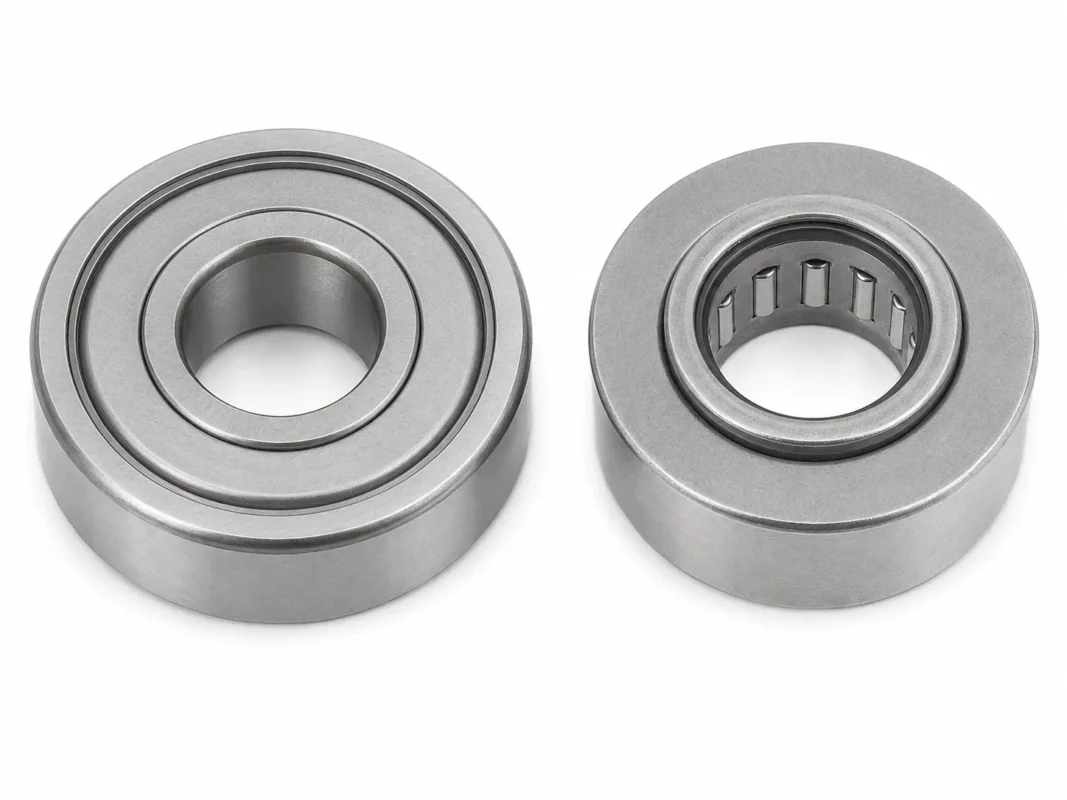
1. Pilot Rolling Bearings
Pilot rolling bearings use rolling elements to reduce friction. Common designs include needle roller pilot bearings and small ball-type pilot bearings.
Needle roller pilot bearings are very common because they can support radial load in a compact space. Ball-type pilot bearings may also be used in some applications, depending on the vehicle design.
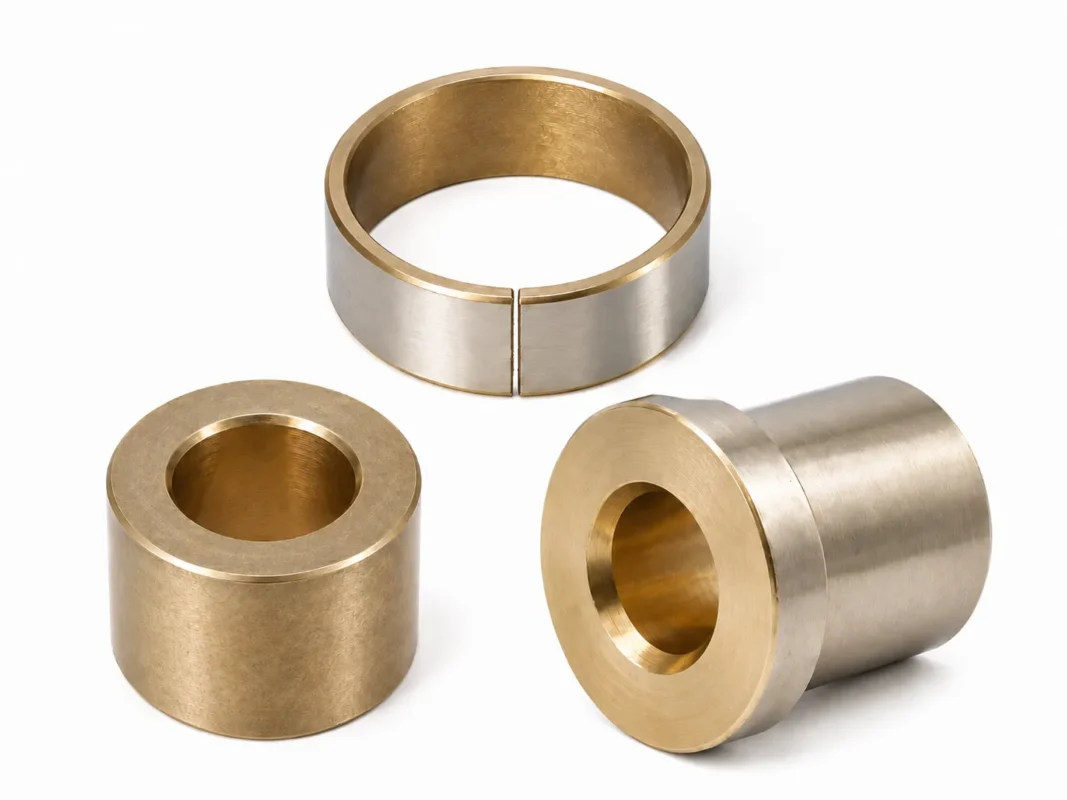
2. Pilot Bushings
Pilot bushings do not use rolling elements. They are plain bushings that support the front end of the transmission input shaft through sliding contact. They are commonly made from bronze, sintered metal, or other self-lubricating materials. Compared with rolling pilot bearings, pilot bushings are simpler in structure, but they still provide the same basic function: supporting and aligning the transmission input shaft with the crankshaft.
Throwout Bearing Types
Throwout bearings can be classified by their operating structure and release system design. Common types include:
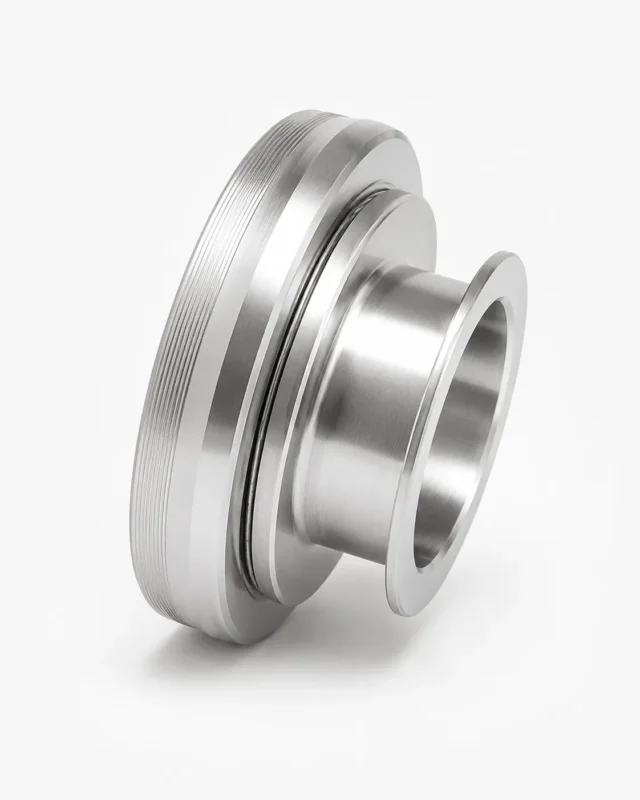
1. Mechanical Throwout Bearings
Mechanical throwout bearings are operated by a clutch fork, cable, or mechanical linkage. When the driver presses the clutch pedal, the linkage or fork moves the bearing forward to press the diaphragm spring of the pressure plate.
2. Hydraulic Release Bearings
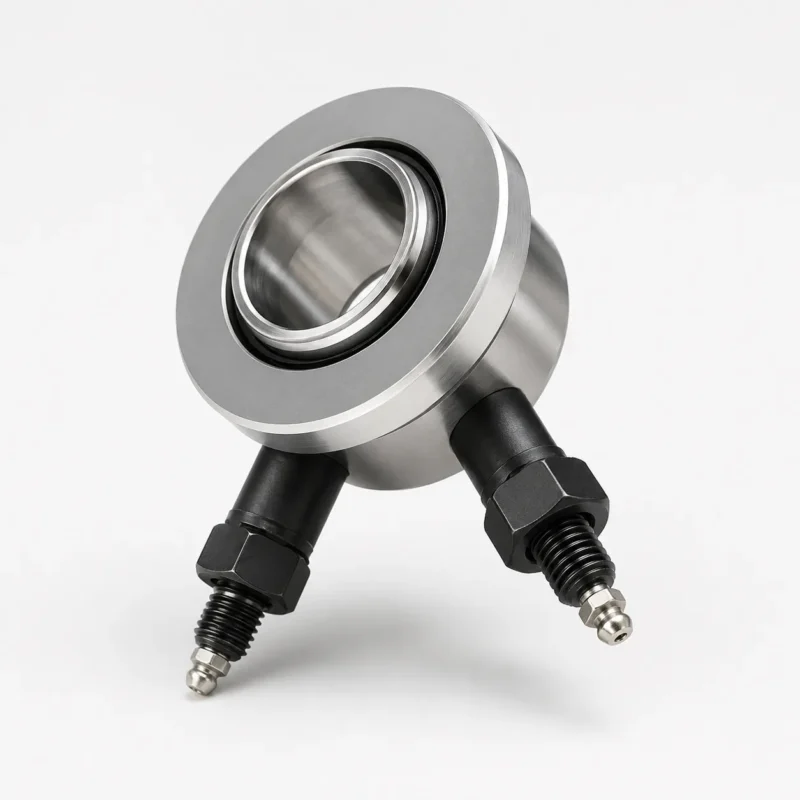
Hydraulic release bearings use hydraulic pressure to move the bearing. In many modern vehicles, the release bearing and hydraulic slave cylinder are combined into one unit, often called a concentric slave cylinder or hydraulic release bearing.
3. Self-Aligning Throwout Bearings
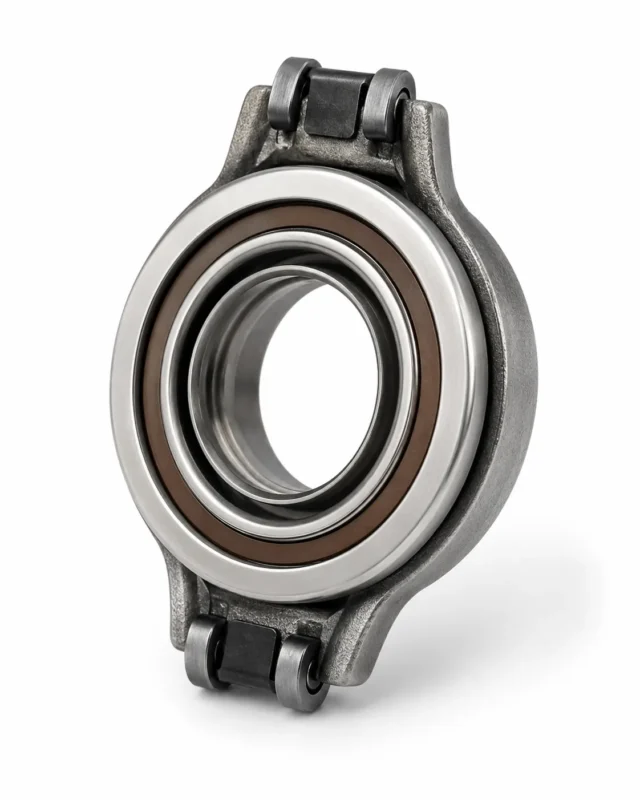
Self-aligning throwout bearings are designed to compensate for small alignment errors between the bearing, input shaft, and diaphragm spring. This helps reduce uneven contact, noise, and premature wear.
4. Ball-Type Clutch Release Bearings
Many throwout bearings use ball bearing structures inside because they need to handle axial release force while contacting a rotating diaphragm spring. However, they are usually described as clutch release bearings or throwout bearings, not simply as standard deep groove ball bearings.
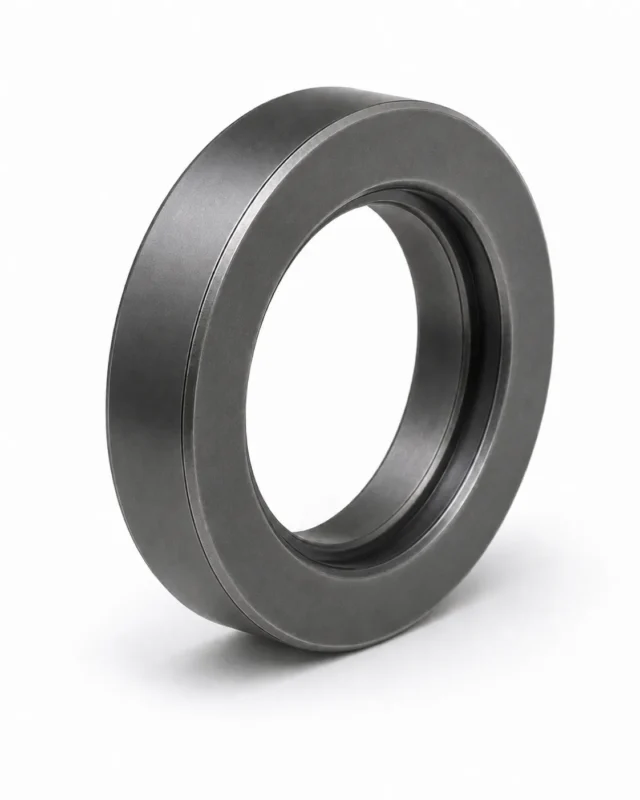
From the information above, you can see that pilot bearings and throwout bearings are different in both type and appearance.
Also Read: What is a Carrier Bearing? Functions, Types, Bad Signs, and Replacement
Part 4. Pilot Bearing vs Throwout Bearing Noise
After understanding the pilot bearing and throwout bearing, the next question is how to tell which bearing may be bad by the noise.
Both pilot bearings and throwout bearings can make whining, grinding, squealing, chirping, or whirring noises when they are worn, dry, or damaged. So the noise type alone is not always enough to identify the failed bearing. The more important clue is when the noise appears.
A bad throwout bearing usually makes noise when the clutch pedal is pressed. This is because the throwout bearing starts working when it is pushed toward the pressure plate and contacts the diaphragm spring. A bad throwout bearing may produce whining, growling, squealing, or chirping noise when it is loaded and rotating against the diaphragm spring.
A bad pilot bearing is more likely to be suspected when the noise appears after the clutch pedal is fully pressed, especially when the vehicle is stopped, the engine is running, and the driver is trying to shift into gear. In some cases, the vehicle may also be hard to shift into first gear or reverse because the input shaft is still being dragged by the faulty pilot bearing.
You can first identify the possible problem by the noise timing, then confirm it together with the clutch pedal condition, shifting behavior, and final inspection result.
Ending Note
Pilot bearings and throwout bearings both work in the manual transmission clutch system, but they have different positions and functions. The pilot bearing supports the transmission input shaft, while the throwout bearing helps release the clutch.
When judging bearing noise, the key is not only the sound, but when the noise appears. Noise while pressing the clutch pedal often points to the throwout bearing. Noise, hard shifting, or clutch drag after the pedal is fully pressed may point to the pilot bearing.
If you need pilot bearings, throwout bearings, or other automotive bearings, contact BKZ Industry for suitable bearing solutions.