A fluid bearing, also called a fluid film bearing, is not a rolling bearing because it has no balls or rollers. So what is a fluid bearing, how does it work, and what are the main types? In this article, I will explain the key information you need to know.
After understanding fluid bearings, if you want to buy the bearings you need, you can contact BKZ Industry, a bearing manufacturer with 15 years of bearing experience and ISO 9001 certification.
Part 1. What is Fluid Bearing?
A fluid bearing, also called a fluid film bearing, is a type of plain bearing. It has a thin fluid film between the rotating part and the stationary part. This fluid film separates the shaft and the bearing surface, reduces friction, supports the shaft, and helps the shaft run smoothly in the correct position.
The main function of a fluid bearing is to support the shaft, carry radial or axial loads, reduce friction, and prevent direct metal-to-metal contact during normal operation.
You May Also Like: Anti-Friction Bearing: What It Is, Types, Uses, and More
Fluid Bearing Working Principle
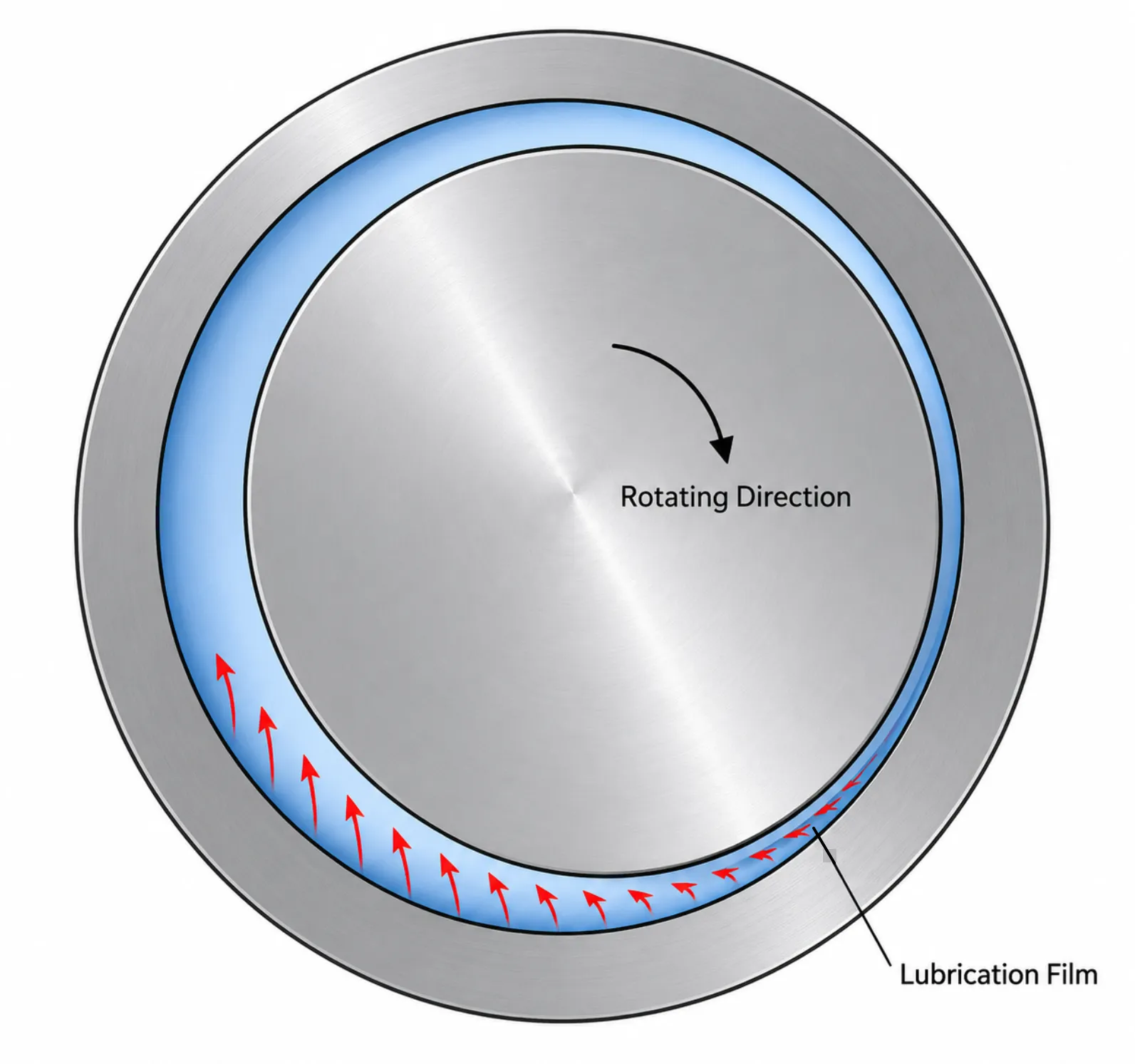
When the shaft rotates, the lubricant between the shaft and the bearing is pulled into a narrow, wedge-shaped space. As more lubricant enters this converging area, pressure is generated in the fluid film. This pressure separates the shaft from the bearing surface and allows the shaft to rotate smoothly with very low friction.
Fluid Bearing Types
Fluid bearings can be divided into different types based on different classification standards. Here are the common categories.
Based on the way the fluid film pressure is generated, fluid bearings can be divided into Fluid dynamic bearing(Hydrodynamic Bearings) and Hydrostatic Bearings
Hydrodynamic Bearings
Hydrodynamic bearings do not need external fluid pressure. The pressure is generated by the relative motion between the shaft and the bearing surface. As the shaft rotates, the lubricant is pulled into the converging clearance and forms a load-supporting fluid film.
Hydrostatic Bearings
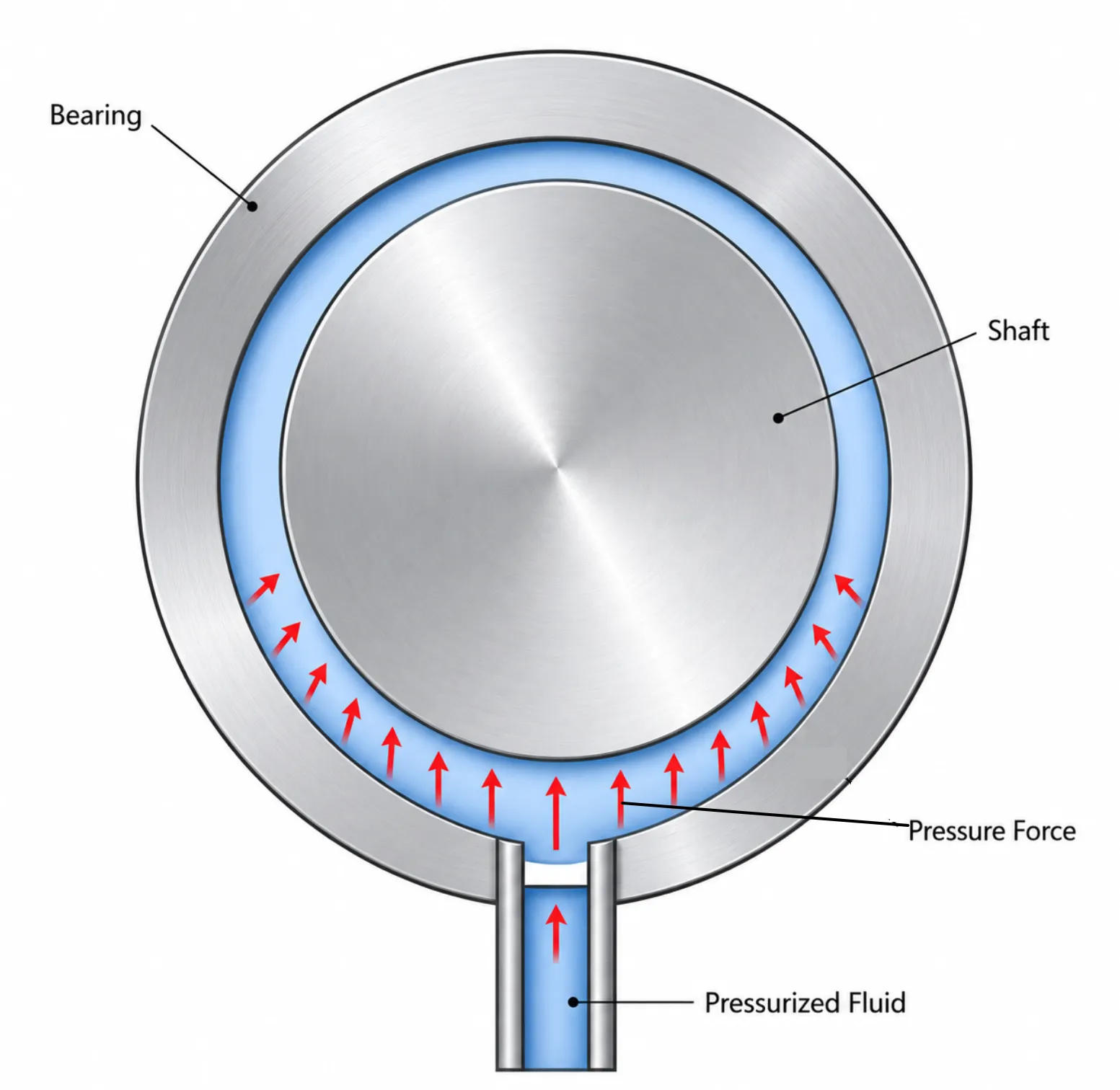
Hydrostatic bearings need an external pressure supply. Oil, water, air, or other fluid is pumped into the clearance between the shaft and the bearing surface. The external pressure helps separate the two surfaces, even when the shaft is not rotating.
Based on the structure and load direction, fluid bearings can be divided into fluid journal bearings and fluid thrust bearings.
Fluid Journal Bearings
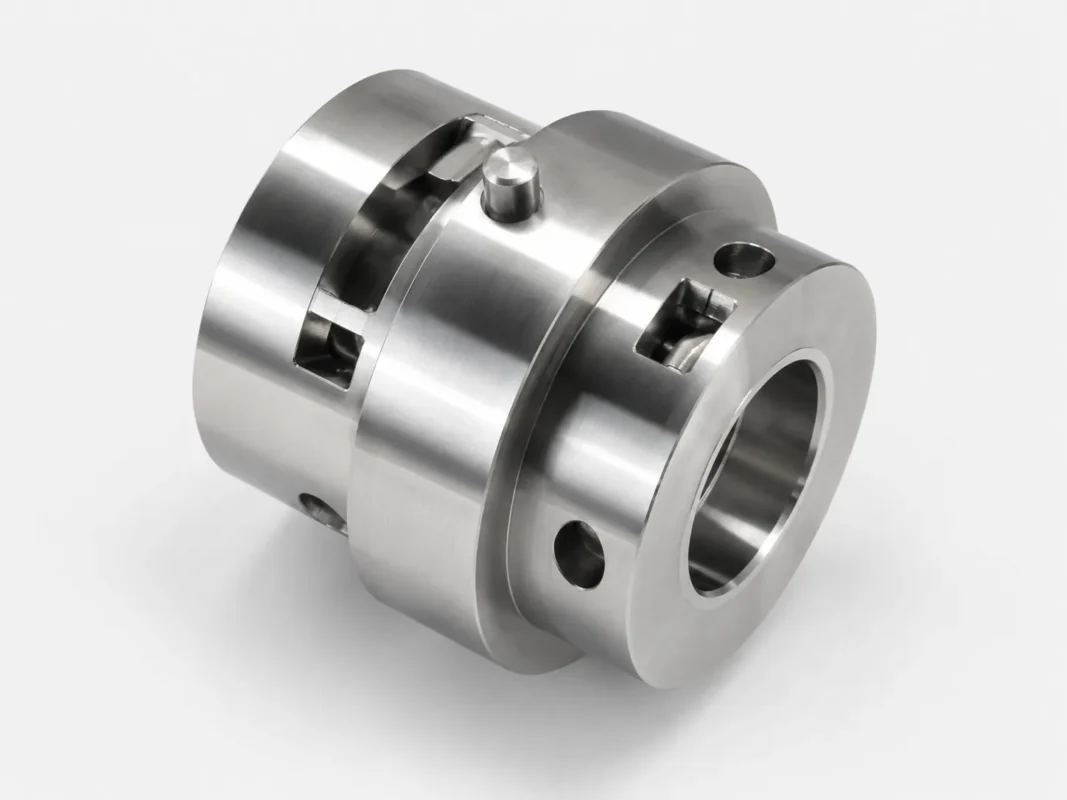
A fluid journal bearing is a fluid bearing with a cylindrical bearing surface. A thin fluid film is formed between the shaft journal and the inner bearing surface during operation. This fluid film separates the shaft from the bearing surface, reduces friction, and supports the rotating shaft. Fluid journal bearings are mainly used to support radial loads.
You May Also Like: What Is a Journal Bearing? Everything You Need to Know
Fluid Thrust Bearings
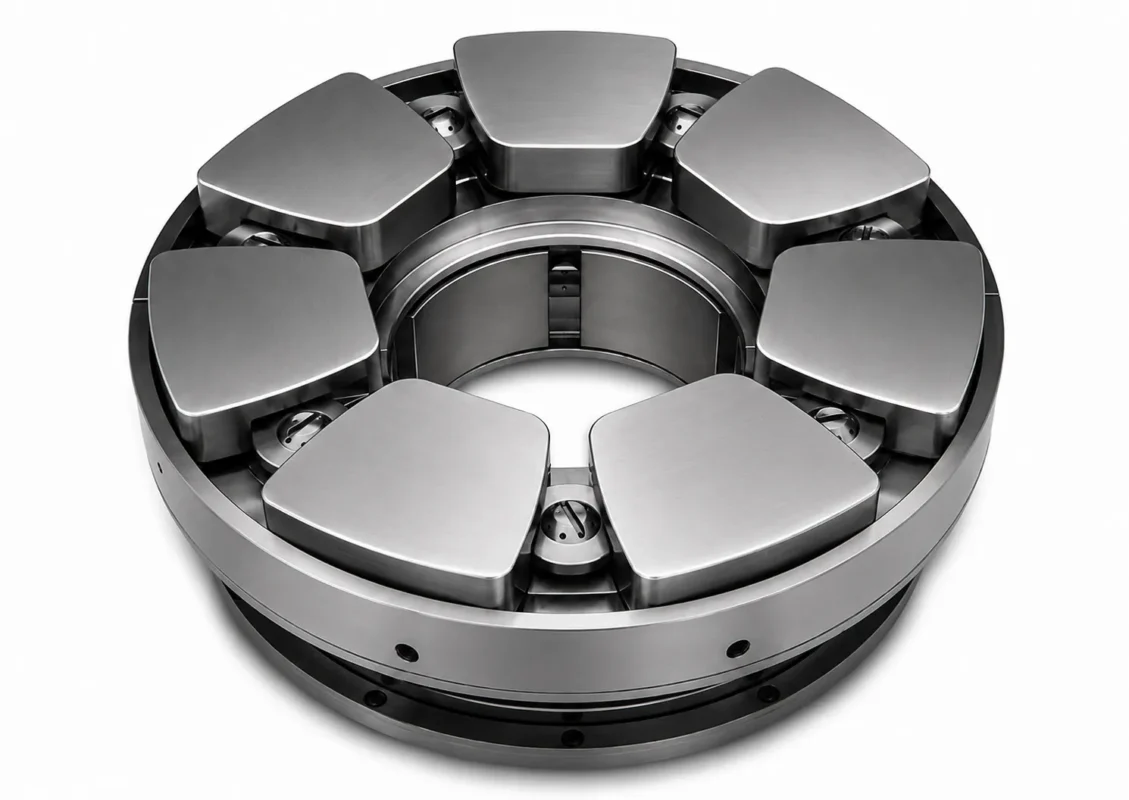
A fluid thrust bearing is designed to support axial loads. It usually has a flat or tilting thrust surface, and a fluid film is formed between the rotating thrust collar or shaft shoulder and the stationary thrust bearing surface. This fluid film separates the two surfaces, reduces friction, and helps carry the axial load smoothly.
Based on the fluid medium, fluid bearings can include:
Oil-lubricated Fluid Bearings
Oil-lubricated fluid bearings use oil as the lubricant. During operation, the oil forms a thin fluid film between the shaft and the bearing surface. This oil film separates the two surfaces, reduces friction, and supports smooth rotation.
Water-lubricated Bearings
Water-lubricated fluid bearings use water as the lubricating medium. The water film separates the shaft from the bearing surface and reduces direct contact during operation.
Air Bearings
Air bearings use a thin film of air to separate the shaft or moving part from the bearing surface. Because there is no liquid lubricant, air bearings can provide very low friction and are often used in high-speed or precision applications.
After learning the basic information about fluid bearings, you may also want to know their advantages and disadvantages.
Advantages of Fluid Bearings
- Very low friction during normal operation with no direct metal-to-metal contact
- Suitable for high-speed operation
- Can support heavy loads
- Long service life with proper lubrication and maintenance
- Lower noise and vibration compared with many rolling bearings
Disadvantages of Fluid Bearings
- Hydrodynamic fluid bearings may have surface contact during start-up and shutdown because the fluid film is not fully formed at low speed and not ideal for very low-speed or frequent start-stop applications.
- Requires proper lubrication or fluid supply
- Needs good shaft alignment and correct clearance
- Some types need a pump, filter, cooling system, or external pressure system
Fluid Bearing Uses
With these advantages and disadvantages, fluid bearings are used in many suitable applications. Common fluid bearing applications include:
- Steam turbines
- Gas turbines
- Compressors
- Centrifugal pumps
- Generators
- Electric motors
- Marine propulsion shafts
- Machine tool spindles
- Turbochargers
- Industrial fans and blowers
Now, you may have a basic understanding of what a fluid bearing is. However, when choosing between a fluid bearing and a ball bearing, you may still find it difficult to make a quick decision. In this section, I will list the key differences between them to help you choose the more suitable bearing type for your application.
Part 2. What is the Difference Between Ball Bearing and Fluid Bearing?
To understand the difference between a ball bearing and a fluid bearing, I can compare them in a table. This will help you understand their features quickly.
| Bearing | Fluid Bearing | Ball Bearing |
| Category | Plain bearing | Rolling bearing |
| Separating or Rolling Medium | Fluid film, such as oil, water, air, or other process fluid | Balls |
| Structure | Bearing surface and fluid film. The bearing itself can be simple. | Outer ring, inner ring, balls, cage, seals or shields, and lubrication |
| Load Capacity | Can support high loads when properly designed, especially in large rotating equipment | Can support radial and axial loads, but load capacity is usually limited by ball contact stress |
| Friction | Very low friction during normal operation because there is no direct metal-to-metal contact | Low friction, but usually higher than fluid bearings in high-speed continuous operation |
| Speed | Suitable for very high-speed operation | Suitable for many speed ranges, but limited in extremely high-speed applications |
| Start-stop Condition | Hydrodynamic fluid bearings are not ideal for frequent start-stop operation because the fluid film may not be fully formed at low speed | More suitable for frequent start-stop operation |
| Lubrication | Requires stable oil, water, air, or other fluid supply | Usually uses grease or oil lubrication |
| Maintenance | May need an oil system, pump, filter, cooling system, and condition monitoring | Easier to install, replace, and maintain |
| Noise and Vibration | Lower noise and vibration during stable operation | Usually higher noise and vibration compared with fluid bearings |
| Service Life | Can have a long service life with proper lubrication, alignment, and maintenance | Has a predictable fatigue life, depending on load, speed, lubrication, and working conditions |
| Cost | Higher initial cost, especially when an external lubrication system is needed | Lower initial cost and widely available |
From the table above, you can see that fluid bearings are more suitable for high-speed, low-noise, heavy-load, and long-service-life applications. Ball bearings are more suitable for frequent start-stop conditions, medium-speed applications, easy installation, and simple maintenance.
Part 3. Where to Buy Fluid Film Bearings?
Now, you may be looking for a fluid film bearing manufacturer, but it is not always easy to find a suitable supplier because fluid film bearings often require customized design and production.
BKZ Industry can help you with fluid film bearing selection and manufacturing. We have 2 factories, ISO 9001 certification, and 15 years of bearing experience. Our engineers can help produce bearings based on your working conditions, drawings, and application requirements.
To get a quotation, you can send us the bearing name, quantity, drawings, shaft size, load, speed, lubrication method, working temperature, and any other information you have. BKZ Industry will help you select the suitable fluid film bearing and provide a cost-effective quotation.
Ending Note
Now, you know what a fluid film bearing is, how it works, and how it differs from a ball bearing. If you cannot find a suitable manufacturer for your fluid film bearings, you can contact BKZ Industry. We can help you manufacture the fluid bearings you need based on your application requirements.