Ceramic bearings and steel bearings are two common bearing options in the market. However, many of you may not clearly understand their differences or know which one is more suitable for your application.
If you are also unsure about the difference between ceramic bearings and steel bearings, or if you do not know how to choose between them, this article will help you make a clearer decision.
In this article, we will compare ceramic bearings and steel bearings from materials, advantages, limitations, bearing types, applications, and selection factors. After reading, you will better understand where each bearing performs well, where each one has limits, and which option may be more suitable for your working conditions.
If you are still not sure how to choose, you can contact BKZ Industry. We can help you select the suitable bearing and provide a quotation based on your speed, load, temperature, environment, and application requirements.
Part 1. Ceramic Bearing vs Steel Bearing: Comparison Chart
I understand that many of you may not have time to read a long article. So before going into the detailed explanation, here is a quick comparison table.
This table shows how ceramic bearings and steel bearings differ in material, friction, speed, load capacity, temperature resistance, corrosion resistance, electrical insulation, cost, bearing types, and typical applications.
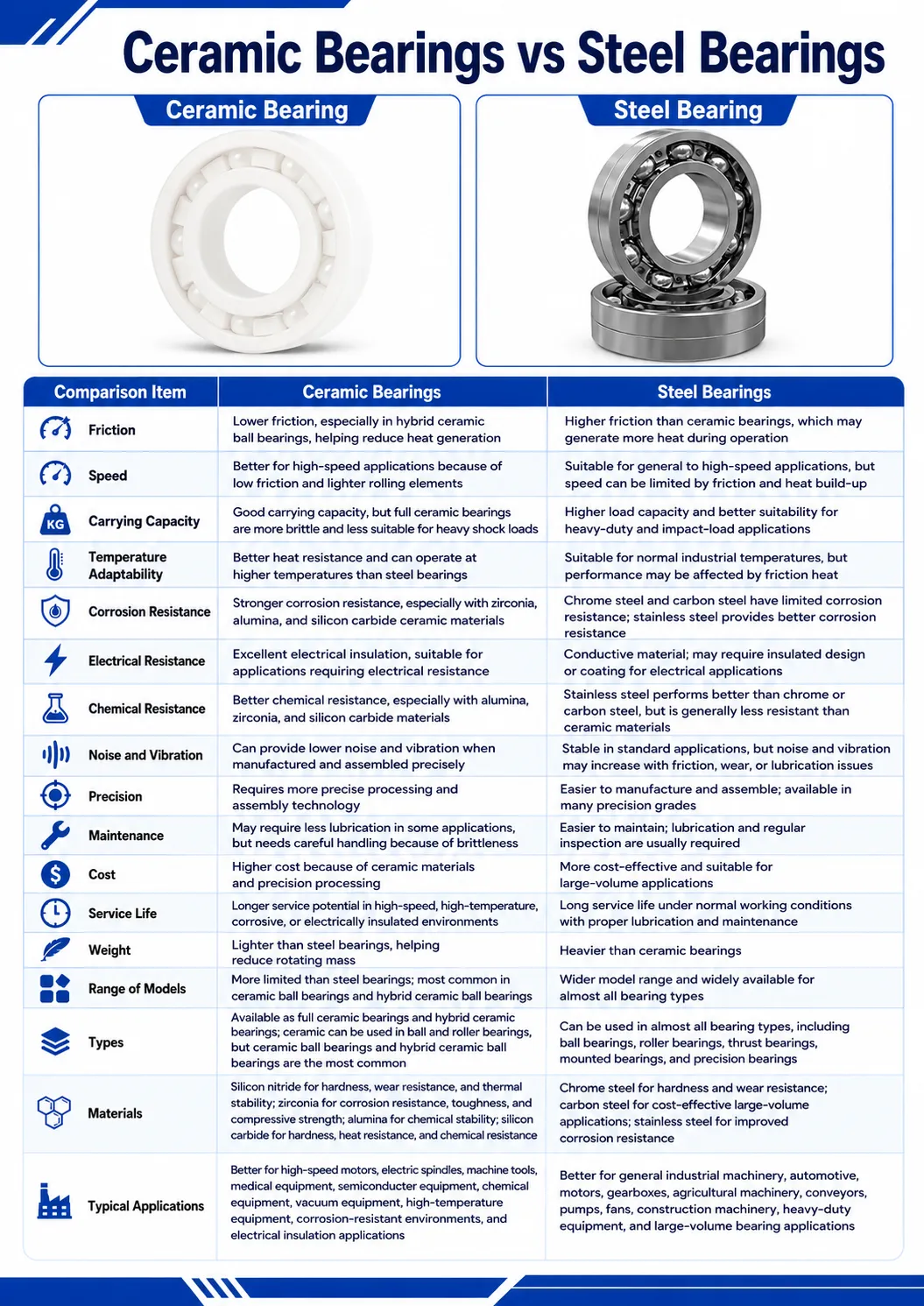
After reviewing the table, you may already have a basic answer. Ceramic bearings are not always better than steel bearings.
Ceramic bearings are better when the working condition needs speed, low friction, heat resistance, corrosion resistance, chemical resistance, electrical insulation, or reduced weight.
Steel bearings are better when the working condition needs heavy load capacity, impact resistance, easy replacement, wide model availability, and lower cost.
Part 2. Ceramic Bearing vs Steel Bearing: Detailed Comparison
The quick comparison table gives the main differences at a glance. However, choosing between ceramic bearings and steel bearings cannot rely only on one table.
A better decision also requires understanding what each bearing is made of, how each material performs, where each bearing has advantages, and where each one has limitations.
This section explains ceramic bearings and steel bearings in more detail, including their materials, advantages, limitations, common types, and typical applications.
What is Ceramic Bearing?
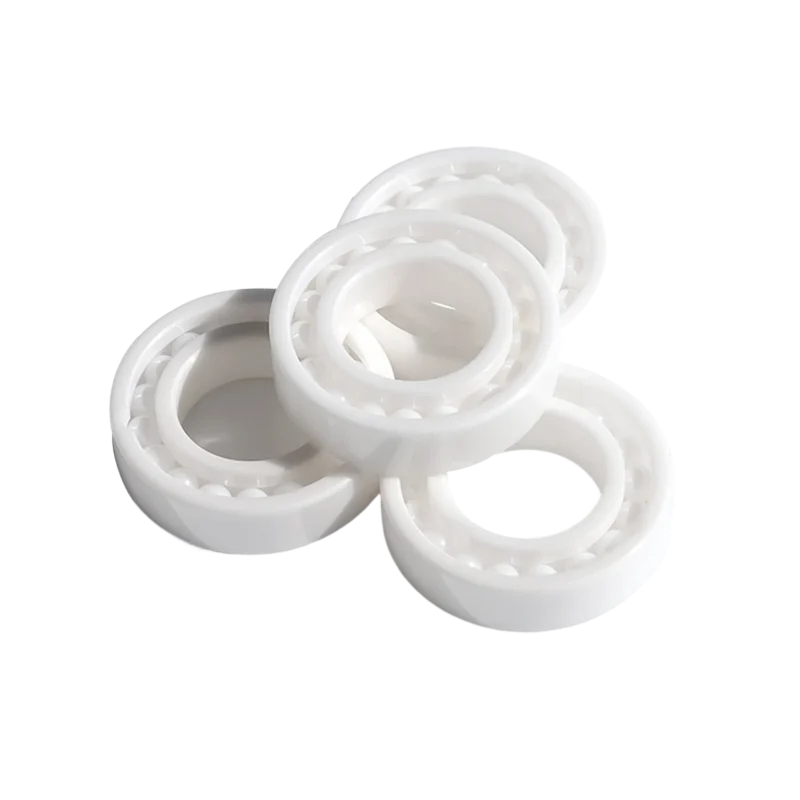
A ceramic bearing is a bearing that uses ceramic materials in some or all of its bearing components. Depending on the design, ceramic materials may be used for:
- Rolling elements
- Inner ring
- Outer ring
- The whole bearing structure
Common Ceramic Bearing Materials
Ceramic bearings can be made from different ceramic materials. Each material has its own characteristics.
| Ceramic Material | Main Characteristics | Common Use |
| Silicon Nitride (Si₃N₄) | Excellent hardness, wear resistance, low density, and thermal stability. | Commonly used in hybrid ceramic bearings, high-speed bearings, electric motors, and machine tool spindle bearings. |
| Zirconia (ZrO₂) | Good corrosion resistance, toughness, and compressive strength. | Often used in full ceramic bearings for corrosive or special environments. |
| Alumina (Al₂O₃) | Stable chemical properties and good overall performance in corrosive or special working conditions. | Used in chemical, corrosion-resistant, and special industrial applications. |
| Silicon Carbide (SiC) | High hardness, heat resistance, wear resistance, and chemical resistance. | Suitable for demanding chemical and high-temperature environments. |
Advantages of Ceramic Bearings
Ceramic bearings have several important advantages.
Lower Friction
Ceramic rolling elements usually have lower friction than steel rolling elements. This can help reduce heat generation and improve running efficiency, especially in high-speed applications.
Better High-Speed Performance
Ceramic rolling elements are lighter than steel rolling elements. Lower weight means lower centrifugal force during high-speed rotation. That is why ceramic bearings, especially hybrid ceramic ball bearings, are often used in high-speed motors, electric spindles, CNC machine tools, and precision rotating equipment.
Better Heat Resistance
Ceramic materials usually have better heat resistance than standard bearing steel. This makes ceramic bearings suitable for applications where friction heat, process heat, or environmental temperature may affect normal steel bearings.
Good Corrosion Resistance
Ceramic materials such as zirconia, alumina, and silicon carbide have strong corrosion resistance. This is useful in chemical processing, food equipment, marine equipment, humid environments, and other applications where ordinary steel may rust or corrode.
Electrical Insulation
Ceramic materials are non-conductive. This is important for electric motors, generators, and other electrical equipment where current may pass through the bearing and damage the raceways. Hybrid ceramic bearings can help reduce electrical erosion and bearing fluting.
Lighter Weight
Ceramic rolling elements are lighter than steel rolling elements. This can reduce rotating mass, improve high-speed performance, and reduce heat generation in suitable applications.
Limitations of Ceramic Bearings
Although ceramic bearings offer many advantages, they are not suitable for every application. Their main limitations should be considered when selecting the right bearing.
Higher Cost
Ceramic bearings are usually more expensive than steel bearings. The material cost is higher, and the manufacturing process requires more precise grinding, polishing, inspection, and assembly.
More Brittle Than Steel Bearings
Ceramic materials are very hard, but they are also more brittle than steel. This means full ceramic bearings may not be suitable for heavy shock loads, impact loads, or poor installation conditions.
Higher Requirements for Processing and Assembly
Ceramic bearings require precise processing and assembly technology. For high-speed or precision applications, bearing quality, tolerance, cage design, lubrication, mounting accuracy, and preload control all matter.
Not Always Suitable for Heavy-Duty Applications
If the application involves heavy loads, shock loads, vibration, or dirty working conditions, steel bearings may be more practical. Ceramic bearings are usually selected when their special material advantages solve a specific problem.
Types of Ceramic Bearings
Ceramic bearings are mainly divided into two types:
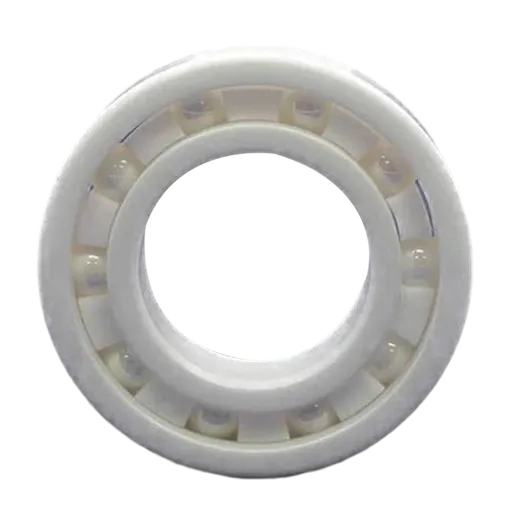
- Full Ceramic Bearings
Full ceramic bearings use ceramic materials for the rings and rolling elements. They are often selected for corrosive, high-temperature, non-magnetic, or electrically insulated environments.
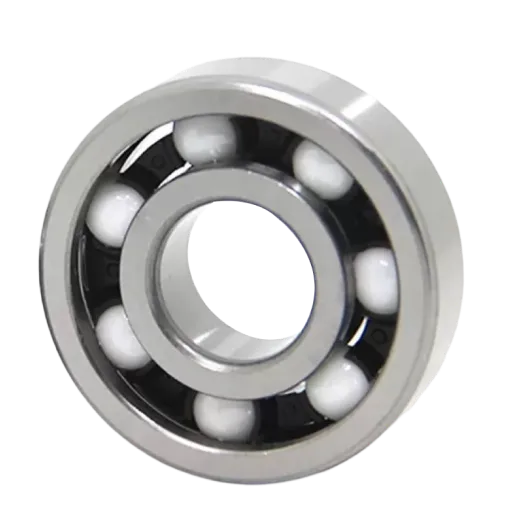
- Hybrid Ceramic Bearings
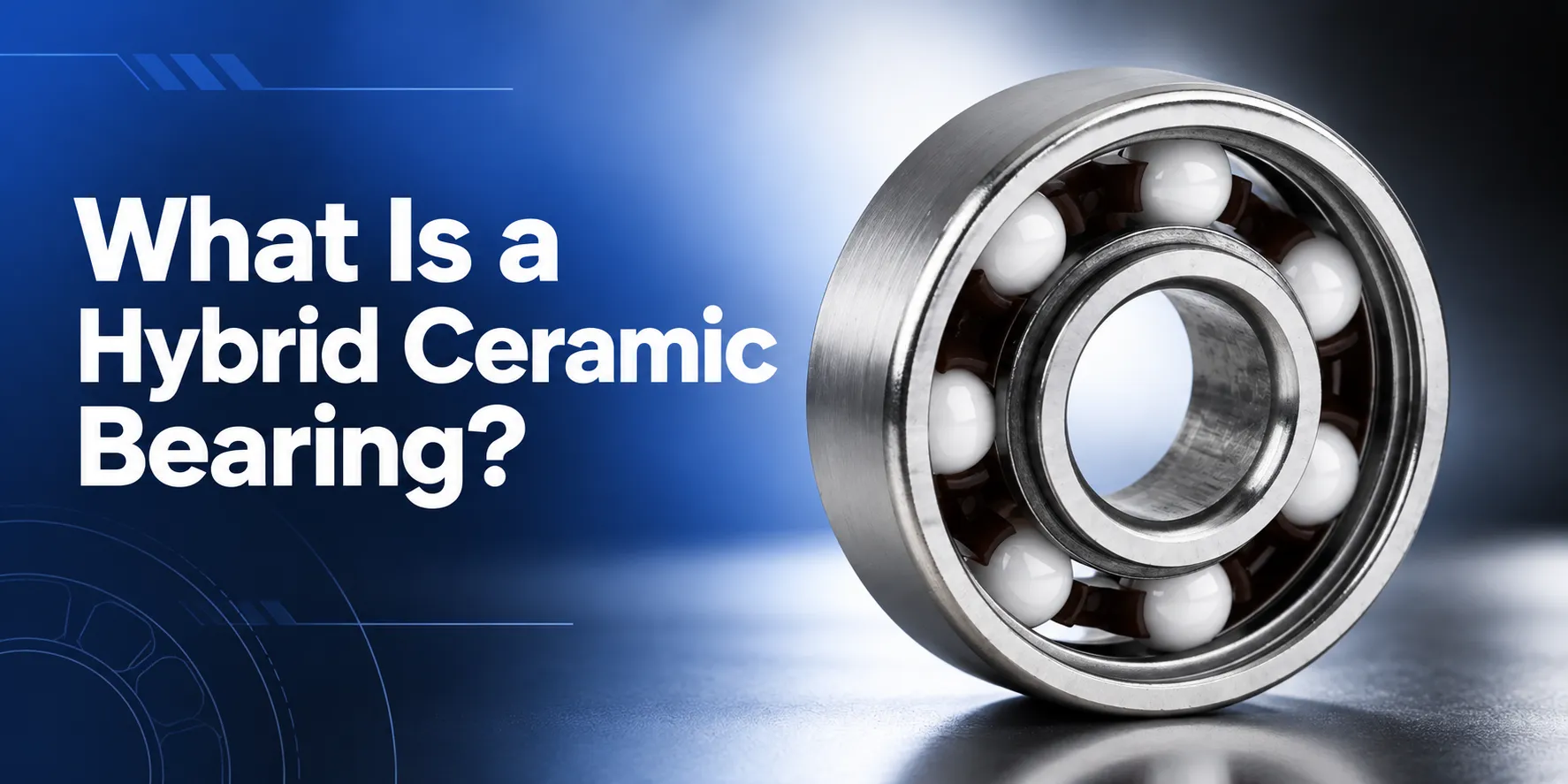
Hybrid ceramic bearings usually use ceramic rolling elements and steel bearing rings. For example, hybrid ceramic ball bearings often use ceramic balls with steel inner and outer rings. They are commonly used in high-speed motors, electric spindles, machine tools, and precision equipment.
Ceramic materials can be used in both ball bearings and roller bearings. However, in real applications, ceramic ball bearings and hybrid ceramic ball bearings are the most common.
Typical Applications:
Ceramic bearings are commonly used where steel bearings may be limited by speed, heat, corrosion, electrical current, or lubrication conditions. Typical applications include:
| Industry / Application | Why Ceramic Bearings Are Used |
| Machine Tools | Support high-speed spindles, reduce heat generation, and improve machining stability. |
| Aerospace | Reduce weight, improve speed performance, and support demanding operating conditions. |
| Electric Motors | Provide electrical insulation and reduce the risk of current-related bearing damage. |
| Medical Equipment | Support precision rotation, low noise, corrosion resistance, and clean operation. |
| Chemical Processing | Resist corrosion and chemical attack better than standard steel bearings. |
| Food and Beverage Equipment | Improve corrosion resistance in washdown or humid environments. |
| Marine Equipment | Resist moisture, salt, and corrosion better than ordinary steel bearings. |
| Bicycles and Skateboards | Reduce friction and improve rolling performance, especially in high-quality bearing designs. |
What is Steel Bearing?
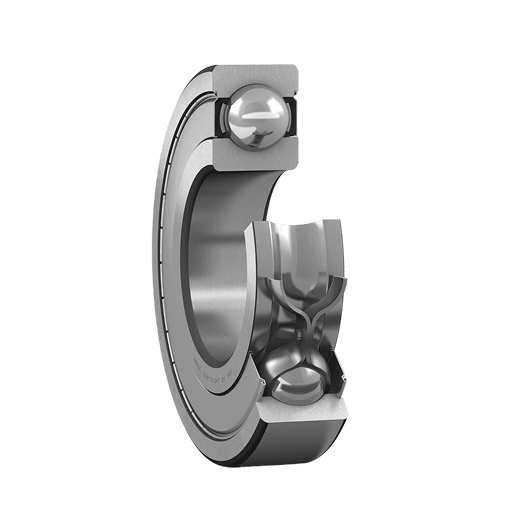
A steel bearing is a bearing made mainly from steel materials. Steel bearings are the most widely used bearing type because they offer strong load capacity, stable performance, easy maintenance, wide availability, and good cost-effectiveness. Steel bearings are used in almost every industry.
Common Steel Bearing Materials
Steel bearings can be made from different steel materials, including:
- Chrome Steel: Provides excellent hardness, wear resistance, and fatigue strength. It is one of the most common materials for bearing rings and rolling elements.
- Carbon Steel: Offers a better price-performance ratio and is often used for cost-sensitive or large-volume bearing applications.
- Stainless Steel: Provides better corrosion resistance than chrome steel and carbon steel, making it suitable for humid, washdown, or mildly corrosive environments.
Advantages of Steel Bearings
Steel bearings have several major advantages:
1. Strong Load Capacity
Steel bearings are strong and tough. They can handle heavy radial loads, axial loads, and combined loads depending on the bearing type. This is why steel is widely used in roller bearings, thrust bearings, mounted bearings, and heavy-duty industrial bearings.
2. Better Impact Resistance
Compared with ceramic materials, steel has better toughness. It is more suitable for applications with shock loads, vibration, misalignment, or heavy-duty working conditions.
3. Lower Cost
Steel bearings are generally much more cost-effective than ceramic bearings. For large-volume applications, this cost difference can be very important.
4. Easy Manufacturing and Maintenance
Steel bearings are easier to manufacture, process, lubricate, inspect, and replace. Replacement sizes are also easier to find.
5. Wide Model Availability
Steel can be used in almost all bearing types, including:
- Deep groove ball bearings
- Angular contact ball bearings
- Self-aligning ball bearings
- Tapered roller bearings
- Cylindrical roller bearings
- Spherical roller bearings
- Needle roller bearings
- Thrust ball bearings
- Thrust roller bearings
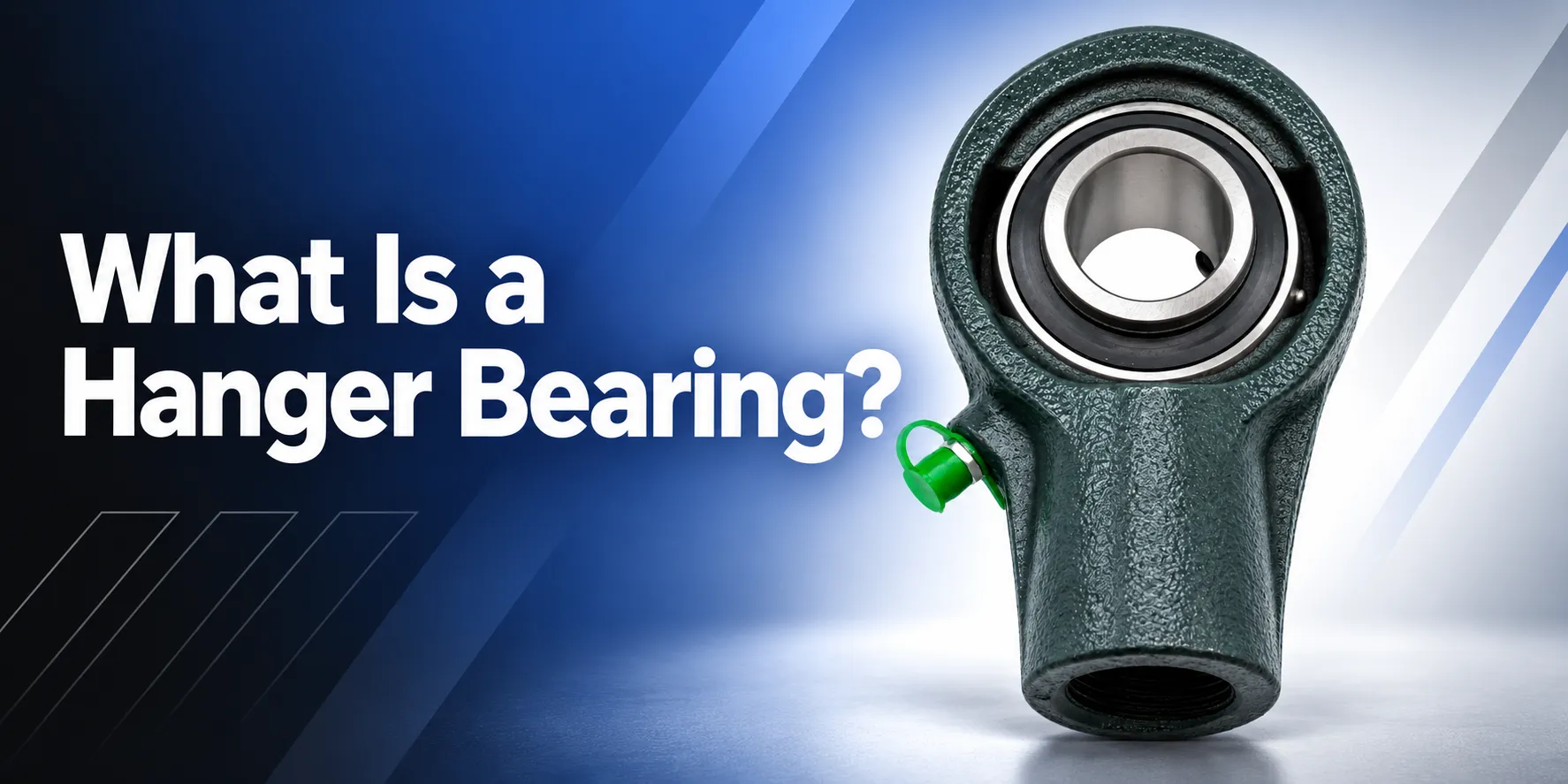
- Mounted bearings
- Precision bearings
Limitations of Steel Bearings
Steel bearings also have limits.
1. Higher Friction Than Ceramic Bearings
Steel rolling elements are heavier than ceramic rolling elements. In high-speed applications, this can increase friction, heat generation, and energy loss.
2. More Heat Build-Up at High Speed
Steel bearings can run at high speed, but heat build-up becomes a bigger issue. Speed performance depends on bearing design, precision grade, cage material, lubrication, preload, and cooling condition.
3. Limited Corrosion Resistance
Chrome steel and carbon steel can rust in humid, washdown, or corrosive environments. Stainless steel improves corrosion resistance, but it may still not match ceramic materials in some chemical environments.
4. Electrical Conductivity
Steel is conductive. In motors, generators, and other electrical equipment, current may pass through the bearing and damage the raceway surface. To solve this problem, you may need insulated bearings, ceramic-coated bearings, or hybrid ceramic bearings.
Typical Applications of Steel Bearings
Steel bearings are widely used across standard and heavy-duty industrial applications.
| Industry / Application | Why Steel Bearings Are Used |
| General Industrial Machinery | Strong, reliable, easy to maintain, and cost-effective. |
| Electric Motors | Suitable for standard motor speeds and loads. |
| Automotive Systems | Good load capacity, durability, and mass-production cost performance. |
| Agricultural Machinery | Handles dust, vibration, shock loads, and outdoor working conditions. |
| Construction Machinery | Suitable for heavy loads, impact loads, and harsh environments. |
| Steel and Metal Processing | Supports heavy loads, vibration, heat, and continuous operation. |
| Paper and Pulp Machinery | Suitable for rotating shafts, rollers, and industrial production lines. |
| Packaging Machinery | Cost-effective and widely available for high-volume equipment. |
Key Difference Between Ceramic and Steel Bearings
After reading the whole details, you can understand the key differences between these two bearings. The real difference is their material properties and application suitability.
Ceramic bearings are usually better for applications requiring high speed, low friction, high temperature resistance, corrosion resistance, chemical resistance, electrical insulation, or lighter weight.
Steel bearings are usually better for applications requiring high load capacity, impact resistance, easy maintenance, wide model availability, and lower cost.
In short, ceramic bearings and steel bearings are not direct replacements in every application. The right choice depends on your bearing type, speed, load, temperature, working environment, lubrication condition, maintenance requirements, and budget.
Part 3. FAQS About Ceramic and Steel Bearings
In the same working condition, ceramic bearings can usually run faster than steel bearings because ceramic rolling elements are lighter and generate less friction and heat. However, it is not completely correct to say ceramic bearings are always faster than steel bearings. The actual speed of a bearing also depends on the bearing design, load, lubrication, precision grade, clearance, installation condition, and operating environment.
The key difference between ceramic ball bearings and steel ball bearings is the material used for the rolling elements and rings. Ceramic ball bearings may be full ceramic bearings, which use ceramic materials for both the rolling elements and rings, or hybrid ceramic bearings, which use ceramic balls with steel rings. Steel ball bearings use steel for the balls, inner ring, outer ring, and usually the bearing cage. Compared with steel ball bearings, ceramic ball bearings usually offer lower friction, lighter weight, better high-speed performance, better corrosion resistance, higher temperature resistance, and electrical insulation. Steel ball bearings are usually better for heavy loads, shock loads, easy maintenance, wider model availability, and lower cost.
In general, ceramic bearings are more suitable for skateboards if you want smoother rotation, lower friction, and better rolling performance. Ceramic rolling elements are lighter and harder than steel, so they can reduce heat and help the bearing spin more freely when the bearing is clean and properly lubricated. However, steel bearings are still widely used because they are cheaper, durable, and easy to replace. So, ceramic bearings are better for performance-focused riders, while steel bearings are more practical for normal daily use.
In general, ceramic bearings are more suitable for bikes when the goal is lower friction, smoother rotation, and better high-speed performance. They are often used in racing bikes, road bikes, wheel hubs, bottom brackets, and other performance bicycle parts. However, the real performance difference also depends on seal design, lubrication, installation accuracy, contamination, and maintenance. For normal commuting or budget bicycles, steel bearings are still a more economical choice, but for higher-performance riding, ceramic bearings are usually the better option.
Steel bearings are usually much cheaper than ceramic bearings. This is because steel materials are widely available, easier to process, and used in large-scale bearing production. Ceramic bearings cost more because ceramic materials are harder to manufacture and require more precise grinding and processing. Hybrid ceramic bearings are usually cheaper than full ceramic bearings, but they are still more expensive than standard steel bearings. For most general applications, steel bearings are the more economical choice.
Ceramics are harder than steel and usually have better wear resistance, heat resistance, corrosion resistance, and electrical insulation. However, this does not mean ceramics are stronger than steel in every way. Ceramic materials are more brittle, so they can crack or fail under heavy impact, shock load, or poor installation. Steel is tougher and more ductile, which makes it better for heavy-duty loads, vibration, and impact conditions. In short, ceramic is harder, but steel is tougher.
Steel bearings were manufactured and widely used in the 19th century, especially with the development of industrial machinery, bicycles, railways, and automobiles. Ceramic bearings were developed much later, mainly in the 1960s and 1970s, for applications that required higher speed, higher temperature resistance, lower friction, corrosion resistance, or electrical insulation. Today, steel bearings are still the most widely used bearing type, while ceramic and hybrid ceramic bearings are mainly selected for special performance requirements.
Final Words
Now you understand the key differences between ceramic bearings and steel bearings. With this knowledge, you can choose the right bearing based on your application requirements, including speed, load, temperature, corrosion resistance, lubrication, maintenance, and budget.
If you need ceramic bearings, steel bearings, or customized bearing solutions, you can contact BKZ Industry. With 15 years of bearing manufacturing experience, BKZ Industry can provide the best quotation for your requirements.