Bearings are important components in moving machines and rotating equipment. Without bearings, many machines, motors, vehicles, and mechanical systems cannot operate smoothly.
However, bearings do not last forever.
Because bearings directly affect machine safety, running accuracy, and equipment life, it is important to understand bearing failure before it causes serious damage.
This article explains the common signs of bearing failure, bearing failure types, causes, solutions, and prevention methods.
If your bearing has already failed and you need a replacement, you can check the old bearing number, brand, dimensions, seal type, and structure, then contact BKZ Industry for a suitable replacement. BKZ Industry covers a wide range of standard and customized bearing models, so you can find the bearing you need in one place.
Part 1. What Are the First Signs of Bearing Failure?
So, what are the first signs of bearing failure?
I say “signs” instead of “sign” for a reason: bearing failure usually cannot be judged by only one symptom.
In many cases, a machine will not stop immediately when the bearing starts to fail. Instead, it will show several early warning signs. If you can recognize these signs early, you can replace the bearing before it damages the shaft, housing, motor, gearbox, or other connected components.
Here are the common early signs of bearing failure.
Sign One: Abnormal Vibration
When a bearing starts to fail, the machine may produce abnormal vibration.
This can happen because the bearing no longer rotates smoothly. Wear, surface damage, poor lubrication, misalignment, or internal defects can disturb the normal rolling motion.
Even a small defect on the raceway or rolling element can cause vibration during operation.
Sign Two: Reduced Running Accuracy or Uneven Movement
Another common sign is reduced running accuracy.
You may find that the machine no longer moves as smoothly or precisely as before. For example, the shaft may run unevenly, the equipment may lose positioning accuracy, or the rotating part may feel unstable.
This usually means the bearing clearance, raceway condition, or rolling contact has been affected.
Sign Three: Unusual Noise
Noise is one of the most obvious signs of bearing failure.
When a bearing is damaged, poorly lubricated, contaminated, or misaligned, it cannot run along the correct contact path. This increases friction and impact inside the bearing.
As a result, the machine may produce grinding, clicking, humming, squealing, or knocking noise during operation.
Sign Four: Higher Operating Temperature
A failing bearing may also generate higher operating temperature.
This usually happens because friction increases inside the bearing. Common reasons include insufficient lubrication, excessive preload, overload, contamination, misalignment, or internal wear.
If the temperature around the bearing becomes much higher than normal, it should not be ignored.
Sign Five: Surface Damage
Visible surface damage is also an important warning sign.
You may find abrasion, flaking, creep, discoloration, rust, scratches, dents, or burn marks on the bearing surface.
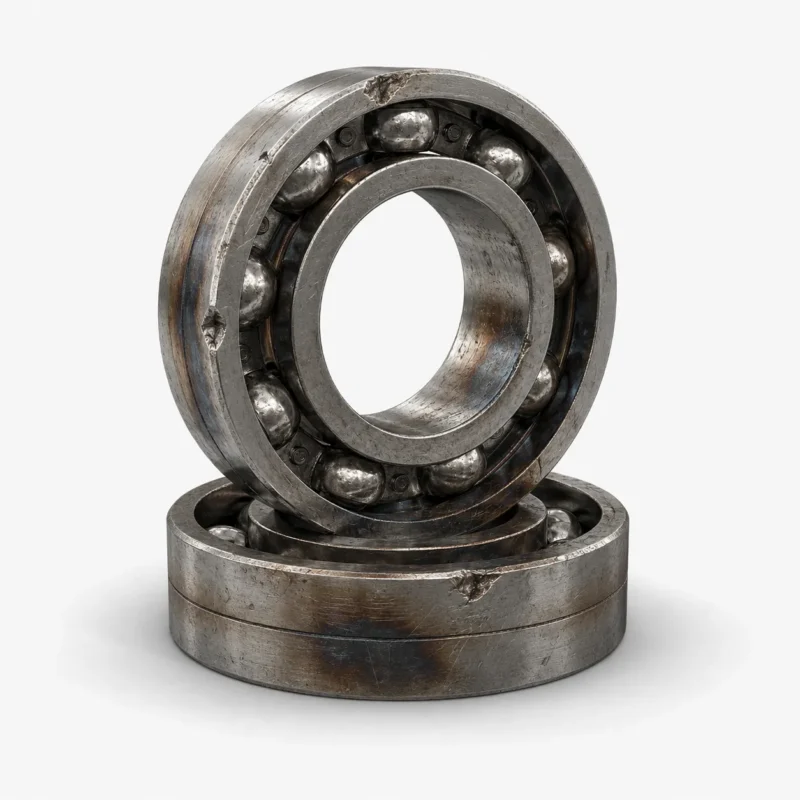
These surface problems usually mean the bearing has already experienced wear, fatigue, overheating, poor lubrication, contamination, or incorrect installation.
If you check the bearing and the machine and find these signs, the bearing has probably started to fail. At this stage, you need to take the problem seriously. Before replacing the bearing or repairing the machine, you should first identify what type of bearing failure it is. This helps you take the right action and avoid the same failure happening again.
Part 2. 12 Common Bearing Failure Types
There are many types of bearing failure. In this section, I will list 12 common bearing failure types and explain what each failure looks like.
This part focuses on the visible damage and operating symptoms. It helps you identify what kind of failure has happened before looking for the root cause.
| Type of Bearing Failure | What It Looks Like | Common Signs |
| Overheating | The bearing shows heat-related damage. The metal surface, cage, or lubricant may be affected by excessive temperature. | Bluish or dark discoloration, burnt grease smell, hardened or dried grease, possible seizure |
| Lubrication Failure | The rolling elements and raceways do not have proper lubricant film protection. The contact surfaces may become dry, polished, worn, or rough. | Heat, wear, polished raceways, abnormal noise, cage wear, lubricant breakdown |
| Contamination Damage | Foreign particles or liquid leave marks on the raceways, rolling elements, lubricant, or seals. | Dirty or discolored grease, scratches, dents, pitting, rust, noise, vibration |
| Misalignment Damage | The load is not evenly distributed across the bearing contact area. Wear marks may appear on one side or edge of the raceway. | Uneven wear marks, edge loading, localized heating, vibration, unstable running |
| Corrosion | The bearing surface is attacked by rust or chemical reaction. The raceways or rolling elements may become rough and damaged. | Rust, brown or red stains, pitting, rough raceways, increased noise |
| Brinelling | Permanent dents appear on the raceway where the rolling elements contact the surface. | Evenly spaced dents, vibration, noise, rough running |
| Fatigue / Spalling | Small pieces of bearing material peel or flake away from the raceway or rolling elements. | Pitting, flaking, peeling, rough running, increased vibration and noise |
| Electrical Pitting | The raceway surface is damaged by electrical discharge. The surface may look frosted, grooved, or marked with fine pits. | Fluting marks, small pits, frosted raceway surface, humming noise in motors |
| Mounting Damage | The bearing is damaged during installation. Marks may appear on the rings, raceways, rolling elements, or cage. | Raceway dents, ring cracks, deformation, early noise, vibration |
| Creep / Fit Damage | The bearing ring moves against the shaft or housing instead of staying firmly fixed. This can leave rubbing or fretting marks. | Creep marks, fretting marks, overheating, vibration, wear on shaft or housing |
| Cage Damage | The cage is worn, cracked, deformed, or broken, so the rolling elements cannot stay evenly separated. | Rattling, chattering, unstable running, irregular rolling element movement |
| Clearance-Related Damage | The bearing runs with too little or too much internal clearance. The contact area and running condition become abnormal. | Overheating, excessive play, unstable running, edge wear, vibration |
These failure types do not always appear separately. In real applications, one bearing may show several failure problems at the same time.
For example, poor lubrication can cause overheating. Overheating can damage the cage and lubricant. Contamination can lead to wear, corrosion, and spalling. Misalignment can cause uneven load, edge wear, and early fatigue.
So when you inspect a failed bearing, do not only look at one surface mark. You also need to check the lubrication condition, mounting condition, shaft and housing fit, working temperature, load condition, and operating environment. This helps you find the real cause of the bearing failure, not only the visible damage.
Part 3. What Are the Common Causes of Bearing Failure?
After identifying the failure type, the next step is to find the real cause.
This is important because the visible failure mark is not always the root problem.
For example, spalling is a type of bearing failure. But the real cause may be overload, poor lubrication, contamination, misalignment, or incorrect internal clearance.
So in this section, I will explain the common causes of bearing failure from six main areas.
1. Lubrication Problems
Lubrication is one of the most common causes of bearing failure.
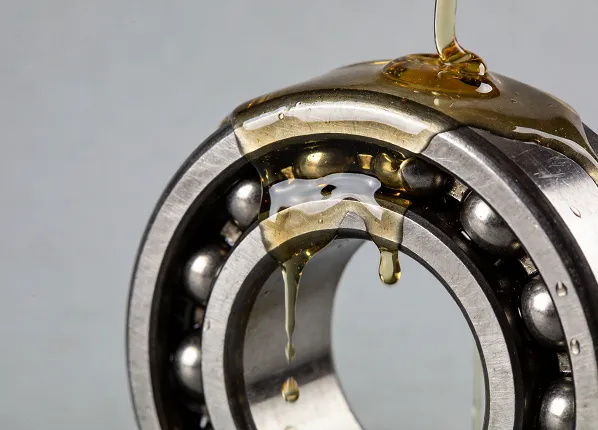
If the bearing has too little lubricant, too much lubricant, the wrong lubricant, or degraded lubricant, the rolling elements and raceways cannot be protected properly.
This can lead to higher friction, heat, wear, cage damage, seizure, and early fatigue.
Common lubrication problems include:
- Insufficient lubrication
- Excessive lubrication
- Wrong grease or oil type
- Lubricant contamination
- Lubricant breakdown under high temperature
- Long relubrication intervals
2. Contamination and Corrosion
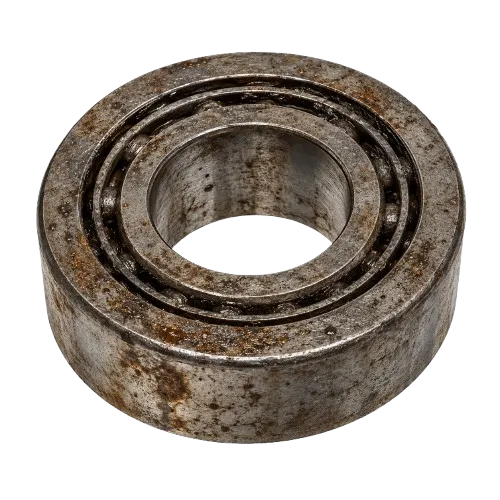
Bearings need a clean working environment. When dust, dirt, metal particles, water, chemicals, or other contaminants enter the bearing, they can damage the raceway and rolling elements.
Contamination can cause scratches, dents, pitting, abnormal noise, vibration, and lubricant failure.
If moisture, salt water, or chemicals are involved, corrosion may also occur. This can make the bearing surface rough and reduce the bearing’s service life.
3. Installation and Mounting Errors
Many bearing failures start during installation.
If the bearing is mounted with the wrong tools, wrong force, incorrect heating method, or poor alignment, the bearing may be damaged before it even starts running.
For example, applying force through the rolling elements can dent the raceway. A wrong fit can cause creep or ring cracks. Poor alignment can create uneven load distribution.
Common mounting problems include:
- Using a hammer directly on the bearing
- Applying force to the wrong ring
- Incorrect shaft or housing fit
- Poor alignment during installation
- Dirty mounting surfaces
- Incorrect preload or clearance control
4. Load and Operating Stress
Every bearing has a designed load capacity and speed range.
If the bearing is overloaded, exposed to shock load, or used under unstable operating conditions, the contact stress inside the bearing increases.
This can lead to fatigue, spalling, overheating, deformation, and shorter bearing life.
The same problem can happen when the bearing is not suitable for the application. For example, using a bearing with insufficient load rating, wrong clearance, wrong cage, or unsuitable material may cause early failure.
5. Shaft, Housing, and Alignment Problems
Bearing performance also depends on the shaft and housing.
Even if the bearing itself is good, poor shaft accuracy, housing deformation, bent shafts, poor shoulder design, or misalignment can cause uneven load inside the bearing.
This often leads to edge loading, vibration, localized heating, uneven wear, and early fatigue.
6. Electrical and Environmental Factors
In electric motors, generators, and equipment using variable frequency drives, stray electrical current may pass through the bearing.
This can damage the raceway surface and create electrical pitting or fluting marks.
The working environment can also cause failure. High temperature, moisture, chemical exposure, vibration during storage, poor sealing, and improper handling can all reduce bearing life.
Part 4. How to Judge Whether You Need to Replace the Bearing or Not?
Now you know the signs of bearing failure, common bearing failure types, and common causes of bearing failure.
But there is still one practical question:
Do you need to replace the bearing immediately, or can it still be used for a while?
This is not always easy to judge, because not every bearing problem means immediate replacement. Some problems can be improved by cleaning, relubrication, adjustment, or correcting the installation.
However, if the bearing already has serious internal damage, continuing to use it may damage the shaft, housing, motor, gearbox, or even the whole machine.
Here are the main points to check.
Before inspection, make sure the work is carried out by a qualified technician or engineer. Bearing inspection should follow the machine manual and safety procedures. If you are not trained for this work, do not check or disassemble the bearing by yourself.
Step 1. Check the Bearing Operating Condition
Before removing or checking the bearing, observe how the machine is running.
If you notice strong vibration, abnormal noise, unstable rotation, excessive heat, or a much higher operating temperature than normal, the bearing should be taken seriously.
These signs do not always mean the bearing must be replaced immediately, but they do mean the bearing needs further inspection.
Step 2. Check the Bearing Surface
After the machine is stopped safely, check the visible bearing surfaces and related parts.
If you find flaking, cracks, deep scratches, dents, rust, burning marks, cage damage, or serious wear, the bearing should usually be replaced.
These are not just small surface problems. They often mean the bearing has already suffered fatigue, contamination damage, corrosion, overheating, improper mounting, or heavy wear.
If the bearing surface is still in good condition, and there is only light dirt, slight grease discoloration, or insufficient lubrication, replacement may not be necessary at this stage. In this case, cleaning, relubrication, and checking the installation condition may solve the problem.
Step 3. Check Again After Cleaning, Lubrication, or Adjustment
After cleaning, adding the correct lubricant, correcting misalignment, or adjusting the installation, run the machine again under proper operating conditions.
If the bearing still has strong vibration, abnormal noise, unstable movement, or excessive temperature, the bearing should be replaced.
This means the problem is probably not only caused by dirt, poor lubrication, or minor installation issues. There may already be internal bearing damage that cannot be repaired by simple maintenance.
Simple Rule
If the bearing only has light dirt or insufficient lubrication, you may clean it and relubricate it first.
But if the bearing has visible damage, serious wear, overheating marks, cage damage, or abnormal running conditions after maintenance, replacement is usually the safer choice.
Part 5. Solutions for Bearing Failure
Once you confirm that a bearing has truly failed and needs replacement instead of cleaning or lubrication, there are three main ways to address the problem.
Way 1. Buy a New Bearing
If you are a trained engineer familiar with the machine and bearings, you can identify the bearing number from the bearing surface, measure its dimensions, or refer to the technical drawings or specifications. Then, you can contact a reputable bearing manufacturer, such as BKZ Industry, to purchase a replacement and install it.
Way 2. Contact the Machine or Bearing Manufacturer
If you are not trained in bearing replacement, you should reach out to the manufacturer of the machine or the bearing. Many manufacturers offer after-sales support and can guide you through the replacement process or even provide repair services.
Way 3. Use Third-Party Bearing Repair or Replacement Services
If replacement costs are high or the manufacturer cannot assist, you can contact specialized bearing repair companies. These third-party services can repair or replace your bearings. It’s best to find providers in your local area. Some well-known companies offering such services include BMC and TIMKEN.
Part 6. How to Prevent Bearing Failure?
Not all bearing failures are unavoidable. Many can be prevented by following proper installation, lubrication, and maintenance practices. Here are the key tips:
1. Have an Engineer Install and Test the Bearing
Before operating the machine, ensure a trained engineer installs the bearing correctly. Proper installation minimizes misalignment, incorrect fits, and other human errors that often lead to premature failure. After installation, testing the machine ensures the bearing is running smoothly under normal operating conditions.
2. Follow the Lubrication Guidelines Strictly
Bearings cannot lubricate themselves. Always use the correct type and amount of lubricant recommended in the bearing or machine manual. Apply it following the proper method—too much, too little, or the wrong lubricant can accelerate wear and overheating.
3. Conduct Regular Inspections
Even a properly installed and lubricated bearing can develop issues over time. Schedule frequent inspections to check for signs of abnormal vibration, noise, temperature changes, or wear. Early detection allows you to address minor problems before they become major failures.
These practices cannot prevent every bearing failure, but they can greatly reduce avoidable failures caused by poor installation, lubrication problems, contamination, and lack of inspection.
Part 7. FAQS About Bearing Failure
The cost depends on the bearing type, size, damage level, and how you fix it. If you replace it with a new bearing, the bearing price may range from a few dollars to over $1,000 per piece, depending on the material, precision grade, size, and application. However, the total fixing cost may also include labor, machine disassembly, installation, testing, and downtime. For small or standard bearings, replacement is usually more practical. For large industrial bearings or special bearings, repair may be considered if the damage is not serious and the bearing can still work safely after reconditioning.
No. Driving with a faulty bearing is extremely dangerous. A failing wheel or axle bearing can cause severe vibration, loss of steering control, or complete wheel detachment, leading to accidents.
This usually refers to bearing failure in a bolted connection. It happens when the contact area between the bolt and the hole, plate, or connected part is under excessive bearing stress. Over time, this can cause the hole or contact surface to deform, enlarge, crack, or become crushed. In some cases, the bolt may also be damaged, especially under high or repeated loads.
Bearing failure and shear failure are two different failure modes in mechanical or bolted connections. Bearing failure happens when the contact area between the bolt and the hole, plate, or other surface is compressed and deformed due to high bearing stress. You may see flattened areas, dents, enlarged holes, or crushed material around the contact surface. Shear failure happens when the bolt or material breaks along a shear plane because of tangential or sliding force. In short, bearing failure is mainly a crushing or compression problem at the contact area, while shear failure is mainly a cutting or sliding failure along a plane.
Final Words
Now you understand the common signs of bearing failure, major failure types, root causes, how to judge replacement needs, repair options, and prevention methods. The key takeaway is: replacing the bearing alone is not enough—always identify the root cause to prevent repeat failure.
For replacement bearings that match your existing equipment, contact BKZ Industry for reliable standard or customized solutions.