When you search for ball bearing wheels, you often get confused by the different results for “ball bearings” and “wheel bearings.” This confusion arises because many websites mix up the concepts of ball bearing wheels with ball bearings and wheel bearings. To clear up the confusion, this article will help you understand what ball bearing wheels really are.
Part 1. What are Ball Bearing Wheels?
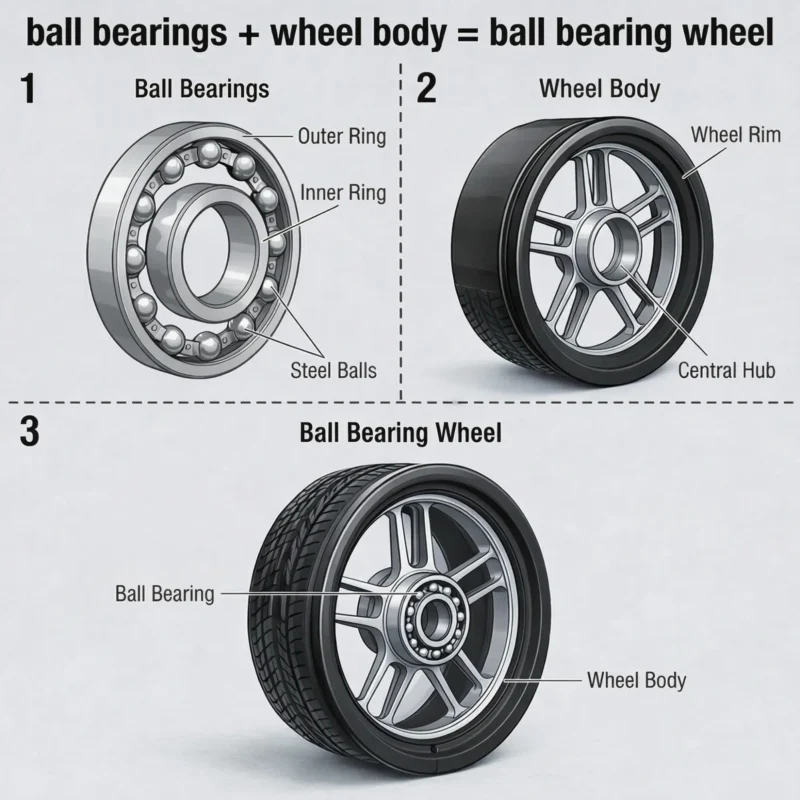
So, what are the ball bearing wheels? Ball bearing wheels are assemblies that combine ball bearings with a wheel. These wheels are designed for direct use in various applications, such as furniture, tables, gates, lawnmowers, office chairs, and more. Common terms for ball bearing wheels include “wheels with ball bearings,” “bearing wheels,” “caster wheels with ball bearings,” or “PU wheels with deep groove ball bearings.”
Part 2. Ball Bearing Wheels vs Ball Bearings vs Wheel Bearings
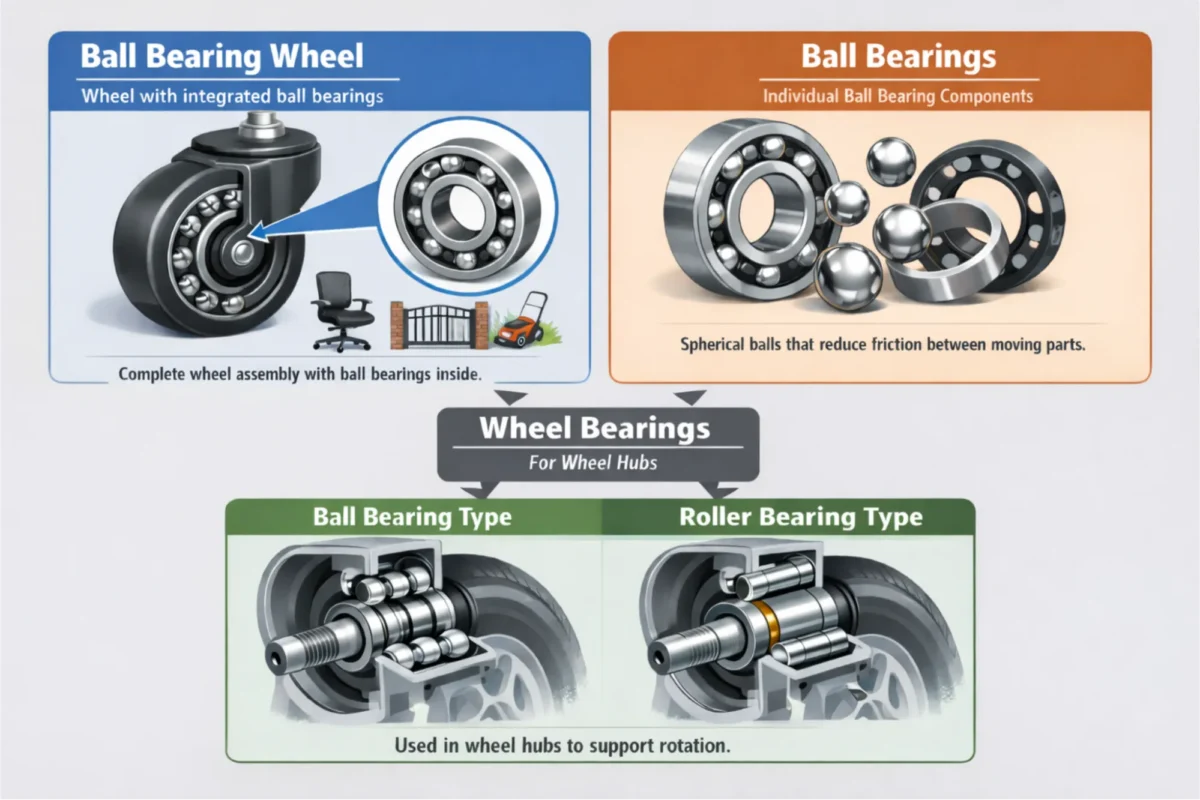
Now that you know what ball bearing wheels are, you may still feel confused. When you search for ball bearing wheels, you’ll often come across results for both ball bearings and wheel bearings. You might mistakenly assume that ball bearing wheels, ball bearings, and wheel bearings are the same thing. However, they are not the same at all.
Ball Bearing Wheels:
As mentioned earlier, ball bearing wheels are complete assemblies that combine a wheel and ball bearings, typically deep groove ball bearings, integrated into the wheel’s design. These assemblies are used in various applications such as office chairs, furniture, gates, and lawnmowers.
Ball Bearings:
Ball bearings are individual components consisting of spherical rolling elements that reduce friction between moving parts. Deep groove ball bearings are a common type of ball bearing. Ball bearings are an integral part of ball bearing wheels but can also be used independently in other applications.
Note: if you are those who are searching for ball bearing manufacturer to produce ball bearings, contact BKZ Industry here. We will provide all ball bearing solutions for you.
Wheel Bearings:
Wheel bearings are a category of bearings specifically designed for use in wheels. They can include both ball bearings and roller bearings. When a wheel uses ball bearings, it is often referred to as a ball bearing wheel. Wheel bearings are responsible for enabling smooth rotation and supporting the load of the wheel.
In summary, ball bearing wheels are fully assembled units combining both a wheel and ball bearings, whereas ball bearings and wheel bearings are individual bearing components. Ball bearings are used in many applications, including as part of ball bearing wheels, while wheel bearings are specifically designed for wheels, and can consist of ball or roller bearings.
Part 3. Why are Ball Bearings Used in Wheels?
Now that you understand what ball bearing wheels are, you may be wondering: why are ball bearings used in wheels? The primary reason is that ball bearings help reduce friction, which allows the wheel to rotate more smoothly, efficiently, and at higher speeds. Additionally, ball bearings are essential for carrying loads, as they distribute the weight and forces applied to the wheel, ensuring stable and reliable performance.
Part 4. Ball Bearing Wheel Types
Ball bearing wheels can be classified in several ways depending on their application, bearing structure, wheel material, and load capacity. Understanding these categories helps ensure the correct wheel is selected for performance, durability, and safety.
4.1 Classification by Application
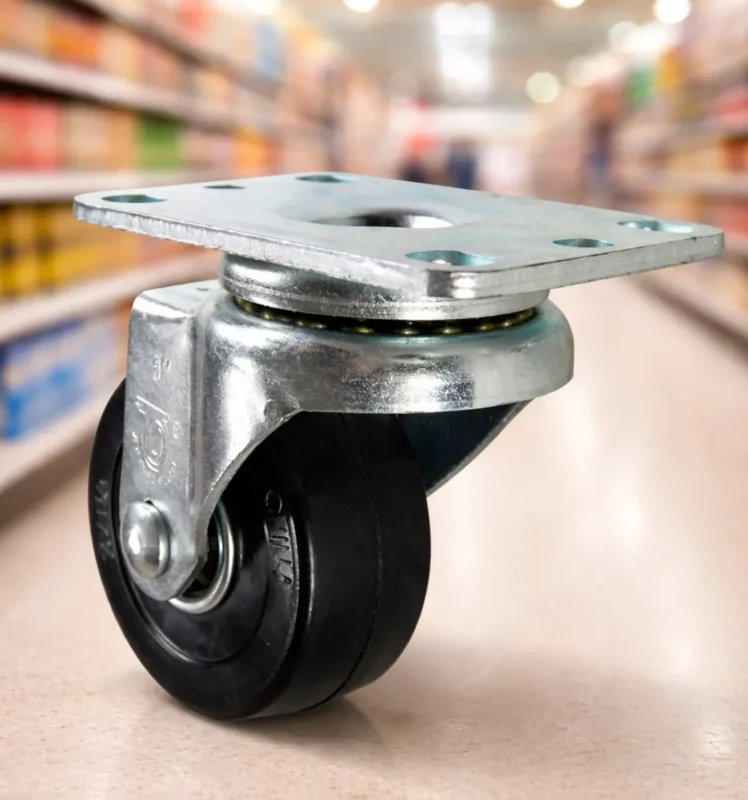
- Caster Wheels
Widely used in office chairs, tables, carts, trolleys, and mobile equipment.
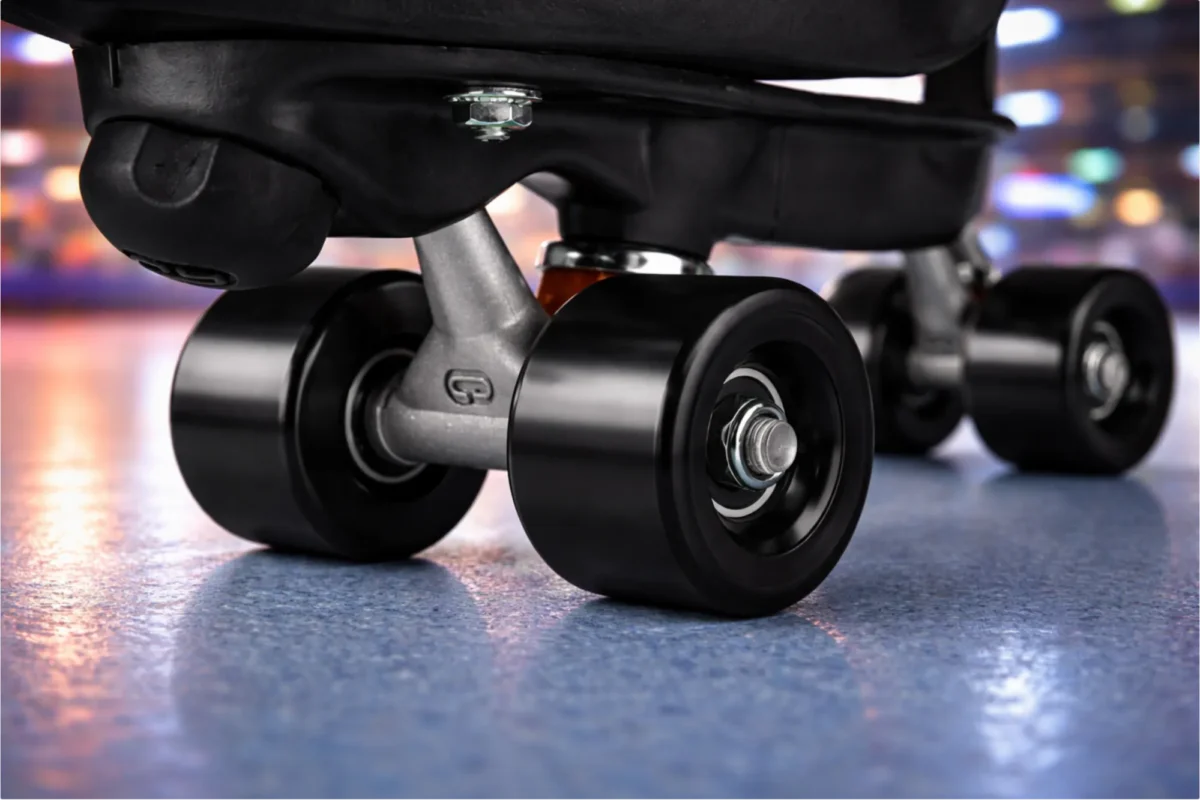
- Skate / Roller Wheels
Commonly used in skateboards, roller skates, and scooters.
- Industrial Wheels
Designed for factories, conveyors, and heavy machinery.
4.2 Classification by Bearing Type
- Deep Groove Ball Bearing Wheels
The most commonly used type. Suitable for primarily radial loads, offering low friction and high-speed performance. - Angular Contact Ball Bearing Wheels
Designed to handle combined radial and axial loads. Ideal for applications where side loads or directional forces are present. - Double-Row Ball Bearing Wheels
Incorporate two rows of balls to increase load capacity and stability, making them suitable for heavier-duty applications. - Sealed Ball Bearing Wheels
Equipped with metal or rubber seals to protect against dust, moisture, and contaminants, extending service life in harsh environments.
4.3 Classification by Wheel Material
- Polyurethane (PU) Wheels
Offer excellent wear resistance, quiet operation, and floor protection. Common in caster wheels and material-handling equipment. - Rubber Wheels
Provide good shock absorption and noise reduction but lower load capacity. Suitable for indoor and light-duty applications. - Nylon / Polyamide Wheels
High load capacity, low rolling resistance, and good chemical resistance. Often used in industrial environments, though they may be noisy on hard floors. - Cast Iron / Steel Wheels
Extremely strong and durable, designed for very heavy loads and harsh industrial conditions. Not recommended for delicate floors.
4.4 Classification by Load Capacity
- Light-Duty Ball Bearing Wheels
- Medium-Duty Ball Bearing Wheels
- Heavy-Duty Ball Bearing Wheels
- Extra Heavy-Duty Ball Bearing Wheels
Load classification is determined by the maximum weight each wheel can safely support during operation.
Part 5. How to Choose Ball Bearing Wheels
After understanding the different types of ball bearing wheels, selecting the right one becomes much easier. The following factors should be carefully evaluated:
- Application Scenario
Identify where the wheel will be used—such as carts, chairs, industrial equipment, or conveyors—as this determines performance requirements. - Load Capacity
Calculate the actual load per wheel, including safety margins, to ensure long-term reliability. - Wheel Size
Choose the appropriate diameter and width based on load, floor conditions, and required mobility. - Wheel Material
Select materials based on floor protection, noise level, wear resistance, and environmental conditions. - Bearing Type
Consider whether standard deep groove, angular contact, double-row, or sealed bearings are required based on load direction, speed, and environment.
By carefully evaluating these factors, you can select ball bearing wheels that provide optimal performance, durability, and cost efficiency for your specific application.
Final Words
By now, you’re likely familiar with what ball bearing wheels are, and the key differences between ball bearing wheels, ball bearings, and bearing wheels. You’ve also gained insight into how to choose the right ball bearing wheels for your needs.
Need help selecting the right ball bearing wheel for your project? Contact BKZ Industry for personalized advice and top-quality bearings tailored to your needs.