You may have come across the term “IMS bearing” in the Porsche community and felt unsure what it refers to. That’s completely normal. In this article, we’ll break down what the IMS bearing is, the common signs of failure, typical replacement costs, and the prevention methods frequently discussed in the community.
For Porsche owners, workshops, or buyers looking for standard or customized bearing solutions in bulk, you can also contact BKZ Industry. With 15 years of manufacturing experience and two factories, BKZ Industry supplies bearings tailored to different specifications and application needs.
Part 1. What is an IMS Bearing?
The IMS bearing (Intermediate Shaft bearing) is a support bearing for the intermediate shaft (IMS) used in certain Porsche water-cooled flat-six boxer engines (M96 / M97 series).
It is not a general-purpose automotive bearing, but a specific design used only in selected Porsche engine architectures, mainly from the late 1990s to 2008.
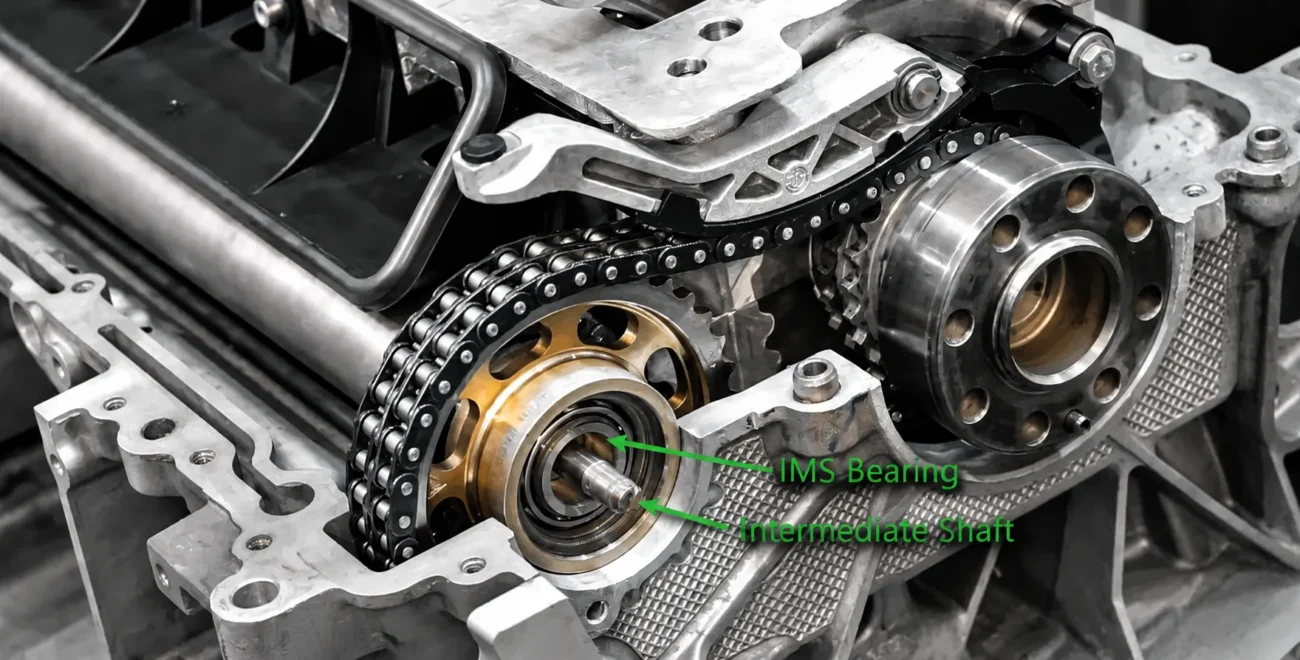
Major Functions of IMS Bearing
IMS bearings are critical components in Porsche engines, as they perform the following functions:
- Support the intermediate shaft inside the engine
- Maintain correct axial and radial positioning of the IMS
- Reduce friction during shaft rotation
- Ensure stable operation of the timing chain drive system
What is the Structure of an IMS Bearing?
To better understand the IMS bearing, it is important to look at its internal structure. An IMS bearing is typically a ball bearing assembly consisting of the following components:
- Inner ring
- Outer ring
- Rolling elements (balls)
- Cage (to separate and guide the balls)
- Seals or shields (depending on the design)
- Lubrication system (sealed grease or engine oil, depending on the version)
Also Read: What is a Tensioner Bearing? Definition, Signs and Replacement
Types of IMS Bearings
You now understand the basic structure of an IMS bearing used in Porsche engines, and it may seem that all IMS bearings share the same design. However, this is not the case.
In reality, IMS bearings exist in different design versions that evolved over time. In the following section, we will introduce three major types of IMS bearings used in Porsche engines, which vary based on engineering design improvements and performance requirements.
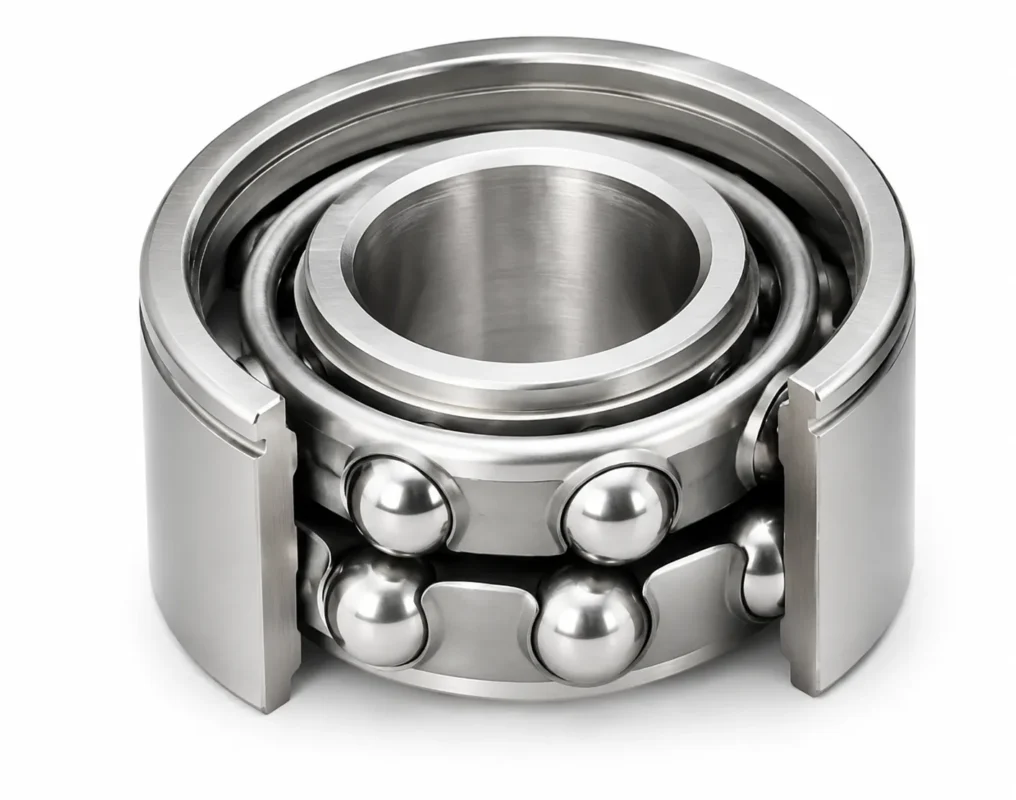
1. Double Row Deep Groove Ball Bearing (Early Design – 1997 ~ mid-2000)
In the early design period (1997 to mid-2000), double-row deep groove ball bearings were used in IMS applications. With two rows of balls inside the bearing, this design provides higher load capacity and improved stability compared to single-row versions. It was commonly used in early M96 engines and is generally considered the more robust of the early IMS bearing designs.
2. Single-Row Deep Groove Ball Bearing (Mid Design – ~2000 ~ 2005)
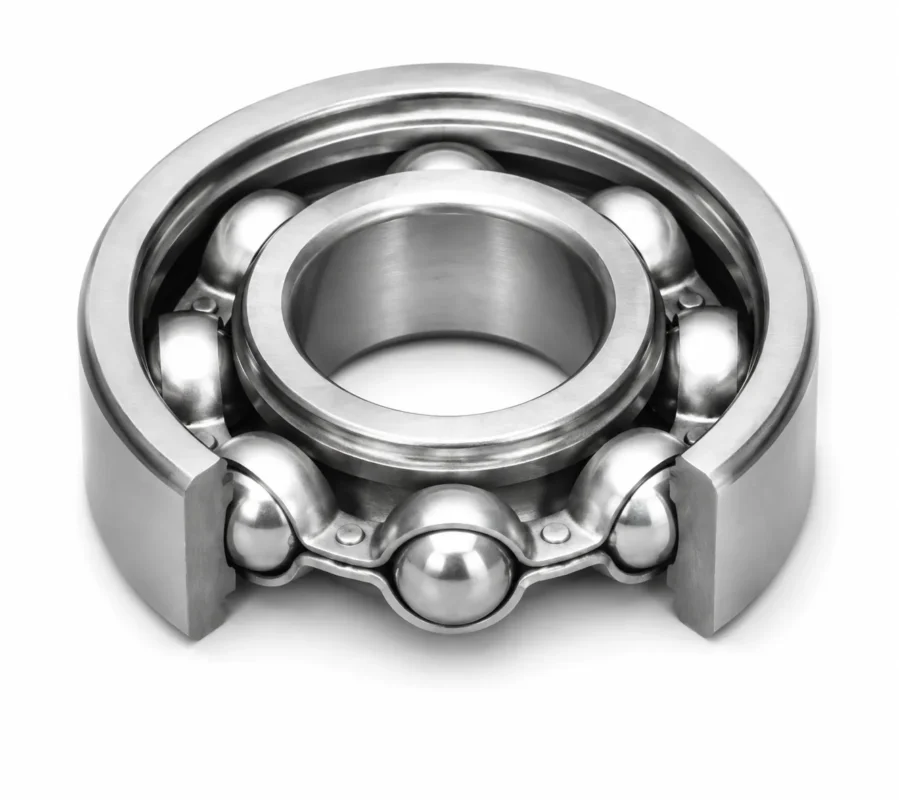
Single-row deep groove ball bearings were used from approximately 2000 to 2005. Compared to the early double-row design, this version has a lower load capacity, but it can generate less friction and support higher rotational speeds. It was widely used in mid-production M96 engines and is the most commonly reported IMS bearing design associated with reliability issues within the community.
3. Larger Diameter Single-Row Deep Groove Ball Bearing (Late M97 – ~2005 ~ 2008)
In response to limitations observed in earlier single-row designs (2000–2005), Porsche introduced a larger-diameter single-row deep groove ball bearing in later M97 engine revisions.
With an increased bearing diameter, this design improves load distribution and overall durability, allowing it to better handle engine operating stresses compared to earlier single-row versions. It was used in later M97 engine applications from approximately 2005 to 2008.
Where Can You Find IMS Bearings?
After understanding that the IMS bearing is an important internal component used in certain Porsche engines, you may want to know which Porsche models are equipped with it.
IMS bearings are only found in specific Porsche M96 and early M97 engines, which are used in the following models:
- Porsche 996 Carrera (1998–2004)
- Porsche Boxster 986 (1997–2004)
- Early Porsche 997.1 (2005–2008, select models only)
- Early Boxster 987 (transition-period engines, limited cases)
Also Read: What Is a Wheel Bearing? Signs, Replacement, Types and Buying Guide
Part 2.How to Tell if IMS Bearing is Bad
Many people want to understand IMS bearings due to concerns about potential bearing failure. Porsche owners often look for common IMS bearing symptoms to identify early signs of a problem. Below are the most commonly observed indicators that an IMS bearing may be failing:
1. Unusual Noise
Grinding, rattling, or rumbling noises are often the first warning signs of a potential IMS bearing issue.
When the bearing becomes worn or damaged, it can no longer properly support the smooth rotation of the intermediate shaft, leading to abnormal friction and noise during engine operation.
In some cases, a “tink tink tink” or light metallic knocking sound may also be heard, which can indicate internal bearing wear or looseness.
2. Oil Leak (Possible Indirect Indicator)
IMS bearings are typically sealed ball bearings, so they are designed to retain lubrication internally.
If oil leakage is observed near the rear of the engine, it may indicate a seal failure or related engine-side issue. While an oil leak alone does not directly confirm IMS bearing failure, it can be a warning sign that further inspection is required.
3. Metallic Debris in the Oil
When an IMS bearing begins to fail, internal wear or collapse can generate metallic particles. These debris may be found in the engine oil or trapped in the oil filter, indicating internal bearing damage.
If one or more of the above signs are present, it does not necessarily confirm IMS bearing failure. However, it strongly indicates that a professional inspection is recommended to assess the condition of the engine.
Part 3. Can IMS Bearing Be Repaired?
Now that you understand the symptoms of a failing IMS bearing, you may wonder whether it can be repaired before taking the vehicle to a repair shop for inspection or replacement, especially since replacement costs can be high.
Unfortunately, the answer is no — an IMS bearing cannot be repaired.
The IMS bearing is designed as a sealed-for-life unit, which means it is not intended to be serviced, opened, or repaired. Once wear or damage occurs, the internal lubrication cannot be replenished, and material fatigue or surface damage cannot be reversed. Therefore, the bearing cannot be restored to a reliable working condition and must be replaced.
In addition, IMS bearing failure is not isolated to the bearing itself. When failure occurs, it may lead to broader engine-related damage, such as:
- Metal debris entering the engine oil system
- Contamination of internal engine components
- Potential damage to the timing chain and related components
In severe cases, the level of contamination and internal wear may require even full engine replacement.
All in all, IMS bearing issues are addressed through replacement or system upgrade rather than repair.
And please note that if you choose to replace with the original IMS bearing, you can only replace the complete intermediate shaft assembly, as Porsche typically does not supply the IMS bearing as a standalone part.
For this reason, many aftermarket solutions focus on IMS retrofit or upgrade kits, which replace the original sealed bearing design with an improved system using different technology (such as oil-fed or enhanced support bearing designs), rather than repairing the original IMS bearing itself.
Part 4. How Much Does it Cost to Replace IMS Bearing
Since the IMS bearing cannot be repaired and must be replaced, the cost depends heavily on whether you choose a factory replacement or an aftermarket upgrade.
Method 1: Replacing with an Original Porsche Intermediate Shaft
As mentioned before, Porsche does not supply the IMS bearing as a standalone part, so you must replace the entire intermediate shaft assembly.
The parts cost is approximately $1,500 – $2,500, with labor costs being very high ($5,000 – $10,000+). So the total cost may range from $6,500 to $12,500.
This method is typically performed only during a full engine rebuild or after severe engine failure.
Method 2: Retrofit/Upgrade with an Aftermarket Kit
Estimated Total Cost (Parts & Labor): $1,500 – $3,000.
This is the most common proactive solution, where the IMS bearing is replaced using an aftermarket upgrade kit without a full engine teardown.
With understanding the cost, you can now decide which method is better for you and go to shop for the solution and solve the IMS bearing problem.
Part 5. How to Prevent IMS Bearing Failure
From the cost of replacing an IMS bearing, you can see that the repair process is very expensive. So, is there any method to prevent IMS bearing failure? The answer is yes. Here are several methods focused specifically on IMS bearing protection:
- Regular engine oil changes: Clean and stable lubrication is critical for IMS bearing life. Old engine oil can lose lubricating performance and increase bearing wear. It is recommended to change oil every 5,000 miles (8,000 km) or every 6 months.
- Use high-quality engine oil with the correct viscosity: IMS bearings rely heavily on stable lubrication conditions. Low-quality or incorrect-viscosity oil can reduce oil film strength and increase direct metal contact. Use high-quality 5W-40 full synthetic oil to maintain stable protection.
- Avoid prolonged low-RPM driving (engine lugging): IMS bearings depend on consistent oil pressure and flow. Operating at low RPM under load can reduce lubrication efficiency at the bearing, increasing wear risk. Try to keep engine speed above 2,500 RPM when driving under load conditions.
- Monitor oil condition and metal debris: Early IMS bearing wear may produce fine metallic particles. Regular oil filter inspection and checking for metal debris during oil changes can help detect early signs of bearing deterioration.
- Install oil monitoring and filtration checks: Regular inspection of oil filters and, if applicable, magnetic drain plugs can help identify early contamination and reduce the risk of continued bearing wear going unnoticed.
- Address oil leaks immediately: Oil leaks can reduce overall lubrication stability and oil pressure consistency, which may negatively affect IMS bearing lubrication conditions and increase wear risk.
Also Read: What is Clutch Release Bearing/Throwout Bearing?
Final Words
After reading this article, do you have a clear idea about the IMS bearing? We have explained its function, common failure signs, replacement cost, and the prevention points that are widely discussed in the Porsche community.
We did not include a step-by-step replacement guide, because IMS bearing replacement is not a simple replacement process. In most cases, it is treated as an upgrade or retrofit solution that requires specific bearing kits, proper tools, and professional installation experience.
Not every repair shop is familiar with this system or offers IMS upgrade kits, so the service is usually handled by specialized Porsche independent workshops or aftermarket suppliers that provide complete retrofit solutions.
If you are looking for bearings in bulk—standard or customized options—you can contact BKZ Industry. With 15 years of manufacturing experience and two factories, BKZ Industry can supply bearings based on your requirements.