Flanged bearings are very commonly seen among bearings. However, many people may not have a very clear understanding of what they are, what types they include, what the difference is between flanged bearings and non-flanged bearings, and how to select them for actual applications.
I understand your case, so here, as a bearing engineer with over 10 years of experience, I will explain them to you one by one.
And if you already understand flanged bearings and want to buy them for your applications, you can contact BKZ Industry, which is a bearing manufacturer with 2 factories and 15 years of experience in bearing manufacturing. BKZ Industry can offer the flanged bearings or flanged bearing units you need.
So, what is a flanged bearing?
Part 1. What is a Flanged Bearing?
A flanged bearing is a bearing with a flange, usually a raised locating rim on the bearing itself or on the bearing housing. The flange helps locate the bearing, prevent axial movement, and make installation easier in certain structures.
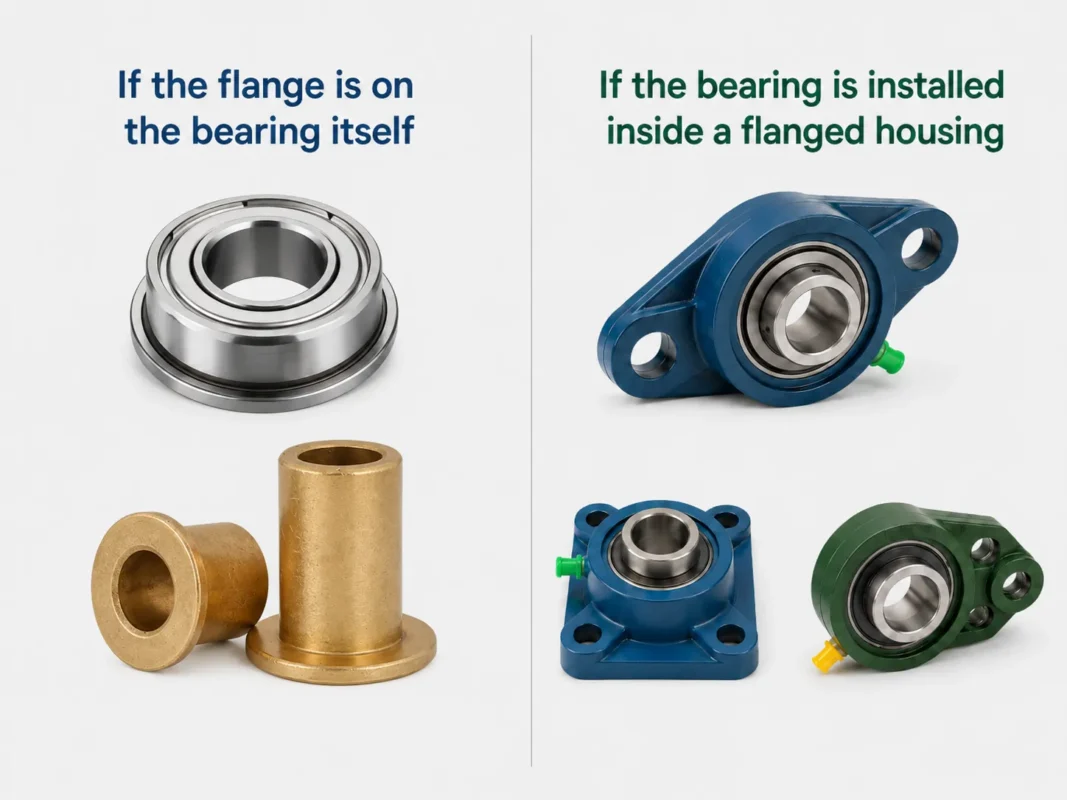
Flanged bearings can refer to different products. If the flange is on the bearing itself, it may be a flanged ball bearing, or flanged sleeve bearing. These bearings usually use the flange for location or axial positioning, and they do not always have bolt holes.
If the bearing is installed inside a flanged housing, it is usually called a flanged bearing unit, such as UCF, UCFL, or UCFC series. These units usually have bolt holes for mounting.
Here are some examples for you to understand.
What is the Purpose of a Flanged Bearing?
So what is the purpose of a flanged bearing? As mentioned before, a flanged bearing can refer to different products.
For a flanged ball bearing or flanged sleeve bearing, the main purpose of the flange is to locate the bearing, provide axial positioning, prevent axial movement, and make installation easier in limited mounting space.
For a flanged bearing unit, the flange housing is designed for easy mounting onto a machine wall, side plate, frame, or vertical mounting surface.
Advantages and Disadvantages of Flanged Bearing
Like standard bearings, flanged bearings also have their strengths and limitations. Here are the major ones:
Advantages of Flanged Bearings:
- Easy Installation: The flange gives the bearing a clear locating edge or mounting surface, so it is easier to install in the correct position.
- Better Axial Positioning: The flange helps keep the bearing in place and reduces unwanted axial movement.
- More Stable Mounting: For flanged bearing units, the housing can be fixed directly onto a machine wall, side plate, or frame.
- Space-Saving Design: Some flanged bearings can be installed directly into plates or compact housings, which is useful when space is limited.
- Easier Replacement:Because the flange defines the mounting position, maintenance and replacement can be easier.
Disadvantages of Flanged Bearings:
- Limited Mounting Flexibility: Once the flange position is fixed, the bearing is not easy to adjust.
- Extra Flange Space Required: The flange needs enough surrounding space, so it may not fit every compact structure.
- Not Suitable for All Load Conditions: The flange mainly helps with positioning and mounting. It does not increase the bearing’s load capacity by itself.
- Possible Higher Cost: Compared with a standard non-flanged bearing of the same type and size, a flanged bearing may cost more.
- Requires Correct Mounting Surface: For flanged bearing units, the mounting surface should be flat and stable to avoid misalignment or uneven load.
Applications of Flanged Bearings
Flanged bearings are used in many applications, here are the major ones.
- Conveyors
- Packaging machines
- Food processing equipment
- Agricultural machinery
- Textile machinery
- Small motors
- Wheels and rollers
- Automation equipment
- Sliding or rotating mechanisms
- Machine side plates and vertical frames
Part 2. What Are the Different Types of Flange Bearings?
Now that you understand what a flanged bearing is, you may want to know the common types of flanged bearings. Based on different structures and applications, flanged bearings can be divided into several types.
Flanged Bearing Units
For flanged bearing units, they can be divided by the number of mounting bolt holes, such as 2-bolt, 3-bolt, and 4-bolt flanged bearing units.
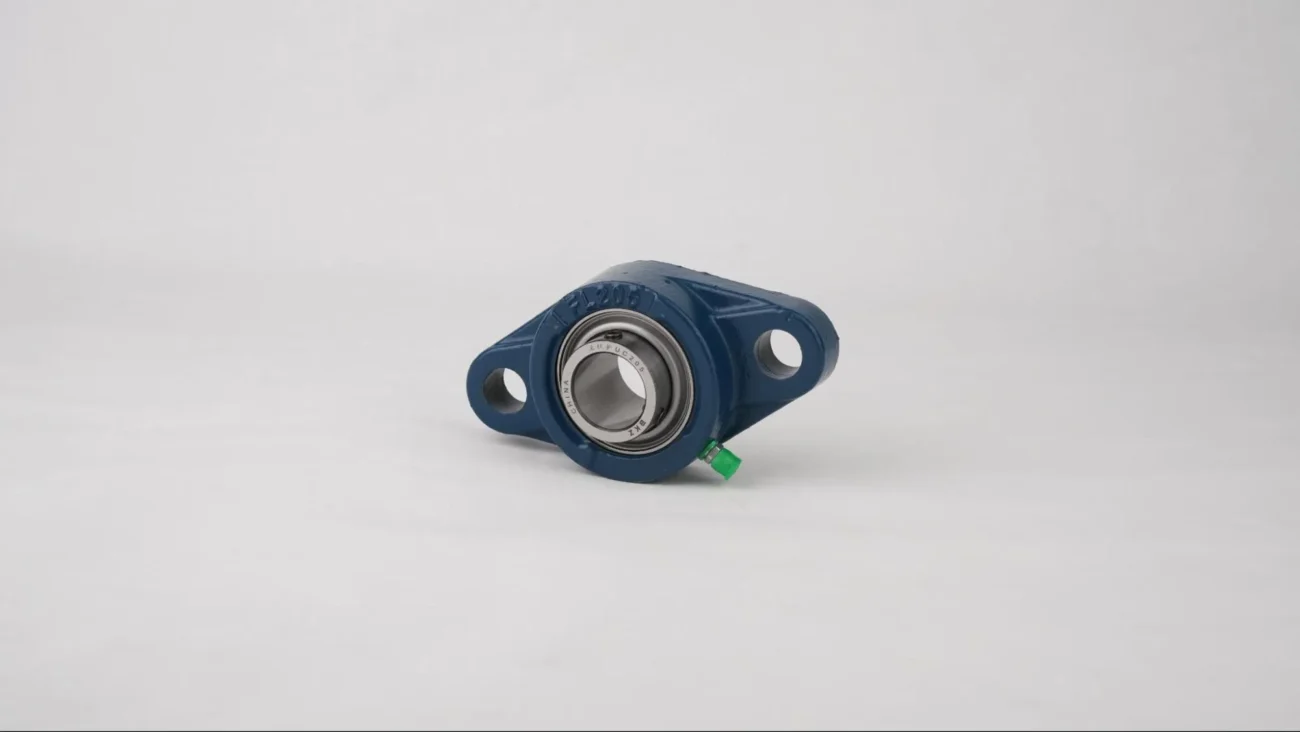
- 2 Bolt Flange Bearing
A 2 bolt flange bearing is a mounted bearing unit made up of an insert bearing and a two-bolt flanged housing. The housing is usually oval or diamond-shaped, with two mounting holes.
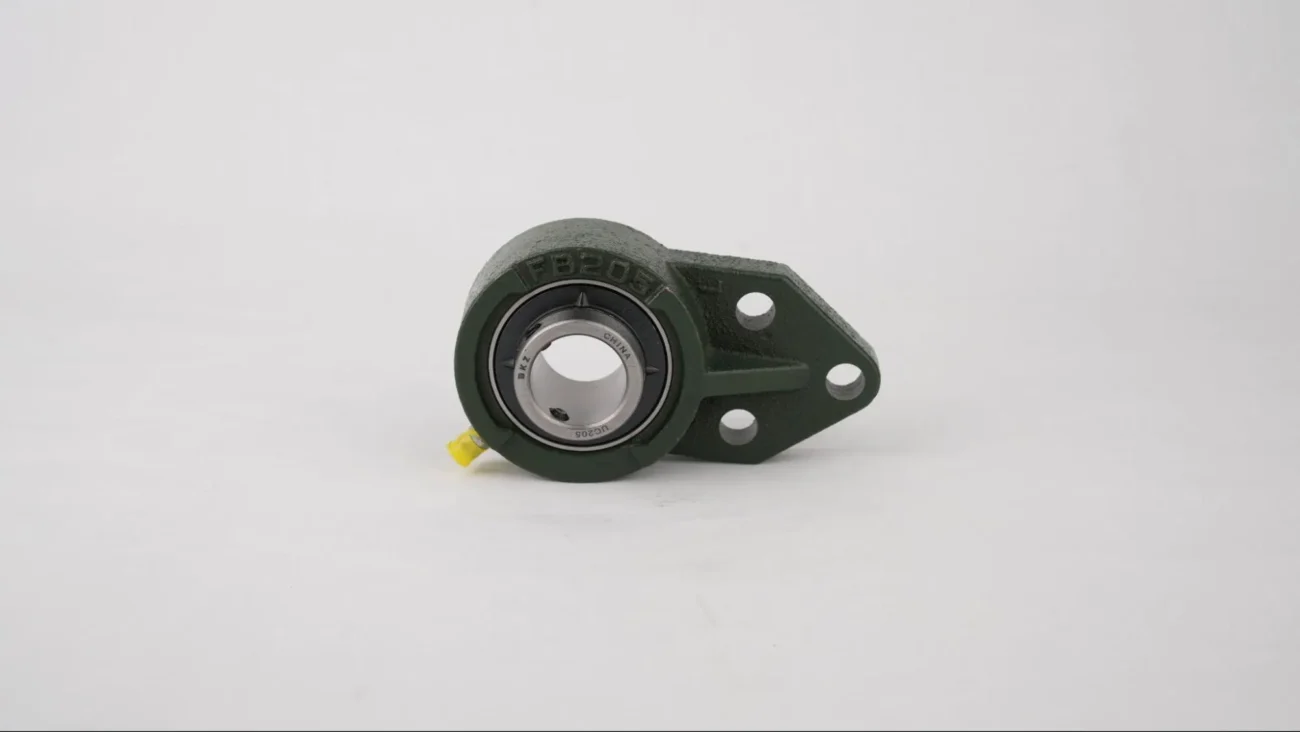
- 3 Bolt Flange Bearing
A 3 bolt flange bearing is a mounted bearing unit with an insert bearing and a three-bolt flanged housing. Compared with a 2 bolt flange bearing, a 3 bolt flange bearing usually provides a more balanced mounting structure.
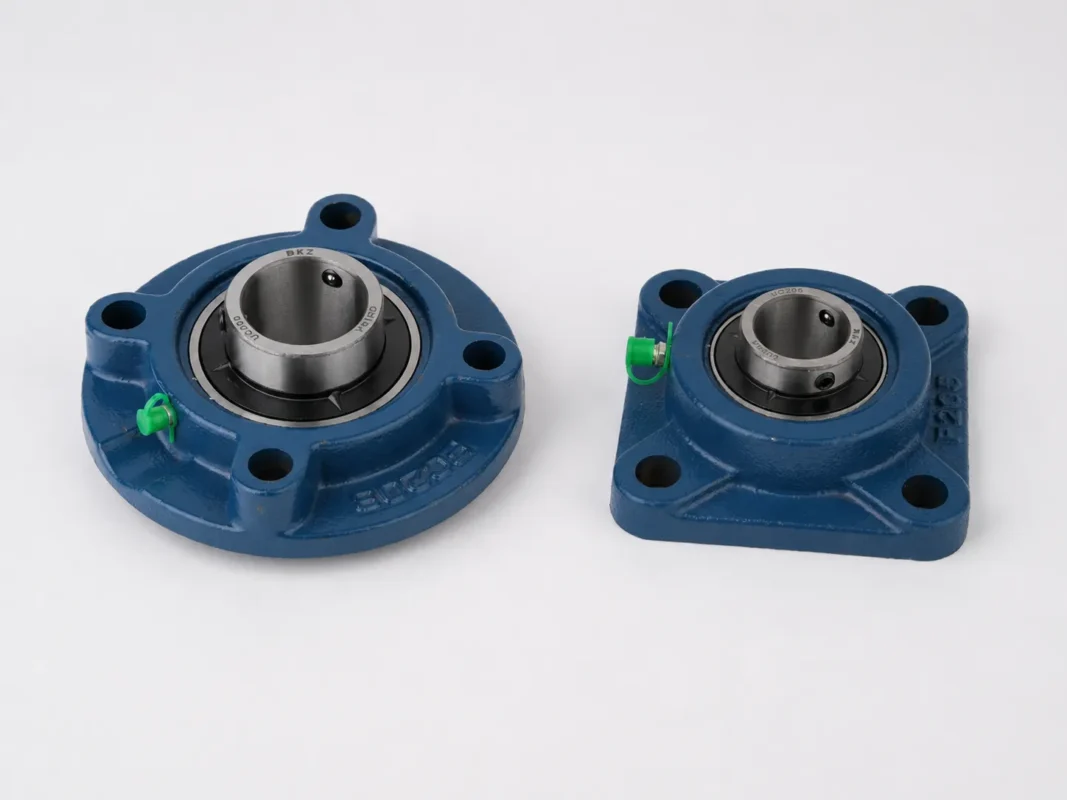
- 4 Bolt Flange Bearing
A 4 bolt flange bearing is a mounted bearing unit with an insert bearing and a four-bolt flanged housing. It usually has a square flange housing with four mounting holes, which gives it stronger mounting stability.
Flanged Bearings with a Flange on the Bearing Itself
When the flange is part of the bearing itself, flanged bearings can be divided into two major types based on their bearing structure and the way they reduce friction.
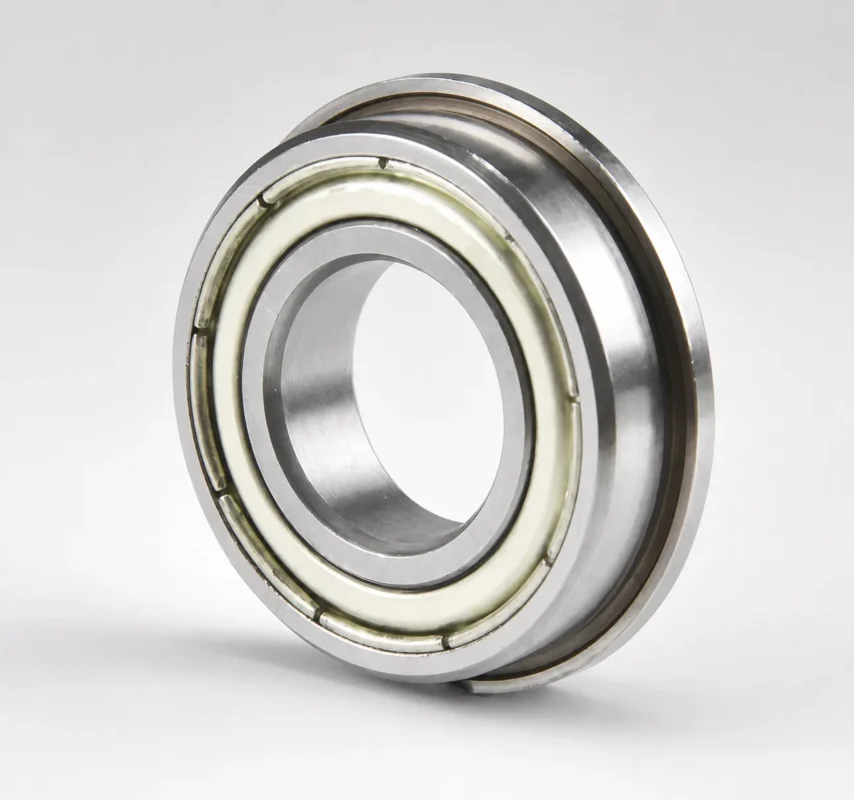
- Flanged Ball Bearings
Flanged ball bearings are ball bearings with a flange on the outer ring. The flange adds another function: it helps position the bearing during installation and keeps it from shifting axially.
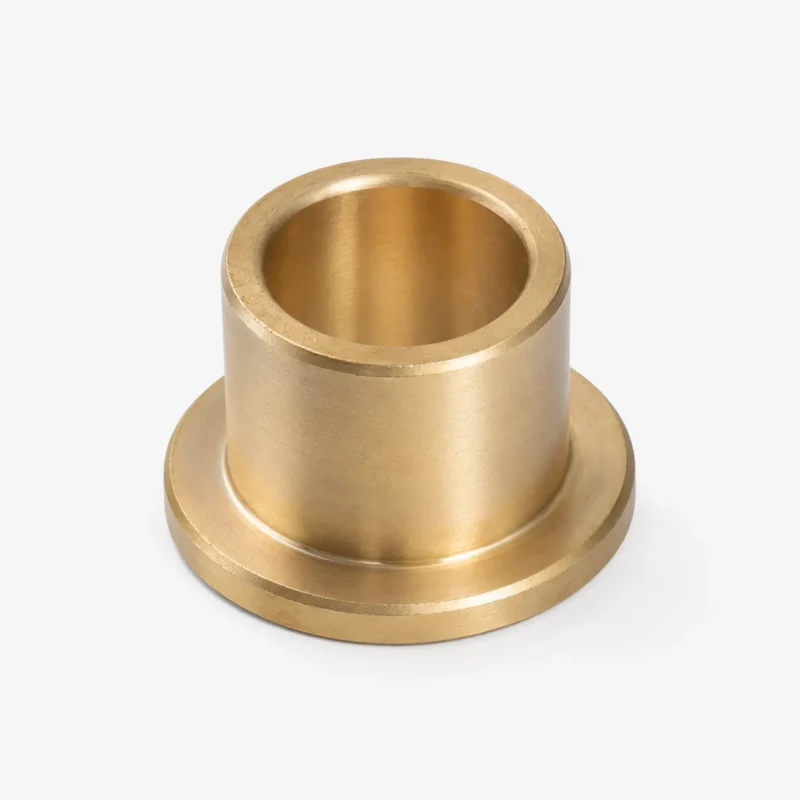
- Flanged Sleeve Bearings / Flanged Bushings
These bearings are plain bearings with a flange at one end. The flange mainly works as a positioning shoulder. It helps keep the bushing in place and can also take light axial loads in some applications, depending on the material and design.
Now, most of you may already have a clear understanding of flagged bearing. For those still cannot understand, can check its comparison with non flanged bearing, and ball bearings.
Part 3. What Is the Difference Between Flanged and Non-Flanged Bearings?
The biggest difference between flanged and non-flanged bearings is the flange structure. A flanged bearing has a flange on the bearing itself or on the bearing housing, while a non-flanged bearing does not have this flange structure.
Here is a table to help you understand the differences.
| Comparison Item | Flanged Bearings | Non-Flanged Bearings |
| Shape | Has a flange on the bearing or housing | No flange structure |
| Positioning | Easier to locate and keep in position | Needs shoulder, retaining ring, spacer, or housing support |
| Installation | Easier for plate, side-wall, or compact mounting | More suitable for standard housings and shafts |
| Axial Movement | Flange helps reduce axial movement | Needs extra parts to prevent axial movement |
| Space Use | Can save space in some compact designs | May need extra locating parts |
| Cost | Usually higher than the same non-flanged type | Usually lower and more common |
| Types | Fewer types and size options | More standard types and size options |
Part 4. Flanged Bearing vs Ball Bearing: What Are Their Differences?
Some flanged bearings belong to ball bearings, such as flanged ball bearings. At the same time, some ball bearings can also be designed with a flange, and these are called flanged ball bearings.
The biggest difference between flanged bearings and ball bearings is their classification method. Flanged bearings are classified by shape or mounting structure, while ball bearings are classified by rolling element type. A flanged bearing focuses on whether the bearing or housing has a flange. A ball bearing focuses on whether the rolling elements are balls.
So, they are not two completely opposite bearing types. A bearing can be both a flanged bearing and a ball bearing at the same time.
To help you understand, you can check this table:
| Comparison Item | Flanged Bearings | Ball Bearings |
| Shape | Have a flange on the bearing itself or housing | May or may not have a flange |
| Structure | Defined by the flange structure | Defined by balls as rolling elements |
| Rolling Elements | May use balls, rollers, needles, or no rolling elements in sleeve bearings | Use balls as rolling elements |
| Types | Flanged ball bearings, flanged sleeve bearings, flanged bearing units | Deep groove ball bearings, angular contact ball bearings, thrust ball bearings, self-aligning ball bearings, flanged ball bearings |
| Characteristics | Better for locating, axial positioning, or mounting | Good for reducing friction and supporting rotating shafts |
| Applications | Used when flange positioning or flange mounting is needed | Used in motors, pumps, gearboxes, wheels, machines, and many rotating applications |
Part 5. How to Select One Flanged Bearing?
Now that you understand what a flanged bearing is, you may still not know what to consider when choosing one for your application. No worries. Here is a simple guide.
Check Your Application Type
First, confirm where the bearing will be used. Different applications need different types of flanged bearings.
For example, if you need to support a rotating shaft in a compact structure, you may choose a flanged ball bearing. If you need a bearing for low-speed sliding or oscillating movement, a flanged sleeve bearing or flanged bushing may be more suitable. If you need to mount the bearing on a machine wall, side plate, or frame, a flanged bearing unit may be a better option.
Check the Load Direction
You need to know whether the bearing will carry radial load, axial load, or both. The flange mainly helps with positioning or mounting. It does not mean the bearing can carry heavy axial loads.
Check the Shaft Size and Mounting Space
Confirm the shaft diameter, housing size, mounting hole size, and available installation space. For flanged bearing units, also check the bolt hole distance and housing shape.
Check the Speed
Different flanged bearings have different speed limits. Flanged ball bearings are usually better for higher-speed rotation, while flanged sleeve bearings are more suitable for low-speed or oscillating motion.
Check the Working Environment
Consider temperature, dust, moisture, chemicals, corrosion, and lubrication conditions. For dirty or wet environments, sealing, material, and lubrication are very important.
Check the Material
Common materials include bearing steel, stainless steel, bronze, plastic, and composite materials. The right material depends on the load, speed, temperature, corrosion resistance, and maintenance requirements.
Check Maintenance Requirements
Some flanged bearings need regular lubrication. Others, such as self-lubricating bushings or sealed flanged bearings, can reduce maintenance work.
Check the Bearing Number or Drawing
If you are replacing an old bearing, check the existing bearing number, dimensions, drawing, or sample. This helps avoid choosing the wrong size or structure.
Final Words
In this article, I showed you what a flanged bearing is, including its definition, purpose, advantages, disadvantages, applications, different types, differences from other bearings, and how to select the correct bearing.
After understanding flanged bearings, if you want to buy the bearings you need, you can contact BKZ Industry. BKZ Industry is an ISO 9001 certified bearing manufacturer, and both flanged bearings and flanged bearing units are available.