Tensioner bearings are often mentioned when repairing vehicles. They are important components in the engine belt system. However, many people may not clearly understand what a tensioner bearing is, what the signs of a bad tensioner bearing are, and how to replace it. In this article, I will explain everything you need to know.
If you do not know where to buy the tensioner bearing you need, you can contact BKZ Industry with your bearing requirements. With ISO 9001 certification, 2 factories, and 15 years of experience, BKZ Industry can offer the bearings you need.
Part 1. What is a Tensioner Bearing?
A tensioner bearing is a bearing used in a belt tensioner pulley. It is commonly found in automotive engines, such as in timing belt systems, serpentine belt systems, and accessory belt drive systems.
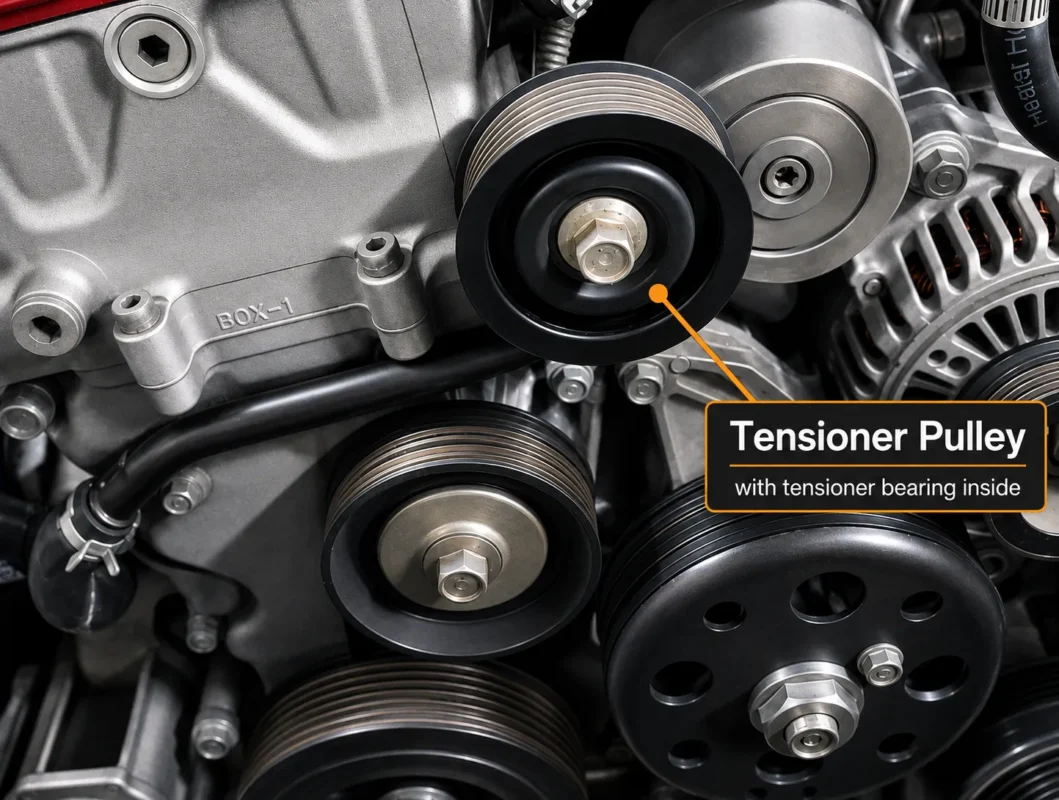
A tensioner bearing is usually a sealed ball bearing. It is mainly made up of an inner ring, outer ring, balls, cage, and rubber seals. In many cases, the bearing is installed inside a pulley or integrated with a tensioner pulley assembly.
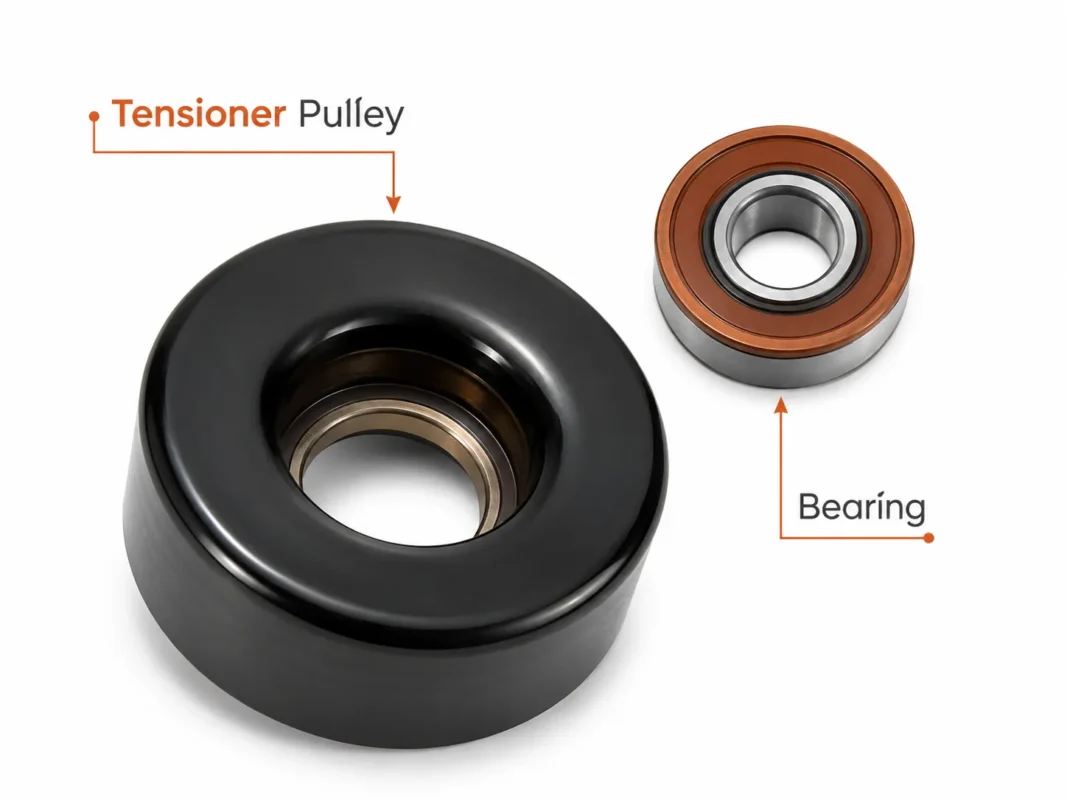
The bearing allows the pulley to rotate smoothly while supporting the belt load. The main purpose of a tensioner bearing is to reduce friction, support smooth pulley rotation, and help the belt run at the proper tension and alignment. This allows the belt to transfer power smoothly and prevents belt slipping, noise, or abnormal wear.
What Does a Tensioner Bearing Do?
Here are its key functions:
1. Support smooth pulley rotation
The tensioner bearing allows the belt tensioner pulley to rotate smoothly when the belt is running.
2. Reduce rotational friction
It reduces friction between the rotating pulley and the fixed mounting shaft or bolt, helping the pulley work smoothly and stably at high speed.
3. Support belt load
The tensioner bearing supports the radial load caused by belt tension. This helps the pulley keep stable contact with the belt.
4. Help maintain belt alignment
Although the bearing itself does not create belt tension, it helps the tensioner pulley run smoothly, which supports proper belt tracking and reduces abnormal belt wear.
Also Read: What is Clutch Release Bearing/Throwout Bearing?
How Does a Tensioner Bearing Work?
When the engine is running, the belt moves around different pulleys. The tensioner pulley rotates together with the belt to guide and support the belt.
Inside the tensioner pulley, the tensioner bearing allows the pulley to rotate freely and smoothly around the fixed bolt, shaft, or tensioner arm. Without the bearing, the pulley would create high friction, heat, noise, and wear.
Working Challenges of Tensioner Bearings
Tensioner bearings usually need to work under tough conditions, such as:
- High temperature
- High speed rotation
- Vibration
- Belt tension load
- Dust and moisture
- Continuous operation
- Grease aging and seal wear
Types of Tensioner Bearing
Because of these working conditions, tensioner bearings normally need good sealing, stable grease, low friction, and reliable running performance. That is why In most automotive belt tensioner pulleys, a sealed deep groove ball bearing is commonly used. A common example is 6203-2RS.
In many tensioner pulley designs, one deep groove ball bearing is installed inside the pulley. In some heavy-load or special designs, the pulley may use two bearings to support higher belt load and improve stability.
Part 2. Tensioner Bearing vs Idler Bearing: Key Differences
Now, you may have a basic idea of what a tensioner bearing is. But when you search for belt system parts, you may also find idler bearing together with tensioner bearing. They are often installed near the belt route and may look similar, but their functions are different.
The main difference is this:
The tensioner bearing helps the tensioner pulley rotate smoothly under belt tension. An idler bearing helps the idler pulley rotate smoothly, guide the belt path, and change the belt direction.
| Item | Tensioner Bearing | Idler Bearing |
| Installed In | Tensioner pulley | Idler pulley |
| Main Purpose | Helps the tensioner pulley rotate smoothly under belt tension | Helps the idler pulley rotate smoothly and guide the belt |
| Position | Usually on a spring-loaded, hydraulic, or adjustable tensioner arm | Usually on a fixed bracket or engine mounting point |
| Movement | May move with the tensioner arm | Usually fixed in position |
| Main Function | Reduces friction, supports belt load, and helps stable pulley rotation | Reduces friction, supports belt load, changes belt direction, and keeps belt alignment |
| Common Bearing Type | Sealed deep groove ball bearing | Sealed deep groove ball bearing |
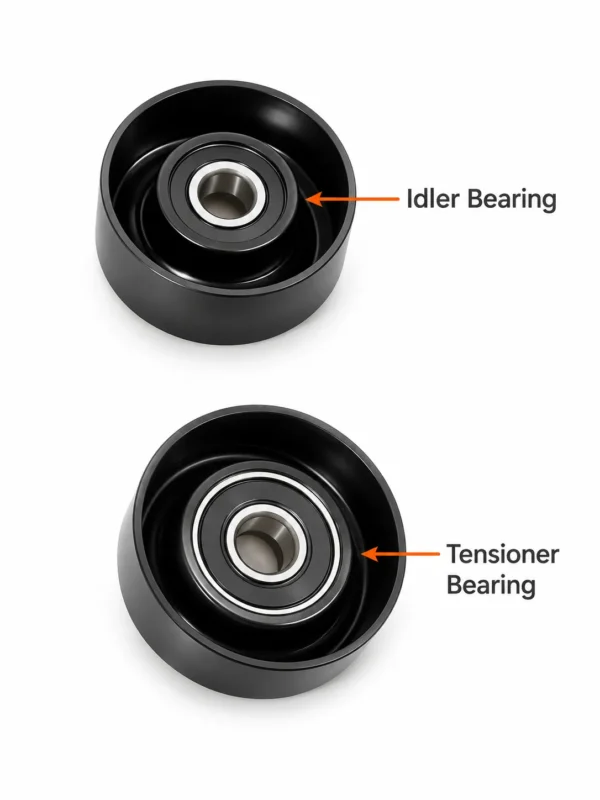
And here is the picture of these two bearings for you to have a look at them.
Also Read: What Is a Wheel Bearing? Signs, Replacement, Types and Buying Guide
Part 3. When to Replace Tensioner Bearing?
After understanding what a tensioner bearing is, it is also important to know when to replace it and what symptoms may appear when the tensioner bearing becomes bad.
1. Squealing, Grinding, or Rattling Noise
When the tensioner bearing is worn, damaged, or lacks grease, it may not rotate smoothly. You may hear squealing, grinding, rattling, or rough running noise from the belt tensioner pulley area. The noise may become more obvious when the engine is running or when the engine speed changes.
2. Rough Pulley Rotation
A good tensioner bearing should allow the pulley to rotate smoothly. If the bearing is damaged, the pulley may feel rough, stuck, or loose when checked by hand after the belt is removed.
3. Excessive Pulley Movement or Shaking
If the bearing is badly worn, the tensioner pulley may shake or wobble during operation. However, excessive movement can also be caused by a weak tensioner arm, damaged spring, or worn pulley, so the whole tensioner assembly should be checked.
4. Belt Slipping or Abnormal Belt Wear
A bad tensioner bearing can make the pulley rotate unevenly or become stuck. This may affect belt movement and cause belt slipping, noise, edge wear, or abnormal belt wear. But belt slipping can also be caused by incorrect belt tension, a worn belt, or a faulty tensioner assembly.
When these signs appear, you should not ignore the problem. These symptoms may not prove that the tensioner bearing is the only cause, but they show that the belt tensioner system needs to be checked. The problem may come from the bearing, pulley, belt, or tensioner assembly. If you are not sure, ask a professional mechanic to inspect it and confirm which part needs to be replaced.
Part 4. How to Replace Tensioner Bearing?
After confirming that the tensioner bearing is the source of the problem and needs to be replaced, you can follow the guide below.
Step 1. Prepare the Tools and Follow Safety Notes
Before replacing the tensioner bearing, prepare the necessary tools and replacement bearing first.
Tools and parts to prepare:
- New tensioner bearing
- Socket set
- Ratchet
- Extension bar
- Hammer or rubber mallet
- Socket with a similar size to the bearing outer ring
- Bearing race/seal driver kit
- Grease
- Steel wool brush or cleaning brush
- Marker pen
- Gloves
- Safety glasses
- Vehicle repair manual
Safety notes:
- Make sure the engine is turned off and completely cool before starting the repair.
- Before removing the pulley, check the belt routing or take a photo so you can reinstall the belt correctly later.
Step 2. Access the Tensioner Pulley
First, open the hood of your car or other vehicle and remove the plastic cover above the belt system.
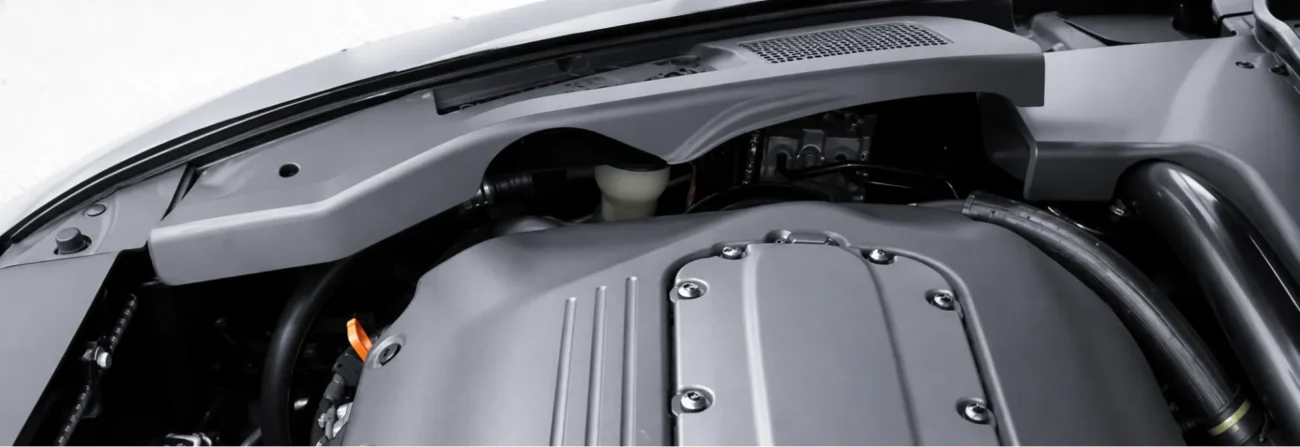
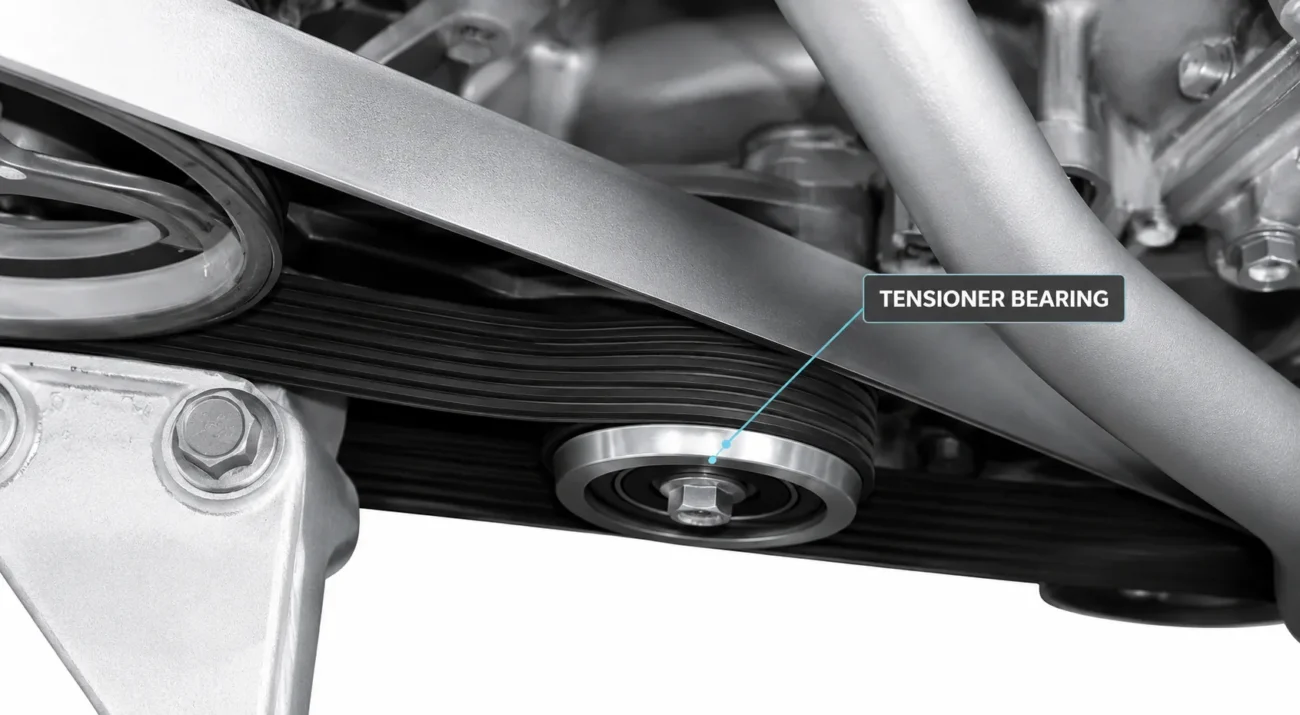
Now, you should be able to see the tensioner pulley with the bearing inside.
Step 3. Remove the Drive Belt
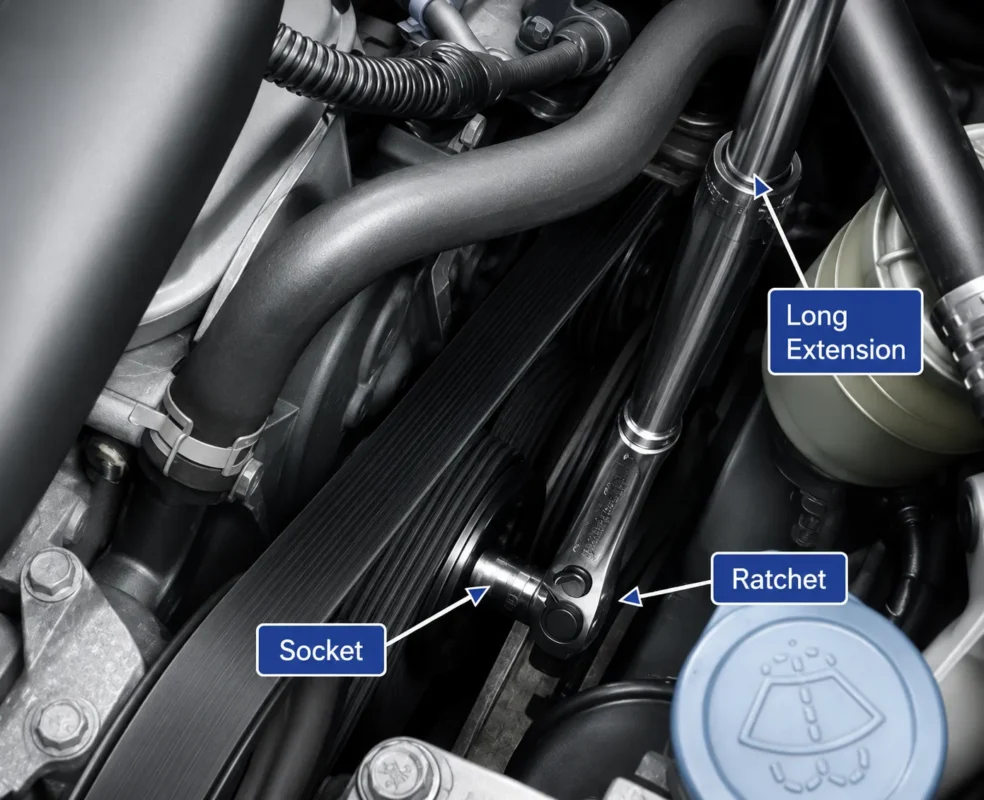
Use a socket on the tensioner pulley nut, attach the ratchet, and install the extension bar if needed. Turn the tensioner counterclockwise to release the belt tension. Once the belt becomes loose enough, remove it from the pulley system.
Step 4. Remove the Tensioner Bearing
Place the socket, ratchet, and extension on the tensioner pulley nut again. This time, turn it clockwise to loosen the tensioner pulley. When the nut is loose enough, remove it by hand and take the tensioner pulley off the engine.
Step 5. Replace the Old Tensioner Bearing with a New One (Optional)
If you purchased a new tensioner pulley with the bearing already installed, you can skip this step and replace the entire pulley assembly.
If you only need to replace the tensioner bearing, use a bearing race/seal driver. Check the outer ring diameter of the bearing and select a driver slightly smaller than the bearing outer ring. Place the driver against the back side of the bearing and use a hammer to drive the old bearing out of the pulley.
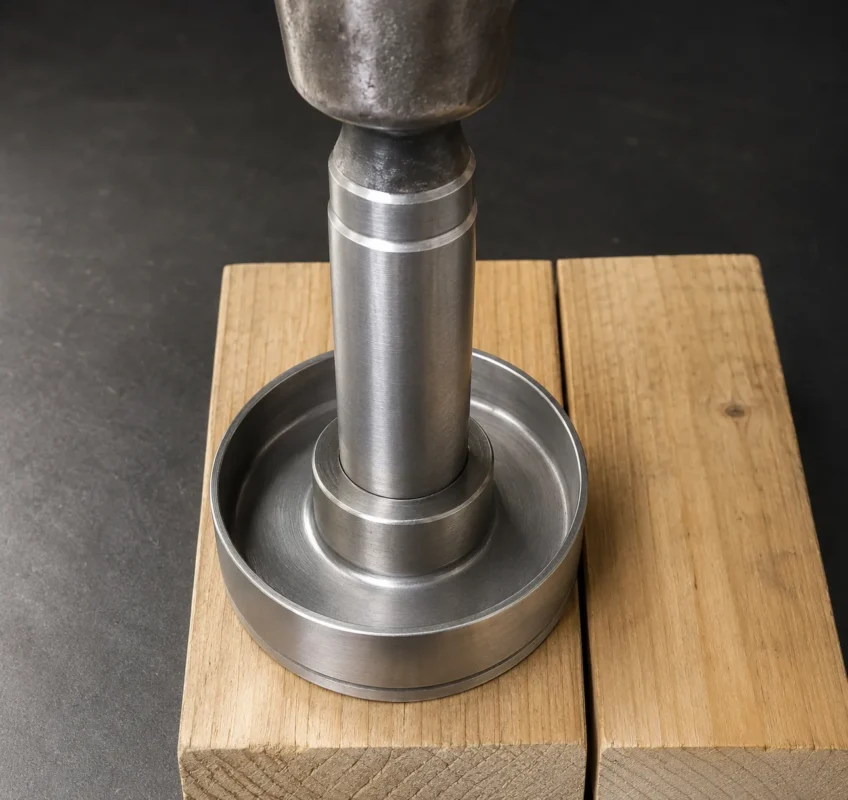
Next, place the new tensioner bearing into the pulley. Use the driver and hammer to carefully install the new bearing into the tensioner pulley.
Step 6. Install the New Tensioner Pulley
Install the new tensioner pulley back onto the engine and secure it with the nut. Tighten it using the ratchet. Then reinstall the drive belt according to the original belt routing.
Step 7. Check The Installation
Check that the belt is seated correctly on all pulleys. Then start the engine and verify that the belt system operates normally without abnormal noise or vibration.
Part 5. Where to Buy Tensioner Bearing or Idler Bearing
If you need to buy tensioner bearings or idler bearings for your repair shop, manufacturing, maintenance, or replacement needs, you can choose BKZ Industry.
As a bearing manufacturer with 15 years of experience and 2 factories, BKZ Industry can produce the tensioner bearings and idler bearings you need. You only need to send the bearing number, size, drawing, quantity, or other requirements, and BKZ Industry will provide the quotation for you.
Part 6. FAQs
The tensioner bearing price is usually from USD 10 to USD 200, depending on the bearing size, material, design, quantity, and other requirements. You can send your bearing requirements and quantity to BKZ Industry, and BKZ Industry will send the quotation to you directly.
No, it is not recommended to drive with a bad tensioner bearing. When the tensioner bearing is damaged, the tensioner pulley may make noise, wobble, rotate roughly, or even seize. This can affect the belt system and may cause belt slipping, abnormal wear, unstable running, or engine accessory failure.
Final Words
Now, you should have a clear understanding of what a tensioner bearing is. It is the bearing used inside the tensioner pulley to help the pulley rotate smoothly and help the belt system run stably.
You also know the common signs of a bad tensioner bearing, when to replace it, and how to replace it.
If you need to buy tensioner bearings or idler bearings, you can contact BKZ Industry. BKZ Industry is a bearing manufacturer that can produce bearings according to your bearing number, size, drawing, quantity, and other requirements.