Polymer bearings are often mentioned alongside metal and ceramic bearings. In some applications, polymer bearings may be the more suitable choice. So, what are polymer bearings? What is the difference between polymer bearings and plastic bearings? How do polymer bearings work, and when should you use them? What are the main types? How do polymer bearings differ from metal and ceramic bearings? And where and how can you buy them?
This guide covers everything you need to know about polymer bearings.
After gaining a complete understanding of polymer bearings, you may be ready to purchase them in bulk. In that case, you can contact BKZ Industry, a bearing manufacturer with two factories and more than 15 years of bearing manufacturing experience.
So, what are polymer bearings?
Part 1. What Are Polymer Bearings?
Polymer bearings are bearings made entirely from polymer materials or bearings that use a polymer-based material as the main bearing body, bearing ring, or sliding surface.
Depending on their operating structure, polymer bearings can generally be divided into polymer plain bearings and polymer rolling bearings.
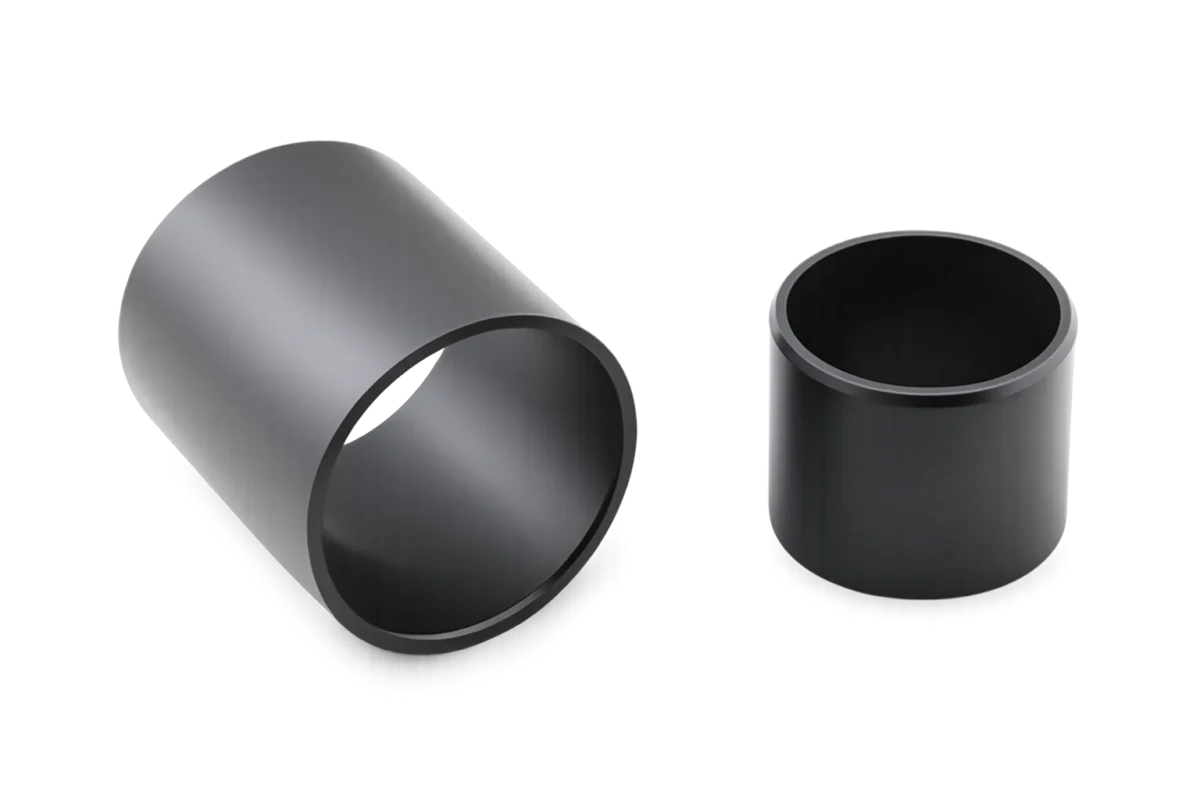
Polymer plain bearings are made from solid engineering polymers, fiber-reinforced polymer composites, or metal-backed materials with a polymer sliding layer.
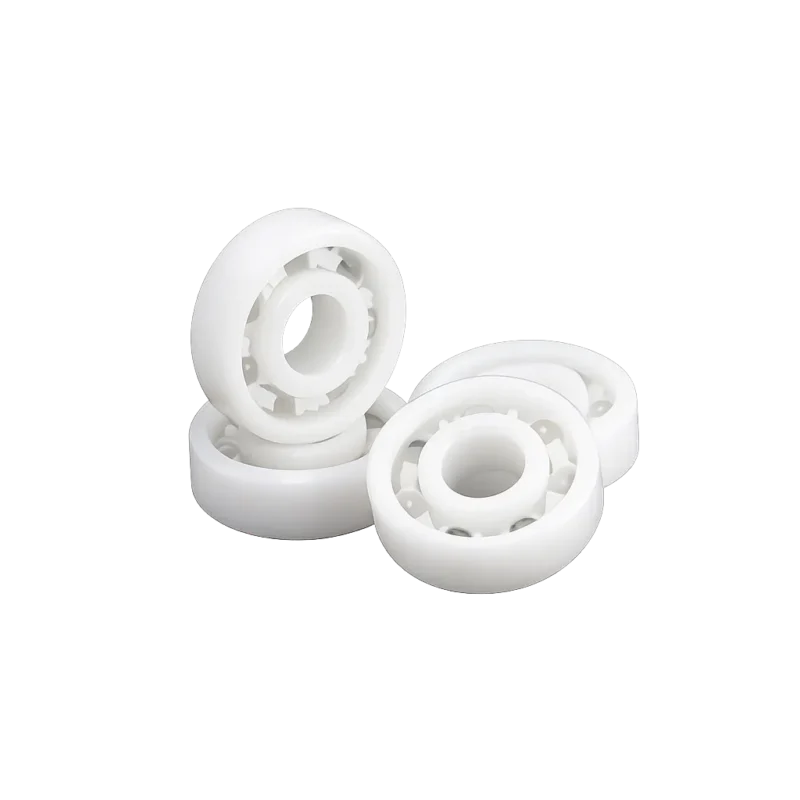
In polymer rolling bearings, the rings and cages are typically made from polymer materials. The balls or rollers may be made from polymers, glass, stainless steel, or ceramic materials. Some polymer rolling bearings use polymer materials for nearly all components, while hybrid designs combine polymer rings and cages with rolling elements made from other materials.
Since many polymer materials are commonly described as plastics, this raises an important question: Are polymers and plastics the same? The answer is no.
Part 2. Polymer Bearings vs Plastic Bearings: Key Differences
To better understand why polymers and plastics are not exactly the same, the following table compares polymer bearings with plastic bearings.
| Item | Polymer Bearings | Plastic Bearings |
| Relationship | A broader category | One type of polymer bearings as the plastics are made based on the polymer and additives |
| Material | All plastic bearing materials listed in the right column, plus: fiber-reinforced polymer composites, fabric-reinforced resin composites, PTFE-fabric composites, thermoset polymer composites, metal-polymer composites, steel-backed PTFE composites, steel-backed POM composites, bronze-backed PTFE composites, and polymer coatings or liners. | Common solid plastic materials: POM, PA6, PA66, PA46, PA11, PA12, PPA, PBT, PET, PE, HDPE, UHMWPE/UPE, PP, PEEK, PPS, PTFE, PVDF, PCTFE, PFA, FEP, ETFE, ECTFE, PI, PAI, PEI, PSU, PESU, PPSU, PBI, and LCP. |
From the table, you can see that all plastic bearings are polymer bearings, but not all polymer bearings are plastic bearings.
Part 3. How Do Polymer Bearings Work?
So, how do polymer bearings work? Their basic operating principles are generally similar to those of metal and ceramic bearings.
In polymer rolling bearings, the rolling elements move between the inner and outer ring raceways to reduce friction between the moving components. Ball bearings use point contact, while roller bearings use line contact to support loads.
Polymer plain or journal bearings operate through sliding contact between the shaft and the polymer sliding surface. The low-friction and wear-resistant polymer material allows the shaft to rotate, oscillate, or slide while reducing friction and wear.
Most polymer rolling bearings and polymer plain or journal bearings can operate under dry-running conditions without external lubrication.
Part 4. Types of Polymer Bearings
Polymer bearings can be classified in several ways. The following are the main types based on their operating principle, material, and construction.
Based on the Operating Principle
- Polymer Rolling Bearings
- Polymer ball bearings
- Polymer roller bearings
- Polymer Plain Bearings
- Polymer sleeve bearings or bushings
- Polymer flanged bearings
- Polymer thrust washers or thrust bearings
- Polymer linear plain bearings
Based on the Material and Construction
- Solid polymer bearings
- Fiber-reinforced polymer composite bearings
- Metal-polymer composite bearings
In addition to the types listed above, polymer bearings can also be manufactured in custom sizes, shapes, and structures to meet specific application requirements.
Part 5. When to Use Polymer Bearings?
After understanding what polymer bearings are, you may want to know when they should be used. To determine whether polymer bearings are suitable for an application, you first need to understand their advantages and limitations.
Advantages:
Corrosion and chemical resistance: Many polymer bearings made from materials such as PTFE, PEEK, PPS, PVDF, and PP are resistant to moisture, corrosion, acids, alkalis, and other chemicals.
Dry-running and self-lubricating operation:
Many polymer bearings are made from self-lubricating polymer compounds containing solid lubricants. These lubricants are distributed throughout the material and help reduce friction and wear during operation.
Low weight:
Polymer bearings are generally much lighter than steel bearings of the same size.
Low operating noise:
Polymer materials have good vibration-damping properties and generally produce less operating noise.
Potential cost savings:
Polymer bearings may reduce total operating costs by eliminating lubrication systems, reducing maintenance requirements, resisting corrosion, and simplifying installation.
Food-grade options:
Some polymer bearing materials, such as POM, PA6/PA66, PEEK, PET, PP, PE/UHMWPE, PTFE, PPS, and PVDF, are available in grades that comply with FDA requirements or EU Regulation No. 10/2011 for food-processing and packaging applications.
Disadvantages
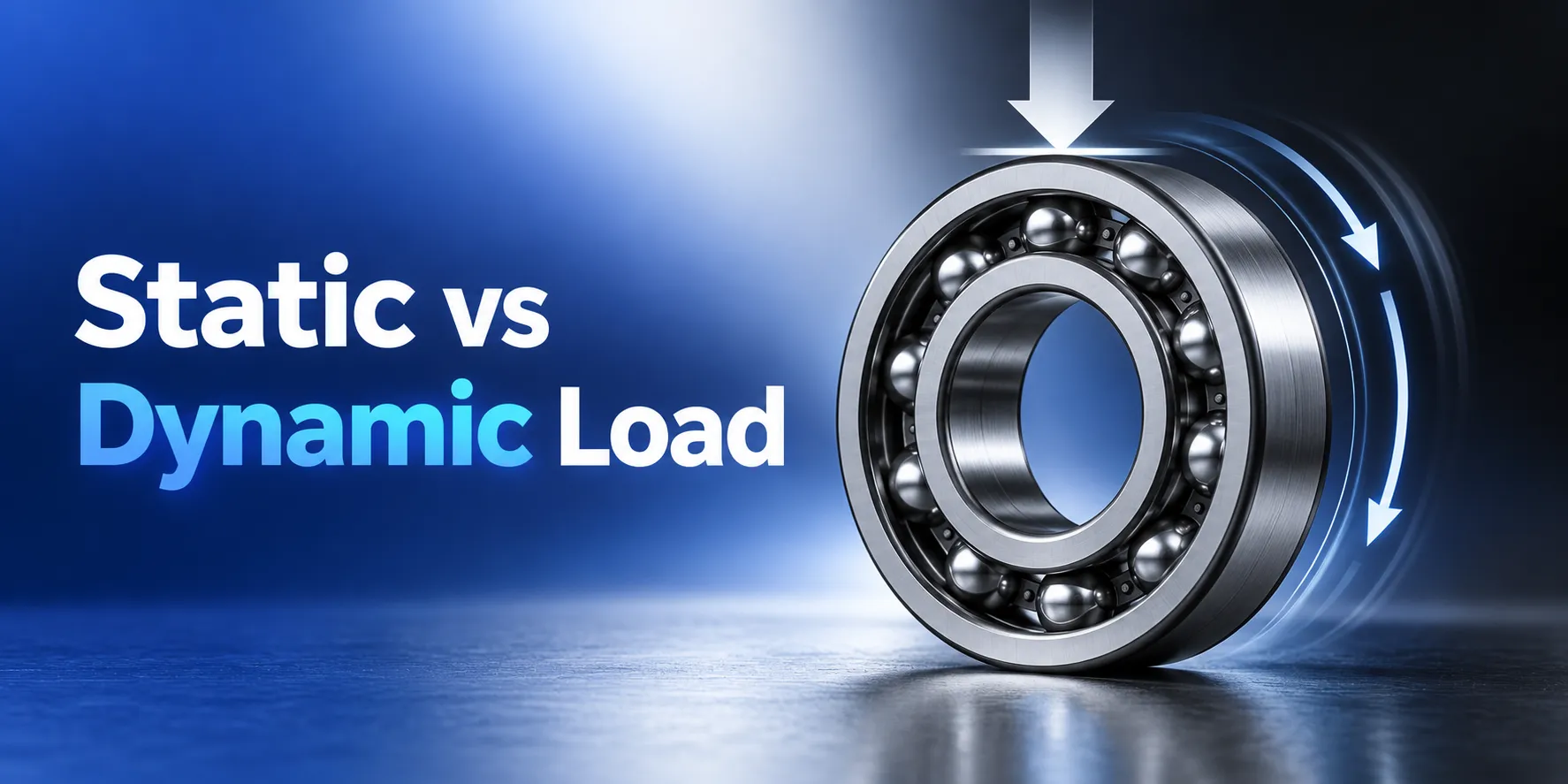
Lower load capacity and stiffness: Compared with steel bearings of the same size, many polymer bearings have lower load capacity and stiffness and may deform more under heavy or sustained loads.
Limited speed and temperature range: Although some high-performance polymer materials can operate at high speeds or elevated temperatures, polymer bearings generally have lower allowable speed and temperature limits than comparable steel or ceramic bearings.
Thermal expansion: Polymer materials generally expand more than metals as the temperature increases, so sufficient operating clearance must be considered.
Therefore, you may have the answer of when to use polymer bearings. They are suitable for applications requiring corrosion and chemical resistance, dry-running or self-lubricating operation, low noise, low weight, potential cost savings, or food-contact-compliant materials.
Applications of Polymer Bearings
So, in which industries and equipment are polymer bearings commonly used? Here are five major application areas:
Food and Beverage Processing: Conveyor systems, filling machines, bottling machines, food mixers, packaging machines.
Chemical Processing: Chemical pumps, mixing equipment, agitators, dosing systems, valve assemblies.
Packaging Industry: Cartoning machines, labeling machines, sealing machines, wrapping machines, sorting systems.
Medical and Laboratory Equipment: Medical pumps, laboratory centrifuges, diagnostic equipment, adjustable medical beds, sterilization equipment.
Industrial Automation and Material Handling: Robotic arms, linear guide systems, automated conveyor systems, pick-and-place machines, sorting and handling equipment.
Part 6. Polymer Bearings vs Metal Bearings vs Ceramic Bearings
From the previous sections, you should now have a clear understanding of polymer bearings. But how do you choose among polymer, metal, and ceramic bearings? The following table compares these three bearing categories to help you make a quicker preliminary selection.
| Item | Polymer Bearings | Meta Bearings | Ceramic Bearings |
| Major Materials | Engineering polymers such as POM, PA, PEEK, PPS, and PTFE; fiber-reinforced polymer composites; and metal-polymer composites. Polymer rolling bearings may use polymer rings and cages combined with polymer, glass, stainless-steel, or ceramic rolling elements. | Bearing steel, stainless steel, alloy steel, or case-hardened steel. Metal plain bearings may also use bronze, copper alloys, or other metal materials. | Full-ceramic bearings use ceramic rings and rolling elements, commonly made from Si₃N₄, ZrO₂, SiC, or Al₂O₃. Hybrid ceramic bearings normally use steel rings and ceramic rolling elements. |
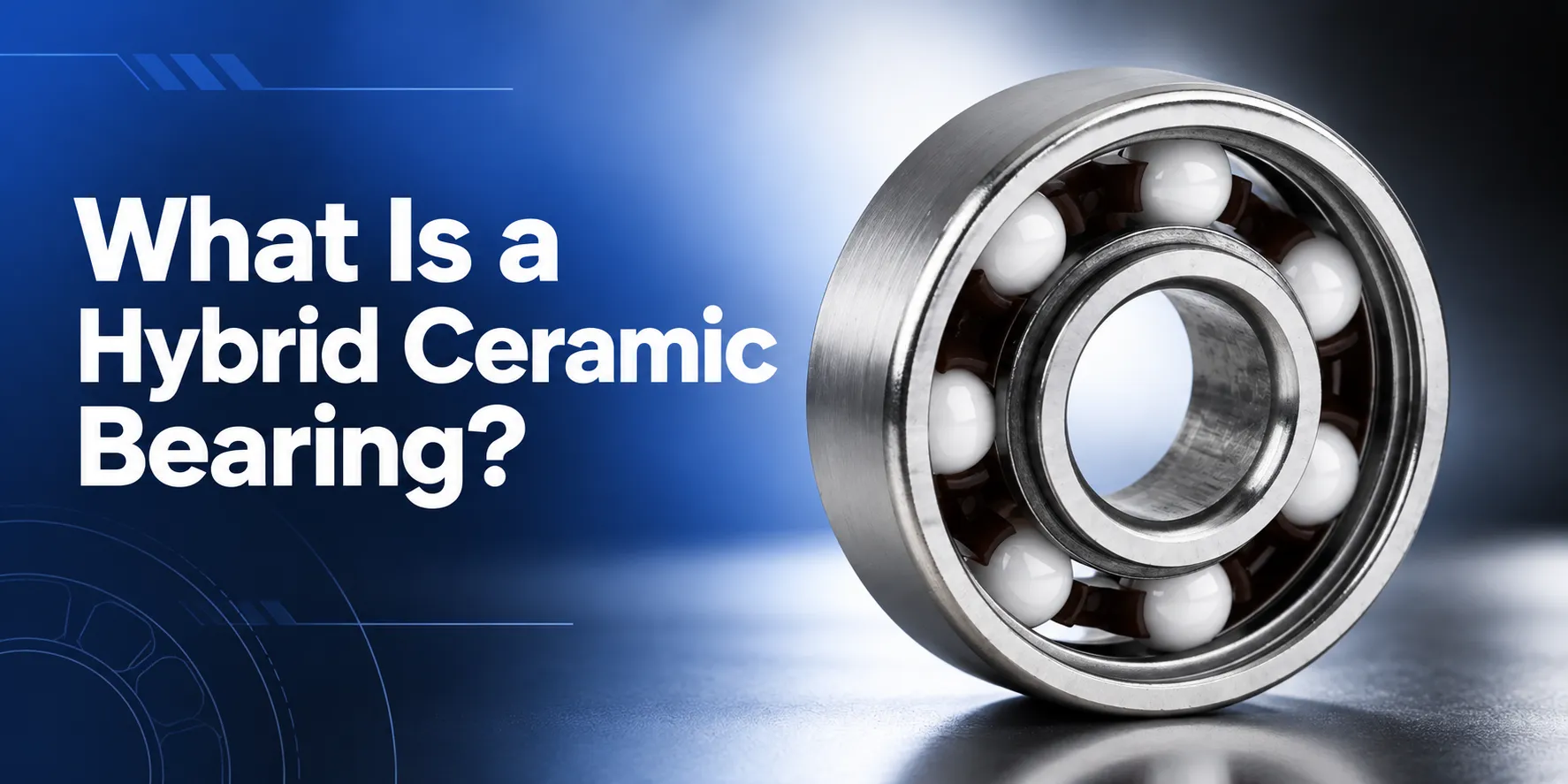
| Speed Range | Generally suitable for low- to medium-speed applications. As a reference, common polymer 608 ball bearings may operate at speeds of approximately 5,000–5,500 rpm. | Generally suitable for medium- to high-speed applications. As a reference, an 608 steel bearing has a limiting speed of 22,000 rpm. | Hybrid ceramic bearings are generally suitable for higher speeds. As a reference, an 608 hybrid ceramic bearing has a limiting speed of 38,000 rpm. |
| Temperature Range | Up to +250°C. | Up to +350°C . | up to +400°C |
| Noise | Generally low because polymer materials can absorb vibration and reduce operating noise. | Generally low to moderate, depending on the bearing accuracy, lubrication, speed, and installation. | Generally low when manufactured and installed with high precision, but ceramic bearings are not necessarily quieter than polymer bearings. |
Part 7. Where and How to Buy Polymer Bearings
Now that you have decided to purchase polymer bearings, you may be wondering where to find a reliable manufacturer. BKZ Industry is a bearing manufacturer in China that supplies a wide range of polymer bearings.
With more than 15 years of experience in bearing manufacturing, BKZ Industry understands different application requirements and can provide suitable polymer material options based on your needs. With two factories, BKZ Industry can maintain stable production and supply.
You can send your bearing model number, quantity, drawing, if available, and application requirements to sales@bkzindustry.com. BKZ Industry will review your requirements and provide a quotation promptly.
Ending Note
Through this article, you should now have a clear understanding of polymer bearings. After learning about their types, materials, working principles, advantages, limitations, and applications, you can select a suitable polymer bearing for your needs.
When you are ready to purchase polymer bearings, you can contact BKZ Industry, a polymer bearing manufacturer and supplier from China.