Before We Begin:
If you are looking for a professional bearing manufacturer capable of supplying a full range of high-quality bearings with ISO-certified production, OEM/ODM customization, fast global delivery, and dedicated engineering support, BKZ Industry is ready to assist you. Contact BKZ Industry here .
Bearings are essential mechanical components used to reduce friction and support rotating shafts. There are different types of bearings designed for various loads, speeds, and working environments. This guide explains all bearing types, including sliding bearings, rolling bearings, and mounted bearing units, along with a clear types of bearings chart and selection guide.
Part 1. What is a Bearing Type?
A bearing type refers to the classification of bearings based on their working principle and structural design. In other words, it describes how a bearing supports loads and reduces friction during shaft rotation.
Different bearing types operate using different mechanisms—such as sliding contact, rolling elements, or integrated mounted assemblies. Because of these differences, each type is designed to meet specific requirements in terms of load capacity, speed performance, alignment tolerance, and installation method.
Understanding bearing types is the first step in selecting the correct bearing for any mechanical application.
Part 2. 3 Different Types of Bearings
Bearings are generally classified into three main structural categories: Plain (Sliding) Bearings, Rolling Bearings, and Bearing Units (Mounted Bearings).
Each category operates on a different mechanical principle and is designed to meet specific requirements in terms of load capacity, speed performance, and installation method.
For readers who prefer a quick overview rather than detailed explanations, the bearing types chart below provides a clear and concise summary of the main bearing types and their characteristics.
Types of Bearings Chart
| Main Category | Working Principle | Key Features | Common Types | Typical Applications |
|---|---|---|---|---|
| Plain (Sliding) Bearings | Shaft slides on bearing surface with lubricant film | Full surface contact; very high load capacity; strong shock resistance; low noise | By Lubrication: Hydrodynamic, Hydrostatic, Dry, Water, Gas, Magnetic By Load: Journal, Thrust, Combined By Structure: Sleeve, Bushing, Flanged, Split | Engines, turbines, generators, large motors, compressors, marine shafts, heavy equipment |
| Rolling Bearings | Rolling elements (balls or rollers) reduce friction between rings | Low friction; high speed capability; high rotational accuracy; standardized sizes | Ball Bearings: Deep Groove, Angular Contact, Self-Aligning, Thrust Roller Bearings: Cylindrical, Spherical, Tapered, Needle | Automotive systems, electric motors, pumps, gearboxes, wind turbines, appliances |
| Bearing Units (Mounted Bearings) | Insert bearing pre-mounted inside housing; ready-to-install assembly | Easy installation; self-aligning; good sealing; cost-effective | By Housing: Pillow Block, Flange, Take-Up, Cartridge By Insert: Ball Units, Spherical Roller Units By Locking: Set Screw, Eccentric Collar, Adapter Sleeve | Conveyors, agriculture machinery, food processing, packaging, textile, fans |
Still do not have a structure in mind? You can check this image.
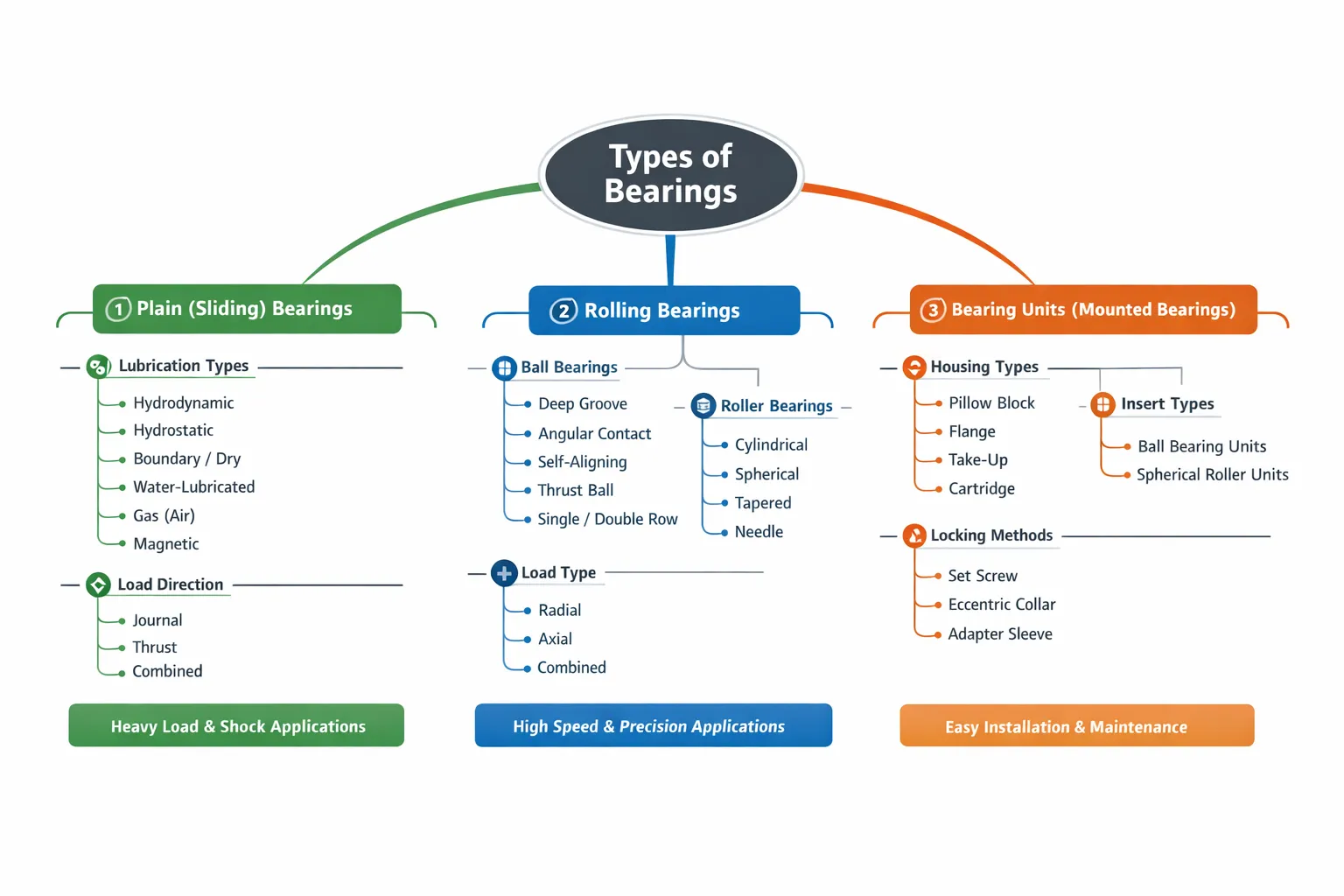
Want to explore each bearing type in detail? Below, you’ll find a complete guide covering what they are, how they work, their key features, advantages, limitations, typical applications, and main subtypes.
Plain (Sliding) Bearings
Plain bearings, also known as sliding bearings, represent the most fundamental bearing design. They operate without rolling elements such as balls or rollers. Instead, the shaft rotates directly against the bearing surface, separated by a lubricating film that minimizes friction and prevents metal-to-metal contact.
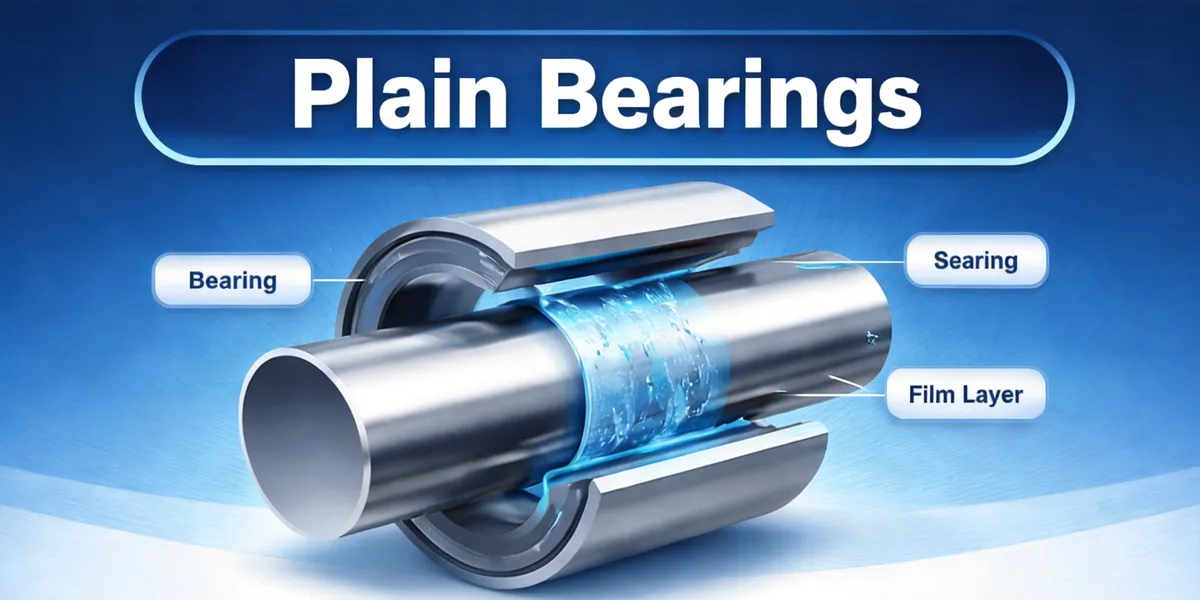
Unlike rolling bearings that rely on point or line contact, plain bearings support loads through full surface contact. This structural feature allows them to handle very high loads and absorb shock effectively. For this reason, plain bearings are widely used in heavy-duty, large-diameter, and high-load industrial equipment where durability is more critical than rotational speed.
Below is a structured overview of their advantages, limitations, and typical applications.
Advantages
- Simple and compact design
- High load capacity
- Excellent shock absorption
- Low operating noise
- Suitable for large shaft diameters
Limitations
- Require reliable lubrication
- Higher starting friction than rolling bearings
- Sensitive to lubrication failure
- Clearance design is critical
Common Applications
- Engine crankshafts and connecting rods
- Turbines and generators
- Large motors and compressors
- Marine propulsion shafts
- Heavy equipment pivot systems
Plain bearings are ideal for applications where heavy loads, structural rigidity, and long service life are more important than high rotational speed or ultra-low friction startup.
Common Types of Plain Bearings
Plain bearings can be classified according to lubrication principle, load direction, and structural design.
- Based on Lubrication Principle
Hydrodynamic Plain Bearings – The oil film is formed by shaft rotation; no external pressure is required. Common in engines and turbines.
Hydrostatic Plain Bearings – Lubricant is supplied under external pressure; suitable for heavy-load, low-speed, high-precision applications.
Boundary / Dry Bearings – Operate with minimal lubrication; often use self-lubricating materials such as bronze or PTFE composites.
Water-Lubricated Bearings – Use water as the lubricant; common in marine and environmentally sensitive applications.
Gas (Air) Bearings – Use air or gas film; applied in ultra-high-speed and precision equipment.
Magnetic Bearings – Non-contact type using electromagnetic force; used in high-speed turbo systems.
- Based on Load Direction
Journal Bearings – Support radial loads.
Thrust Plain Bearings – Support axial loads.
Combined Plain Bearings – Support both radial and axial loads.
- Based on Structural Design
Sleeve Bearings – Cylindrical type, press-fitted into a housing.
Bushings – Replaceable liner-type plain bearings.
Flanged Bearings – Sleeve bearings with a flange for axial positioning.
Split Bearings – Two-piece design for easy installation on large shafts.
Rolling Bearings
Rolling bearings are designed to reduce friction by placing rolling elements between the inner and outer rings. Instead of sliding contact, the load is transmitted through rolling contact. This design significantly lowers friction, minimizes heat generation, and improves mechanical efficiency.
Compared with plain bearings, rolling bearings provide more stable rotational accuracy and better speed performance. They are widely used in machinery where smooth rotation, energy efficiency, and predictable service life are required.
Below is a professional overview of their advantages, limitations, and typical applications.
Advantages:
- Low friction – Rolling contact significantly reduces starting and running friction.
- High rotational accuracy – Suitable for precision machinery.
- Good speed capability – Ideal for medium to high-speed applications.
- Standardized dimensions – Easy interchangeability worldwide.
- Simple lubrication – Grease or oil lubrication is sufficient for most applications.
- Easy installation and replacement – Modular and widely available.
Disadvantages of Rolling Bearings
- Finite fatigue life – Limited by material fatigue under repeated stress.
- Sensitive to contamination – Dust and debris can cause premature failure.
- Lower shock resistance than plain bearings – Less suitable for heavy impact loads.
- Load capacity limited by size – Extremely heavy loads may require sliding bearings.
- Noise at very high speeds – Improper selection or lubrication increases vibration.
Applications of Rolling Bearings
Rolling bearings are essential in systems that require low friction, reliable rotation, and efficient power transmission. Typical applications include:
- Automotive systems – Wheel hubs, transmissions, alternators
- Industrial equipment – Electric motors, pumps, compressors, gearboxes
- Construction machinery – Axles and rotating assemblies
- Energy systems – Wind turbines and generators
- Household appliances – Washing machines, air conditioners, power tools
Because rolling bearings can support radial loads, axial loads, or combined loads, they are found in nearly all types of rotating machinery.
Common Rolling Bearing Types
Rolling bearings are primarily classified by the type of rolling element: ball bearings and roller bearings.
Ball Bearings
Ball bearings use spherical balls as rolling elements. Because they create point contact between the balls and raceways, they generate low friction, produce less heat, and are suitable for high-speed operation.
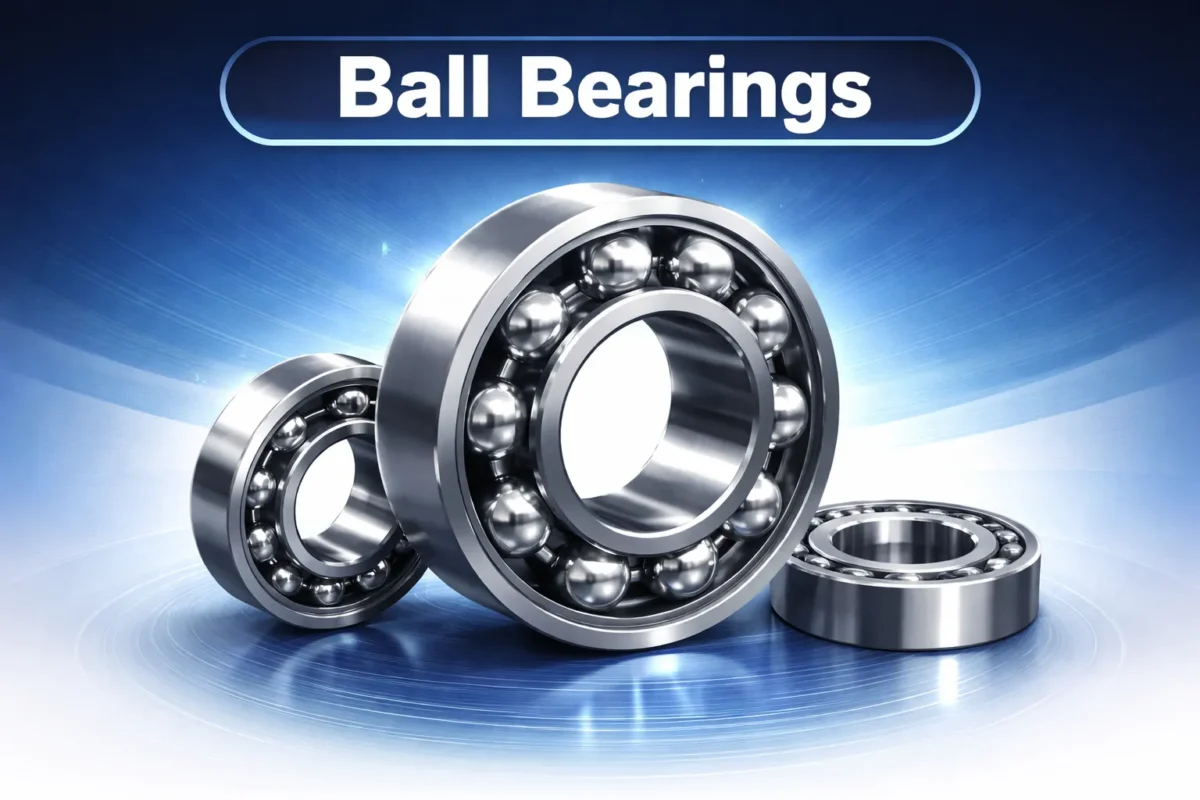
Ball bearings can be classified in two main ways: by structural design and by load direction.
- Based on Structural Design
- Single-Row Ball Bearings – One row of balls; the most common design.
- Double-Row Ball Bearings – Two rows of balls; higher load capacity than single-row types.
- Open Type – Without seals or shields; suitable for oil lubrication systems.
- Shielded/Sealed Type (ZZ, 2RS) – Metal shields (ZZ) or rubber seals (2RS) for dust protection and grease retention.
- Snap Ring Type – Equipped with a retaining ring groove for axial positioning in the housing.
- Based on Load Direction
- Deep Groove Ball Bearings – Primarily radial load, capable of supporting moderate axial loads in both directions.
- Self-Aligning Ball Bearings – Designed with a spherical outer raceway to compensate for shaft misalignment.
- Angular Contact Ball Bearings – Support combined radial and axial loads, especially higher axial loads in one direction.
Thrust Ball Bearings – Designed to support axial loads only.
Proper classification helps ensure the correct selection based on load condition, speed, alignment, and sealing requirements.
Roller Bearings
Roller bearings are another type of rolling bearings, they use cylindrical, tapered, spherical, or needle-shaped rollers. Because they create line contact instead of point contact, they can carry heavier loads than ball bearings.
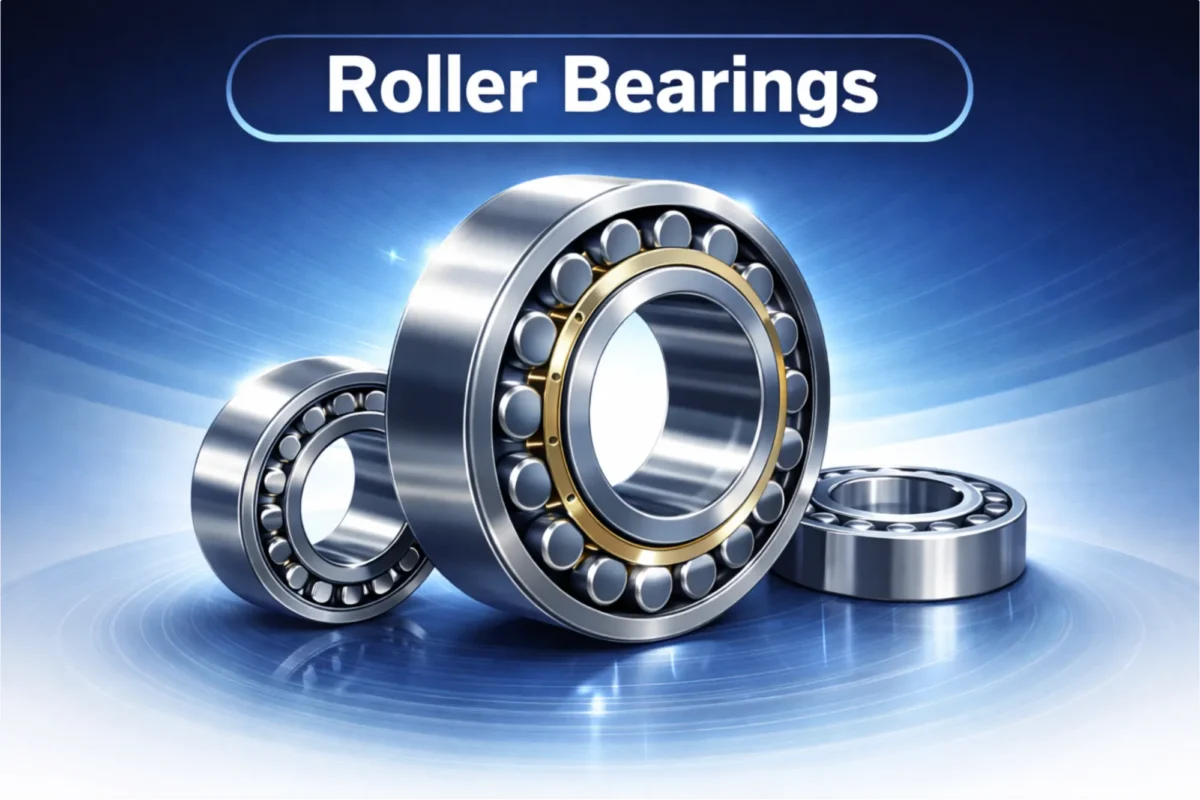
Based on shape of the rolling element, roller bearings can be divided into
- Cylindrical Roller Bearings – use straight cylindrical rollers
- Spherical Roller Bearings – use barrel-shaped rollers
- Tapered Roller Bearings – use conical (tapered) rollers
- Needle Roller Bearings – use long, thin cylindrical rollers
Based on the type of load they support, roller bearings can be divided into
- Radial Roller Bearings – Primarily support radial loads (e.g., cylindrical, spherical, needle roller bearings).
- Thrust Roller Bearings – Designed to support axial (thrust) loads only.
- Combined Load Roller Bearings – Support both radial and axial loads simultaneously (e.g., tapered roller bearings, spherical roller bearings).
Roller bearings are commonly used in gearboxes, construction equipment, and heavy industrial machinery.
In addition to plain (sliding) bearings and rolling bearings, there is another important category known as bearing units, also called mounted bearings.
Bearing Units (Mounted Bearings)
Bearing units consist of an insert bearing mounted inside a housing. They are supplied as complete assemblies, ready to install.
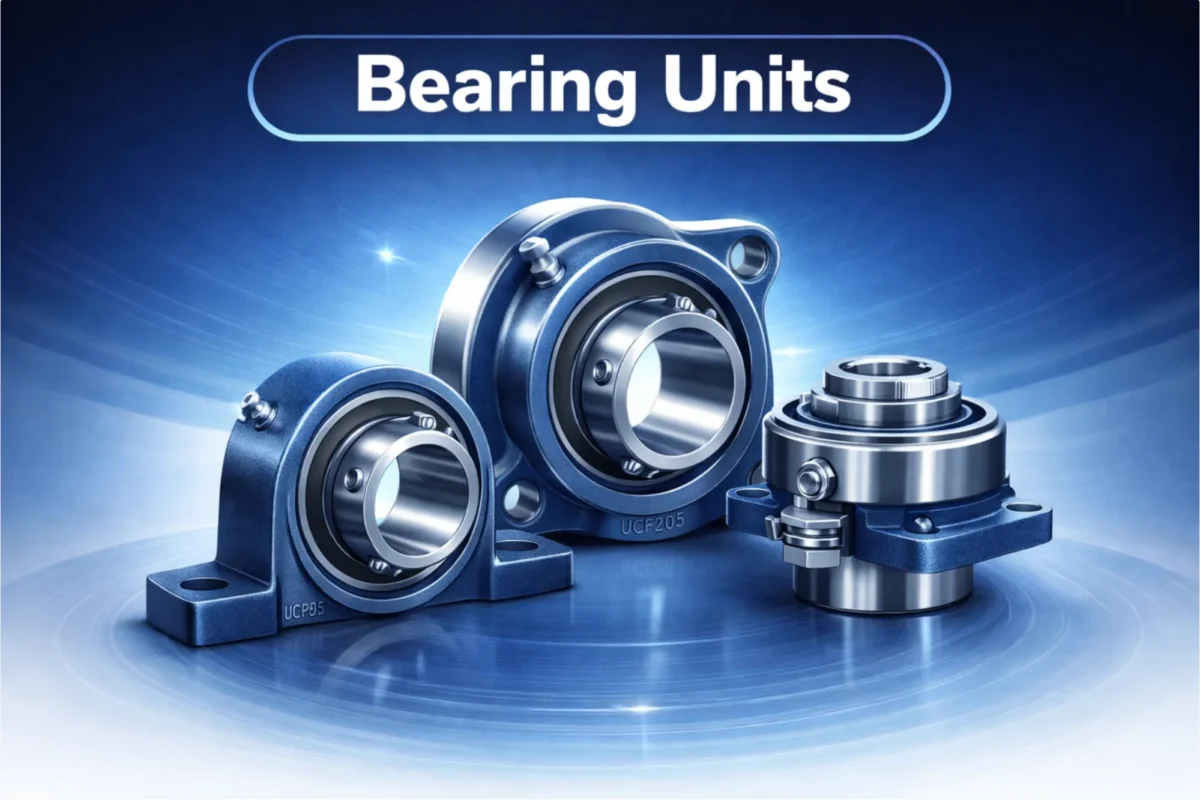
A typical bearing unit includes:
- Insert bearing (usually deep groove ball type)
- Housing (cast iron, ductile iron, stainless steel, or polymer)
- Shaft locking mechanism
- Sealing system
Below is a structured overview of their advantages, limitations, and typical applications.
Advantages
- Easy installation
- Self-alignment capability
- Pre-assembled structure
- Good sealing performance
- Cost-effective for general machinery
Limitations
- Moderate load capacity (standard ball insert type)
- Not suitable for very high-speed applications
- Lower precision than standalone precision bearings
Common Applications of Bearing Units
Bearing units are widely used in equipment where convenient mounting, stable shaft support, and reduced downtime are priorities. Typical applications include:
- Conveyor and material handling systems
- Agricultural machinery (harvesters, seeders, tillers)
- Food processing and packaging equipment
- Textile and printing machinery
- Industrial fans and blowers
- Light mining and construction equipment
They are particularly suitable for environments where shaft alignment may vary and quick replacement is essential to maintain productivity.
Common Types
Bearing units can be classified into different types based on housing design and locking method, as these two factors directly influence installation style, load capability, and shaft fixation reliability.
- Based on Housing Type
Pillow Block Units – Base-mounted housing with bolt holes; the most common type for horizontal shaft support.
Flange Units – Designed for vertical or wall mounting; available in 2-bolt, 3-bolt, 4-bolt, or round flange designs.
Take-Up Units – Installed in adjustable frames; allow shaft movement for belt or chain tensioning.
Cartridge Units – Cylindrical outer housing; used in compact or enclosed mounting structures.
Based on Insert Bearing Type
Ball Bearing Units – Typically use deep groove ball inserts; suitable for moderate loads and general applications.
Spherical Roller Bearing Units – Designed for heavy loads and shock conditions; higher load capacity than ball insert units.
- Based on Locking Method
Set Screw Locking – Shaft secured by set screws; simple and economical.
Eccentric Collar Locking – Provides firm locking for unidirectional rotation.
Adapter Sleeve Locking – Stronger shaft grip; suitable for heavier-duty applications.
Bearing units are widely used in conveyors, agricultural equipment, packaging machinery, and light-to-medium industrial systems.
Part 3. How to Select Bearing Type?
After understanding the different bearing types, the next critical step is selecting the correct one for your application. Bearing selection is not simply about choosing a product category—it requires a comprehensive evaluation of operating conditions, mechanical requirements, and long-term performance expectations.
Below are the key factors every engineer and purchaser should consider.
- Operating Environment
The working environment directly affects bearing life and reliability.
You must evaluate:
- Presence of dust, sand, or abrasive particles
- Exposure to water, moisture, or chemicals
- High or low temperature conditions
- Frequent start-stop cycles or vibration
For harsh environments, sealed rolling bearings, stainless steel materials, or bearing units with enhanced sealing systems may be required. In heavy contamination conditions, plain bearings or specially protected roller bearings may perform better.
- Application Requirements
Different machines and components require different bearing solutions.
You need to determine:
- Which part of the machine supports the shaft
- Whether alignment tolerance is critical
- Whether easy installation or frequent replacement is needed
For example:
- Electric motors often use deep groove ball bearings.
- Gearboxes frequently require cylindrical or tapered roller bearings.
- Conveyors typically use mounted bearing units for easy maintenance.
- Load Capacity
Load type and magnitude are fundamental in bearing selection.
You must consider:
- Radial load
- Axial (thrust) load
- Combined load
- Shock or impact load
For extremely heavy loads, roller bearings or plain bearings are more suitable. Ball bearings are not recommended for very high load applications due to their point-contact structure.
- Speed Requirements
Operating speed determines the bearing structure and lubrication method.
High-speed applications require:
- Low friction design
- High rotational accuracy
- Effective heat dissipation
Ball bearings generally perform better at high speeds, while heavy roller bearings are more suitable for moderate speeds with high loads.
- Size and Installation Space
The available installation space limits bearing dimensions.
You must confirm:
- Shaft diameter
- Housing bore diameter
- Width constraints
- Mounting method
Needle roller bearings are often selected for compact radial space. Bearing units are chosen when installation convenience is prioritized.
- Material Selection
Material affects durability, corrosion resistance, and operating temperature range.
Common material considerations include:
- Standard bearing steel (high strength and fatigue resistance)
- Stainless steel (corrosion resistance)
- Bronze or composite materials (plain bearings)
- High-temperature alloys for special environments
- Lubrication and Sealing
Lubrication and sealing directly determine bearing lifespan.
You must evaluate:
- Grease vs. oil lubrication
- Re-lubrication interval
- Sealed, shielded, or open design
In contaminated environments, double-sealed (2RS) bearings or bearing units with integrated seals are recommended to prevent premature failure.
- Structural Design and Maintenance
Ease of installation and maintenance can significantly reduce downtime.
For example:
- Bearing units allow fast installation and replacement.
- Split plain bearings simplify servicing large shafts.
- Adapter sleeve locking improves mounting accuracy.
- Supplier Reliability
Selecting a reliable manufacturer ensures product quality, dimensional accuracy, and stable supply.
When evaluating a supplier, consider:
- Manufacturing experience
- Quality certifications
- Product range completeness
- Technical support capability
A professional bearing manufacturer should be able to provide engineering guidance, not just products.
- Cost Consideration
Cost should be evaluated from a total lifecycle perspective, not just purchase price.
Consider:
- Initial bearing price
- Maintenance cost
- Downtime risk
- Service life
A high-quality bearing with longer lifespan often reduces total operating cost.
Part 4. FAQS About Bearing Types
Bearings are generally divided into three bearing types mentioned above. But it can also classify into 4 ot 5 types.
The four primary types are plain bearings, rolling bearings, magnetic bearings, and bearing units (mounted bearings). They are classified based on working principle—sliding contact, rolling elements, electromagnetic suspension, or integrated mounted structure.
The five common types are plain bearings, ball bearings, roller bearings, magnetic bearings, and bearing units. This classification separates rolling bearings into ball and roller types for more practical industrial identification.
Final Words
Now you understand what a bearing type is, the three main types of bearings, and how to select the right bearing for your application.
If you are looking for a reliable bearing manufacturer that can supply a complete range of bearing solutions, BKZ Industry is your trusted partner. With over 15 years of manufacturing experience, ISO-certified production standards, OEM/ODM capabilities, fast global delivery, and professional technical engineering support, we are committed to delivering high-quality products and customized solutions to meet your specific needs.
Our experienced sales and engineering teams are ready to provide expert guidance and help you select the most suitable bearings for your project.
Contact BKZ Industry today for professional bearing solutions and technical support.